كاشفات متناهية الصغر تلتقط ضوء اللحظات الأولى سريع
الضوء الذي يقطع نحونا ما يقرب من 14 مليار سنة هو كصورة قديمة تظهر تفاصيلها عند معالجتها بعناية. إشعاع الخلفية الكونية الميكروي (وهو التوهج المتبقي من الانفجار العظيم) يحمل بصمة اللحظات الأولى للكون، لكن إشارته ضعيفة ومشوهة. لرؤية الأنماط الدقيقة للاستقطاب — أي اتجاه اهتزاز موجة الضوء — نحتاج إلى أجهزة فائقة الحساسية.
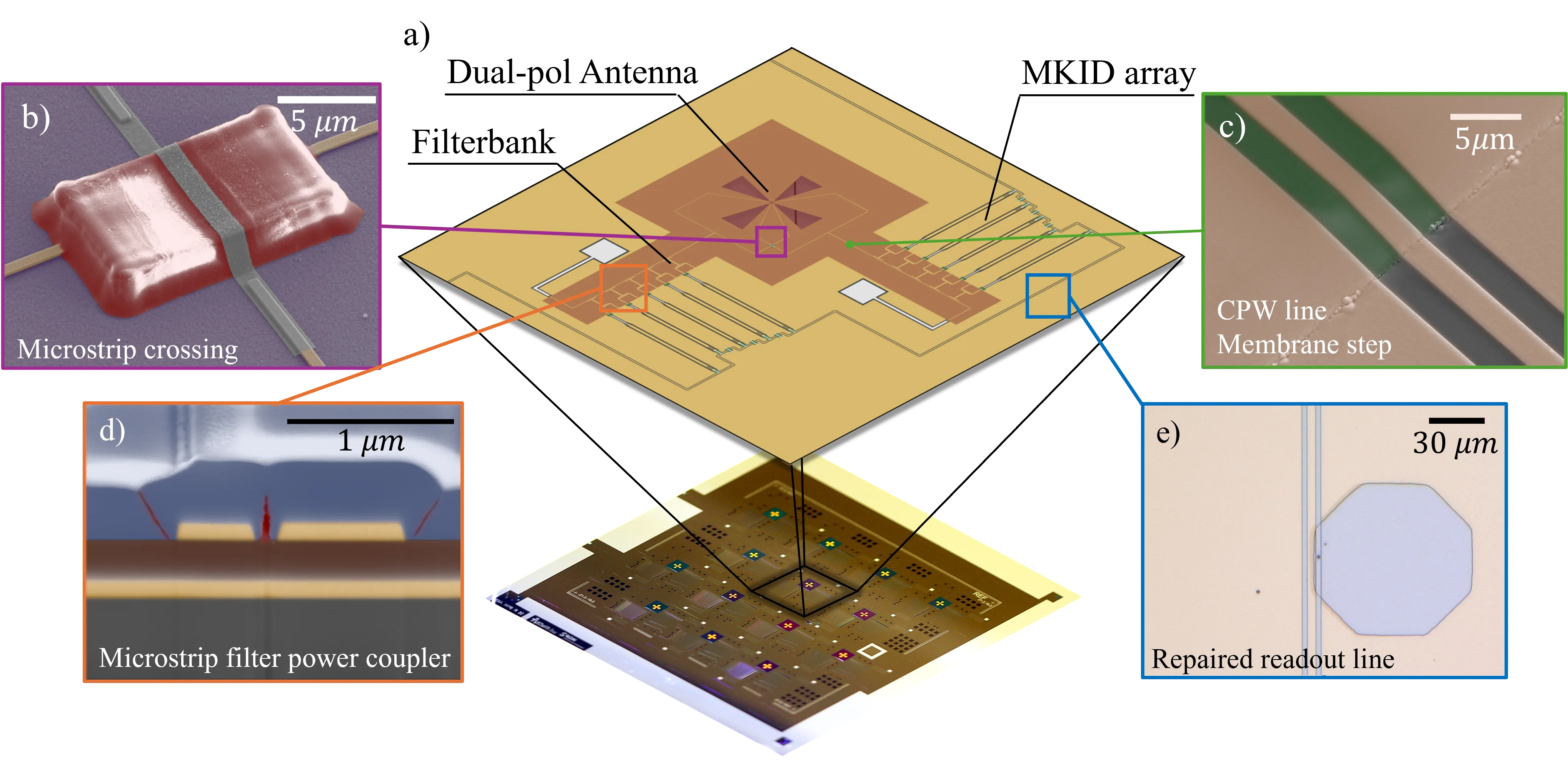
التلسكوبات التقليدية تقضي سنوات في مسح السماء بأكملها. أما المطيافيات فائقة التوصيل الجديدة بحجم طابع بريدي فتعمل في درجات حرارة أقل من تلك الموجودة في الفضاء الخارجي، وتلتقط الضوء دون ضوضاء زائدة. أضاف المهندسون على الرقاقة مسارات متقاطعة تفصل الإشارة حسب الاستقطاب، تمامًا كما يوجه مفتاح السكة الحديدية القطارات إلى مسارات مختلفة. كما سمحت طبقة عازلة — وهي مادة لا توصل التيار — بضبط كل كاشف على التردد المطلوب بدقة أكبر.
بعد إزالة التماسات القصيرة العشوائية في الخطوط، تمكن الفريق من تجميع مصفوفة من أربعة عشر بكسلًا مطيافيًا مستقلاً. هذا هو أول نموذج أولي عملي جاهز للتجارب الميدانية. إذا نجح الأمر، سيتمكن علماء الفلك من بناء خرائط سريعة لإشعاع الخلفية الكونية ومقارنتها بخرائط الخلفية تحت الحمراء — ضوء المجرات البعيدة. ستُظهر هذه المقارنة كيف نمت تجمعات المجرات وتغيرت خلال آخر 10 مليارات سنة، وستختبر ما إذا كان الكون قد تمدد بالفعل أسرع من الضوء في الأجزاء الأولى من الثانية.
الملخص الأصلي
كما كتبه المؤلفون، بالإنجليزية arXiv:2603.16627
Studying the polarization and spectral distortion of the Cosmic Microwave Background (CMB) in tandem with intensity fluctuations of the Cosmic Infrared Background (CIB) allows us to verify our assumptions on cosmic inflation and investigate the dynamics and evolution of galaxy clusters in the last 10 billion years. Because of its broadband emission and being an all-sky extended source, observing the entire CMB in detail is a very time-consuming and expensive exercise. Fortunately, in the last few years, the on-chip superconducting spectrometer technology has moved out of the lab and into the telescope. With its compact size and background-limited sensitivity, this family of instruments is particularly well-suited for fast and large area observations in a relatively unexplored range of the electromagnetic spectrum. However, recent examples of this technology do not yet reach the requirements needed for large spectroscopic and polarimetric surveys of the CMB. We formulate several of these requirements and introduce novel on-chip components and fabrication techniques. We introduce a cross-over to enable distinguishing signal polarization, minimize signal loss by locally optimized lithography of a coplanar-waveguide (CPW), lower the spectral resolution of microstrip filters by deposition of a dielectric layer, and increase the yield of the spectrometer array by removing individual line shorts. These together have culminated in the successful fabrication of a fourteen-spaxel IFU.
الكاشفات فائقة التوصيل حساسة لدرجة أنها تستطيع رصد فوتون واحد — كما لو أننا نسمع سقوط حبة رمل من ارتفاع برج إيفل.