ضوء لا يسخّن الماء سريع
قطرة ماء على ورقة تحت الشمس تختفي أسرع مما تتوقعه حسابات الحرارة. قبل بضع سنوات ظهرت فرضية: الضوء بحد ذاته، دون تسخين، قد يقتلع جزيئات الماء من السطح. سُمّي هذا التأثير الضوئي الجزيئي. إذا كان موجودًا، فقد تعمل الغيوم والمناخ وحتى تجفيف الملابس في المنزل بشكل مختلف.
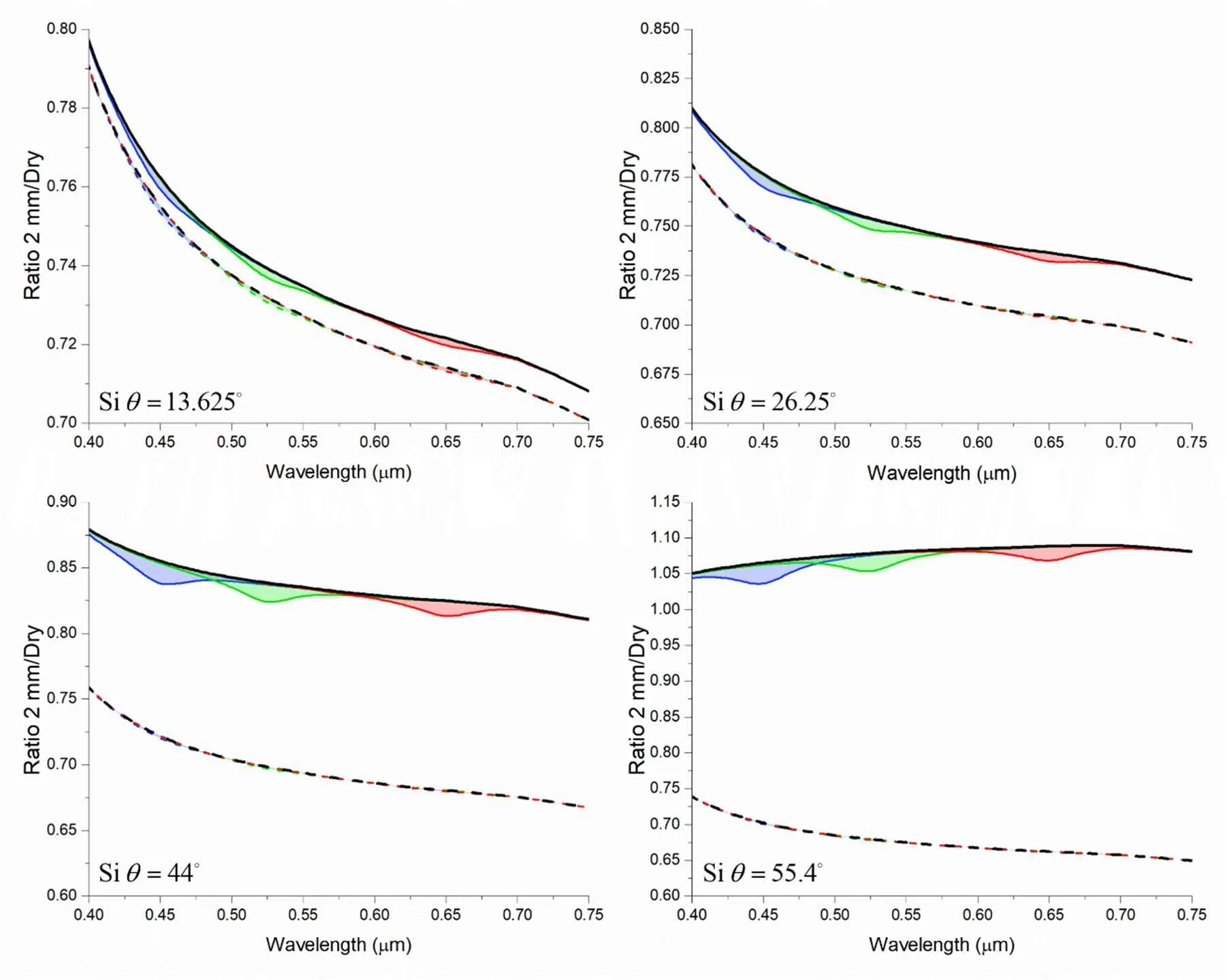
قرر مؤلفو العمل الجديد اختبار الفكرة بقياس دقيق. وجّهوا ضوءًا مستقطبًا (حيث تهتز الموجات في مستوى واحد) إلى الماء، وقارنوا الانعكاس من السطح مع وجود الماء وبدونه. لو كان الضوء يُفقَد عند الحد الفاصل بين السائل والهواء، ليتغيّر الانعكاس. استُخدم نوعان من الركائز: سيليكون مخدوش بشكل خفيف (شبه موصل) وبلاتين (معدن). قِيست خصائصهما البصرية مسبقًا بطريقة الإهليلجية (ellipsometry) (بقياس تغيّر استقطاب الضوء عند الانعكاس). تطابقَت النتيجة مع النموذج التقليدي الذي لا يمتص فيه السطح شيئًا.
إذن، عمليًا، الضوء لا "يخلع" جزيئات الماء بشكل ملحوظ. فالتأثير إمّا أضعف بكثير مما كان يُعتقد، أو يظهر فقط في ظروف خاصة — رطوبة مختلفة، أو نقاء ماء مختلف، أو شدة إضاءة مختلفة. وفي الوقت الحالي، يبقى التسخين التقليدي هو السبب الرئيسي للتبخّر.
الملخص الأصلي
كما كتبه المؤلفون، بالإنجليزية arXiv:2603.17977
The photomolecular effect has been hypothesized to enhance evaporation of water at visible wavelengths. This study develops a measurement technique to investigate its presence and magnitude at the liquid-vapor interface of water. The experiment detects surface absorptance by comparing polarized reflectance for substrates with and without a water layer. The reflectance ratio is used as an indicator of interfacial absorptance or attenuation. Lightly doped silicon and platinum were used as dielectric and metal substrates, and their pseudo-optical properties were measured using ellipsometry. Experimental results were compared to a multilayer reflectance model to determine theoretical sensitivity and guide angle selection. Measurements showed close agreement with a classical model assuming zero surface absorptance. The model was then extended to include surface absorptance using a spectral response based on Lorentzian-distributed Feibelman parameters derived from a recent estimate of 0.84% interfacial absorption. Although this model predicted a 1-2% reduction in reflectance near resonant frequencies, no such spectral features were observed experimentally. These results suggest that under ambient conditions, interfacial absorption is well below 1%, indicating that the optical signature of the photomolecular effect is either much weaker than previously reported or strongly dependent on conditions not present in this experiment.
ينعكس الضوء المستقطب عن الماء بشكل مختلف حسب الزاوية: عند زاوية بروستر (نحو 53° للماء) يكون الضوء المنعكس مستقطبًا بالكامل، وهذه الخاصية تُستخدم في النظارات المستقطبة.