سائل يصطاد الأشباح سريع
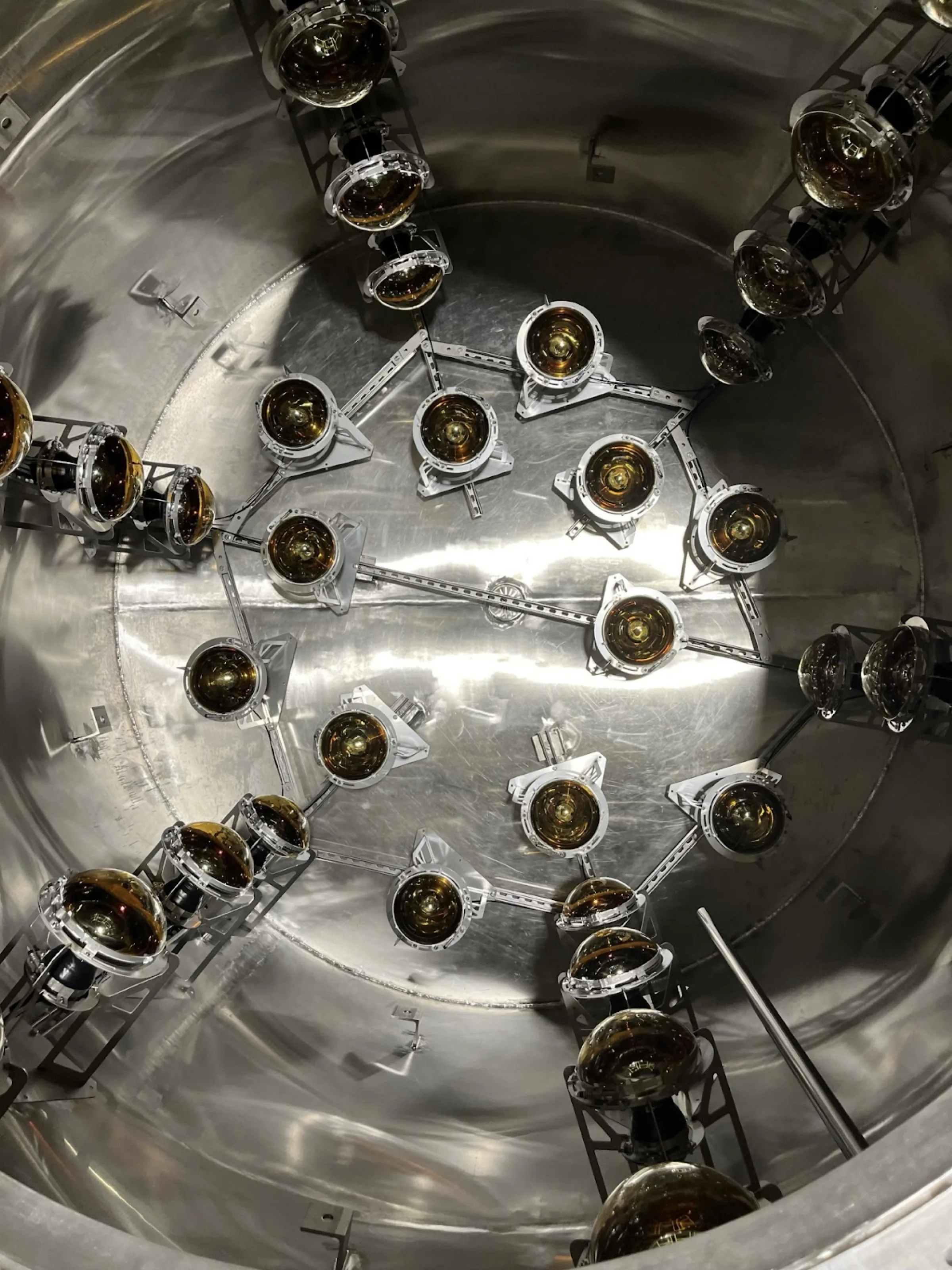
في خزانٍ مظلمٍ يتسع لثلاثين طنًا، يتوهج الماء عندما يعبره جسيمٌ شبحٌ. النيوترينو لا يتفاعل تقريبًا مع المادة، لكنه من حينٍ لآخر يصطدم بذرةٍ، وعندها يولد وميضٌ. لالتقاط هذا الوميض، يُضاف إلى الماء مادةٌ خاصة — وميضٌ سائل (liquid scintillator) — تعمل على تضخيم الضوء.
الكاشفات التقليدية ترى إما نوعًا واحدًا من التوهج أو الآخر. هنا تم الجمع بين الاثنين: إشعاع شيرينكوف (Cherenkov radiation) (مخروطٌ مزرقّ، مثل موجة الصدمة الناتجة عن طائرة أسرع من الصوت، لكن هنا من جسيمٍ أسرع من الضوء في الماء) وضوء الوميض (توهجٌ ناعمٌ منتظم). يمكن تغيير النسبة مباشرة في الخزان، لتكييف الكاشف مع مهام مختلفة.
لماذا هذا مهم؟ تأتي النيوترينوات من الشمس، ومن انفجارات النجوم، ومن المفاعلات النووية. بعضها سريعٌ وحيوي، وبعضها بطيءٌ وضعيف. خزانٌ واحد بسائلٍ قابل للضبط سيكون قادرًا على التقاط النوعين معًا، وتمييزهما عن الضوضاء العشوائية. لقد شغّل العلماء بالفعل نموذجًا أوليًا في مختبر بروكهافن (Brookhaven Laboratory) ويستعدون لتحليل البيانات الأولى.
الملخص الأصلي
كما كتبه المؤلفون، بالإنجليزية arXiv:2603.20019
Water-based Liquid Scintillator (WbLS) was proposed over a decade ago as a novel detector medium that might allow the separation and tuning of the relative ratio of the Cherenkov and Scintillation signals. A detector deploying this technology could combine GeV-scale and MeV-scale neutrino detection at scale. Furthermore, the metal-loading capability of such a material enables neutron tagging and allows the effective particle containment to be tuned. WbLS is attractive both for the potential to use it in large detectors and the ability to modify the configuration in situ. At Brookhaven National Laboratory (BNL), two prototypes have been built for understanding WbLS properties and stability, with masses of 1-ton and 30-ton, respectively. We present here the 30-ton prototype detector design, installation, and operation. Results from the analysis of data collected in the two detectors will follow in future publications.
يمكن رؤية إشعاع شيرينكوف في حوض سباحة يحتوي على مفاعل نووي — يتوهج الماء باللون الأزرق، كما في أفلام الخيال العلمي.