كوكب صخري حول قزم أحمر سريع
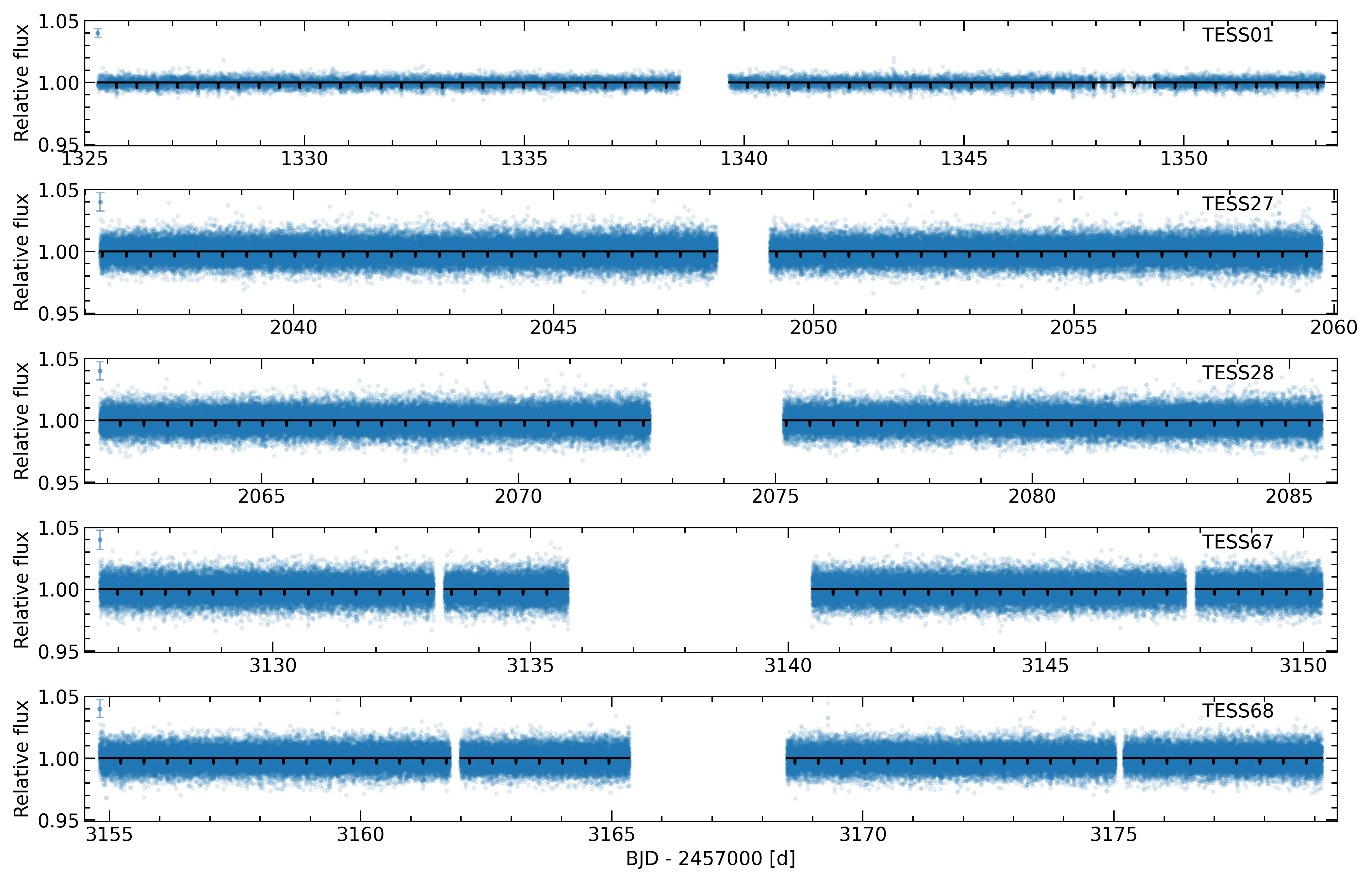
النجم الصغير LHS 3844 يرتجف. يهزّه رفيق غير مرئي — كوكب صخري يدور حوله في 11 ساعة. الكوكب يجذب النجم إليه، والنجم يستجيب بتمايل بالكاد يُلحظ. التقاط هذا التمايل يشبه ملاحظة رافع أثقال وزنه قنطار يخطو خطوة للأمام عندما تهبط ذبابة على كفه.
للإحساس بهذا الارتعاش، استخدم علماء الفلك أداة جديدة اسمها CRIRES+ على التلسكوب الكبير جدًا في تشيلي. إنها تنظر في الضوء تحت الأحمر — ذلك الإشعاع الحراري غير المرئي الذي تتوهج فيه النجوم الحمراء الباردة مثل LHS 3844 بأقصى سطوع. تلتقط الأداة كيف تنزاح الخطوط في طيف النجم تارة إلى جهة وتارة إلى أخرى — مثلما يتغير نبرة صفارة سيارة الإسعاف عندما تمرّ بجانبك. من هذه الانزاحات حسبوا: الكوكب يزن مثل 2.37 أرض، وحجمه أكبر من أرضنا بنسبة 29% فقط. إذن فهو من الداخل كثيف وصخري — مثل الأرض، وليس كرة غازية.
لكن هناك لغز: النجم يتموج بقوة أكبر قليلًا مما ينبغي من كوكب واحد. ربما يختبئ قربه عالم صخري ثانٍ يكمل دورة في 6.88 يوم. حتى الآن هذا مجرد تلميح، لكن إذا تأكد، سيصبح النظام أكثر إثارة.
القيمة الرئيسية للاكتشاف في شيء آخر. LHS 3844 b هو أفضل هدف معروف لتلسكوب جيمس ويب الفضائي. لا يملك الكوكب غلافًا جويًا كثيفًا، لذا سيتمكن التلسكوب من رؤية سطحه مباشرة — من أي نوع من الصخور يتكون. ستكون هذه أول مرة نرى فيها معادن على كوكب آخر. هكذا يتحول تمايل النجم إلى خريطة لعالم غريب.
الملخص الأصلي
كما كتبه المؤلفون، بالإنجليزية arXiv:2603.28238
We present the first planet mass measurement obtained with CRIRES+ radial velocity (RV) observations using the K-band gas cell. Our target, LHS 3844 b (TOI-136), is a transiting super-Earth with radius $$R_b=1.286^{+0.043}_{-0.044}R_\oplus$$ and an orbital period of $$P_b = 0.462929709^{+0.000000044}_{-0.000000042}$$d, placing it in the class of ultra-short-period (USP) planets. The host star LHS 3844 is an old ($$7.8\pm1.6$$Gyr), slowly rotating ($$P_{rot} = 130.0^{+16.9}_{-13.4}$$d) M5.0 dwarf with $$M_\star = 0.151\pm0.014M_\odot$$ at a distance of 15pc (V=15.2mag, K=9.2mag). Combining our CRIRES+ RVs with archival ESPRESSO spectra, and confirming the signal in each dataset independently, we detected periodic RV variations with a semi-amplitude $$K_b=6.95^{+0.55}_{-0.60}$$m/s, implying a planetary mass of $$m_b = 2.37\pm0.25M_\oplus$$ and a bulk density of $$\rho_b = 6.15^{+0.60}_{-0.61}$$gcm$$^{-3}$$, consistent with a predominantly rocky composition. We further found excess RV variability that may be attributed to stellar jitter or to an additional planetary signal, for which we identified a tentative super-Earth candidate with a period of $$\approx6.88$$d. Owing to its proximity to its M-dwarf host, LHS 3844 b experiences intense irradiation and is unlikely to retain a substantial H/He envelope. Interior modeling places an upper limit on the iron-core mass fraction, which is consistent with an Earth-like rocky composition. With an emission spectroscopy metric of 28, LHS 3844 b is a prime JWST target for atmospheric and surface characterization and the most promising surface-characterization target known. Phase-curve spectroscopy may reveal its surface mineralogy and enable the first robust detection of exoplanet surface spectral features. Our results demonstrate that near-infrared RVs obtained with CRIRES+ enable robust mass measurements of super-Earths orbiting late M dwarfs.
السنة على LHS 3844 b تدوم 11 ساعة و6 دقائق — خلال هذه المدة لا يكتمل حتى يوم عمل كامل مع استراحة الغداء على الأرض.
في رواية «سولاريس» لستانيسلاف ليم، المحيط-الكوكب لا يمنح الباحثين راحة أيضًا — لكن هناك هو من يدرس البشر، بينما هنا نحن قد نتمكن لأول مرة من دراسة سطح صخري.