كيف يصبح التجلط قويًا: لغز الكثافة سريع
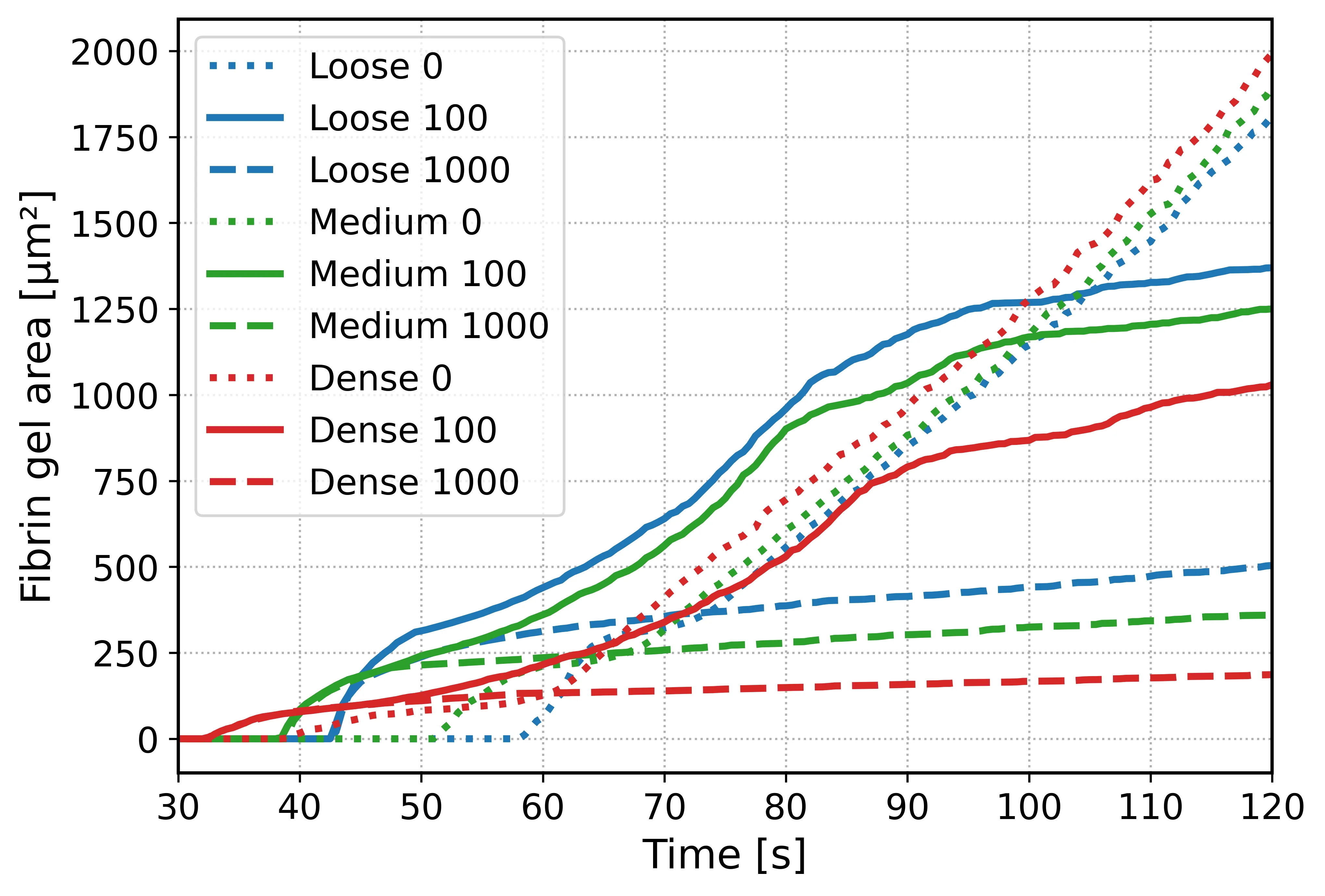
التجلط ليس مجرد كتلة من الخلايا. عندما يتضرر جدار الوعاء، تلتصق الصفائح الدموية معًا لتشكل سدادة، لكنها ما تزال هشة. ما يجعلها قوية هو الفيبرين — البروتين الذي يشكل شبكة من الخيوط، مثل حديد التسليح في الخرسانة. أظهر النموذج أن كثافة السدادة تحدد أين ستظهر هذه الشبكة.
في السدادة الكثيفة، تكون الصفائح الدموية متلاصقة، والمواد التي تُطلق التخثر تتراكم بينها. يبدأ الفيبرين بالنمو عند الحواف حيث لا يزال الدم يتدفق. في السدادة الرخوة، يتسرب الدم إلى الداخل حاملًا مادة البناء — الفيبرينوجين. لذلك تنمو خيوط الفيبرين في كامل السدادة، وإن تأخرت البداية.
نحصل على مفترق طرق: إما سد الوعاء بسرعة أو جعل الجلطة قوية فورًا. السدادة الكثيفة تكسب دقائق، لكنها تخسر في الموثوقية. الرخوة أبطأ، لكنها أكثر إتقانًا. هذا يفسر لماذا تذوب بعض الجلطات من تلقاء نفسها، بينما تؤدي أخرى إلى نوبة قلبية.
الملخص الأصلي
كما كتبه المؤلفون، بالإنجليزية arXiv:2604.07844
During the formation of a thrombus, the architecture of the growing platelet aggregate is heterogeneous, with areas of dense and loosely packed platelets. The surface of activated platelets facilitate biochemical coagulation reactions that ultimately result in the formation of a fibrin network which stabilizes the thrombus. How platelet-plug microstructure and flow jointly govern the onset and development of fibrin is incompletely understood. We developed a novel 2D computational framework that integrates (1) a pre-adhered, discrete platelet aggregate, (2) a reduced coagulation model that generates thrombin, and (3) a fibrin polymerization model. Three platelet-plug configurations were constructed with prescribed interplatelet gaps and simulations were performed with various wall shear rates. We quantified spatiotemporal clotting metrics, including coagulation factor concentrations, fibrin evolution, and gelation onset. Across geometries, gelation initiation accelerated with increasing plug density. For more dense geometries, gelation emerged first near the plug periphery. As the platelet density increased, intraplug transport was increasingly restricted and the thrombin concentrations in between platelets increased. In contrast, the loose plug supported fibrinogen replenishment deeper into the plug core. Despite slower coagulation initiation due to reduced platelet surface area, monomer generation persisted in the interior, causing gelation to begin at the vessel wall. These results suggest a mechanistic tradeoff: rapid sealing of the injured vessel wall by early platelet contraction, i.e. plug densification, may impede the intraplug fibrin formation needed for durable stabilization. The proposed model provides a basis for studies of platelet-coagulation interactions under flow, including therapeutic developments relevant to prevention of cardiovascular disease.
الفيبرين هو بروتين يشكل خيوطًا بسمك 3 نانومتر فقط. إذا مددت كل الخيوط من جلطة واحدة في خط واحد، فستحصل على عدة أمتار.