مرآة لا تُربك الضوء سريع
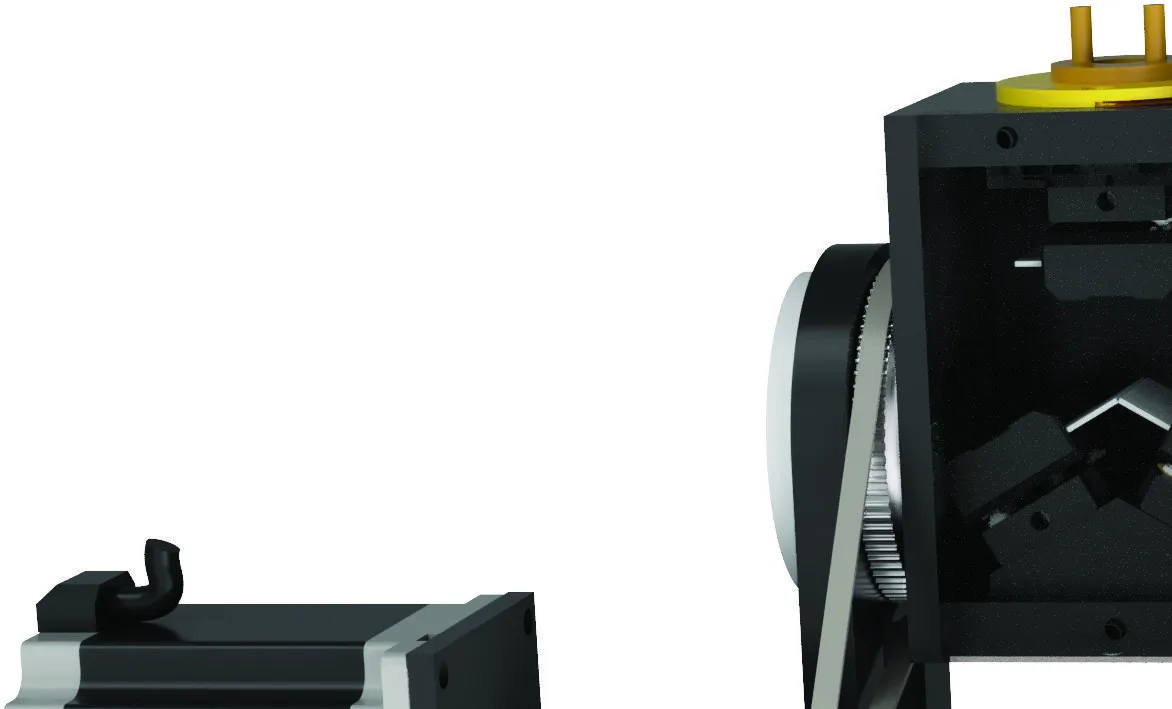
الضوء، مثل حبل هُزّ، يهتز في مستوى معيّن. كثيرًا ما يلجأ الفلكيون والمهندسون إلى تدوير الصورة باستخدام نظام من ثلاث مرايا يُعرف باسم "مرآة K"، لكن في هذه العملية ينعطف مستوى اهتزاز الضوء أيضًا دون قصد. وهذا يمثّل مشكلة للقياسات الدقيقة.
وجد مؤلفو الدراسة الجديدة حلاً بسيطًا: وضعوا صفيحة شفافة أمام المرآة وأخرى خلفها، تعملان على تدوير مستوى الاهتزاز، وجعلوا هذه الصفائح تدور بسرعة نصف سرعة دوران المرآة نفسها. عندها تتعادل جميع الدورات الزائدة مع بعضها، ويخرج الضوء بنفس اتجاه الاهتزاز الذي دخل به.
تعمل هذه الطريقة مع أي زاوية للمرآة، ومع أي مادة، ومع أي حالة للضوء. وهذا يعني أن الفلكيين سيتمكنون من رؤية السماء بوضوح أكبر، ومهندسي الكم من التحكم في جسيمات الضوء بدقة أعلى.
الملخص الأصلي
كما كتبه المؤلفون، بالإنجليزية arXiv:2604.25475
A K-mirror rotates the wavefront of an incident optical field. However, the rotation always introduces polarization changes in the transmitted field. This is a serious concern for applications ranging from astronomical image derotation to orbital angular momentum spectrum characterization in photonic quantum technology. Recent efforts have shown that the polarization change can be minimized significantly, but these require either a very small base angle that limits the field of view, or mirrors with a customized refractive index. Making the transmitted polarization state completely independent of the rotation angle has remained an open problem. In this work, we show that placing half-wave plates before and after a K-mirror and rotating them synchronously at half the K-mirror rotation angle makes the polarization change in the transmitted field exactly independent of the rotation angle. This works for any wavefront rotator, any base angle, any mirror refractive index, and any input state of polarization. We experimentally demonstrate the approach using a K-mirror with a base angle of $$30^{\circ}$$, which gives the largest field of view among practical designs, and find a mean polarization error of ~1%, limited only by the retardance imperfection of commercially available half-wave plates. This has significant practical implications for applications that require precise wavefront rotation without polarization change.
يمكن رؤية استقطاب الضوء من خلال النظارات الشمسية العادية: فهي تسمح فقط بمرور الاهتزازات في مستوى واحد، لذلك تبدو السماء أغمق.