دورية سماوية فوق أوروغواي سريع
في ليلة مظلمة فوق سهول أوروغواي، تتوهج فجأة كرة مبهرة بصمت. تطير لثوانٍ معدودة، متناثرةً شرارات، ثم تخفت خلف الأفق. هذا شهاب ناري — قطعة كبيرة من كويكب اقتحمت الغلاف الجوي. إذا نجا من السقوط، فسيستقر نيزك على الأرض. التقاط هذه اللحظة والعثور بسرعة على الحجر هو مهمة شبكة Bocosur: عشرون كاميرا موزعة على مسافة حوالي 120 كم من بعضها البعض تغطي مساحة تعادل نصف مساحة ألمانيا.
كل محطة هي آلة مستقلة تمامًا. كانت تعمل سابقًا بكاميرات معروفة، لكنها استُبدلت الآن بأخرى أكثر حساسية ووضوحًا. هذا التحول يشبه استبدال كاميرا فيلم قديمة بكاميرا رقمية حديثة: السماء تُرى بشكل أعمق، ومسار الشهاب الناري يُسجل بدقة أكبر. أظهرت المقارنة أن الكاميرات الجديدة تخطئ في تحديد موقع الجسم بمقدار 5 دقائق قوسية فقط — أي حوالي سمك قلم رصاص عند النظر إليه من مسافة ذراع ممدودة.
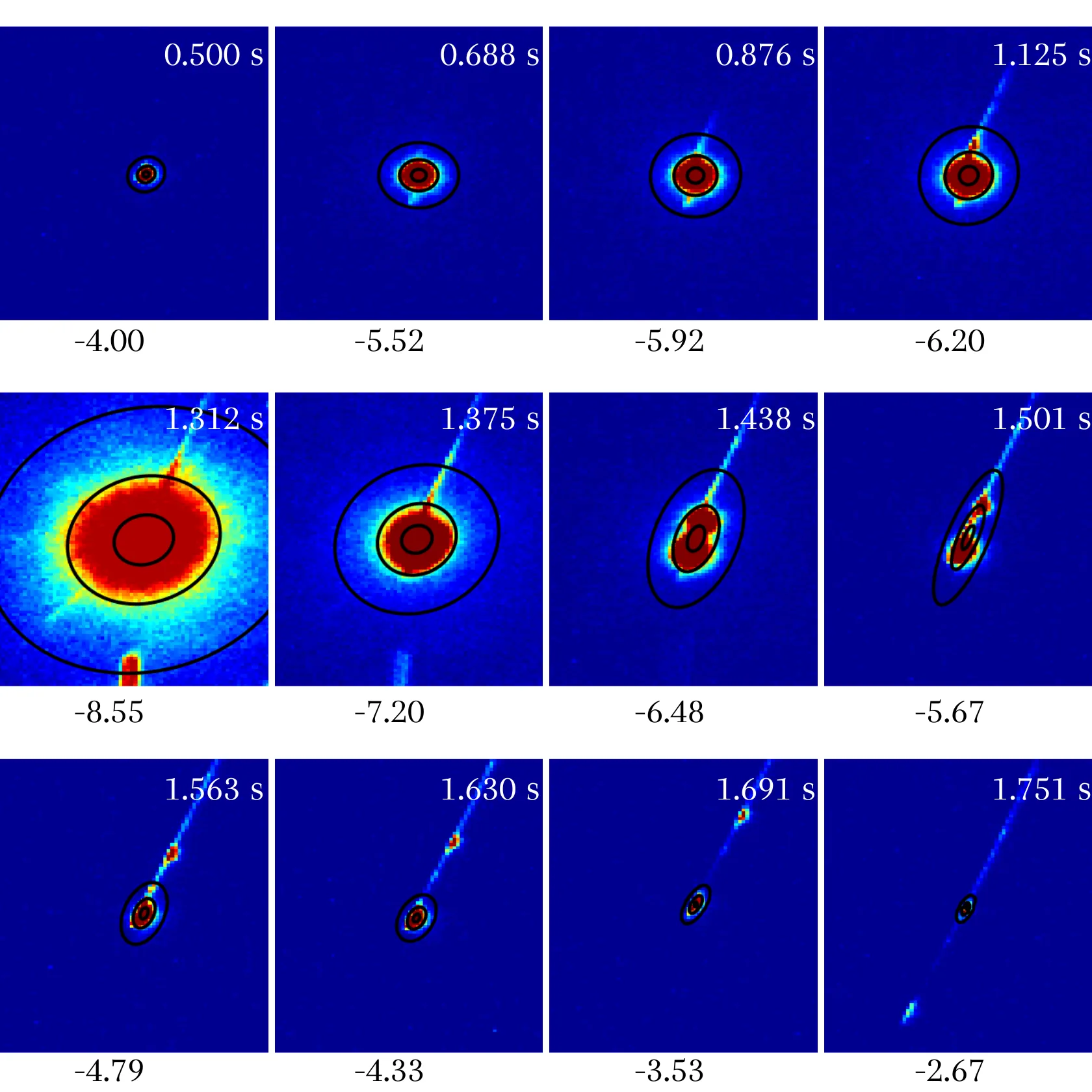
ولكن كيف نقيس سطوع وميض يعمي البصر أكثر من المشتري؟ ابتكر المؤلفون طريقة فوتومترية بسيطة واختبروها على مراجع سماوية مألوفة. بالنسبة للمشتري، بلغ الخطأ 0.18 قدرًا نجميًا فقط — أي ما يعادل تقريبًا الفرق بين مصباحين متجاورين في زينة مضيئة. بالنسبة للقمر، كان الخطأ أكبر قليلًا، 1.2 قدرًا، لكن بالنسبة لجسم بهذا السطوع والامتداد فهذه نتيجة ممتازة. الآن، عندما يقع شهاب ناري في عدسات أربع محطات في وقت واحد، يمكن إعادة بناء مساره بدقة عالية ومعرفة من أين أتى.
كل هذه الآلية تخدم هدفًا مزدوجًا. من ناحية، إعادة قطعة من كويكب إلى الأرض وقراءة تاريخ النظام الشمسي المبكر فيها. ومن ناحية أخرى، إشعال اهتمام تلاميذ المدارس: فهم يشاركون في معالجة الصور ويرون كيف يولد اكتشاف علمي من خط ساطع في سماء الليل. الكرة النارية التي تومض فوق السهوب تصبح جسرًا بين الفضاء البعيد والفصل الدراسي.
الملخص الأصلي
كما كتبه المؤلفون، بالإنجليزية arXiv:2605.08917
Over the past couple of decades, several networks for the automatic detection of fireballs have been deployed. Their primary scientific goal is to facilitate the rapid recovery of meteorites, determine their pre-atmospheric orbits, and look for possible dynamic links with parent bodies. The Bocosur network is a contribution to the global deployment of automated fireball networks and to the increase of the number of recoverable meteorite falls. It is located in Uruguay, South America (Lat: -30$$^{\circ}$$ to -35$$^{\circ}$$). Its main scientific goal is the detection of fireballs of asteroidal origin, massive enough to produce meteorites, and also to inspire secondary-level students and teachers through their involvement in this citizen-science oriented project. The deployment of this network started in 2019, and was completed in March, 2023, when we installed 20 stations separated $$\sim 120$$ km, covering an area of $$\sim 180,000$$ km$$^2$$. During this period of time, one major technological upgrade was made when we migrated from a well-known camera to a higher-resolution, more sensitive system. We were able to build a completely autonomous system at an affordable cost that can be replicated in all the stations. A comparison between the astrometric and photometric performance of these two detection systems is reported. Also, a photometric methodology for estimating the brightness of very bright fireballs is presented and validated against the known magnitudes of Jupiter and the full Moon. We obtain mean residuals of the astrometric reduction of $$\sim$$5', and the discrepancy between the obtained brightness of Jupiter and the Moon average to 0.18 and 1.2 magnitudes, respectively. Results on the processing of a very bright (M$$_{peak}\sim$$-9.0 mag) fireball detected in four stations are also presented.
تغطي شبكة Bocosur مساحة حوالي 180 000 كم² — أي ما يقارب ضعف مساحة البرتغال.