التيار يسري في مسارات خفية سريع
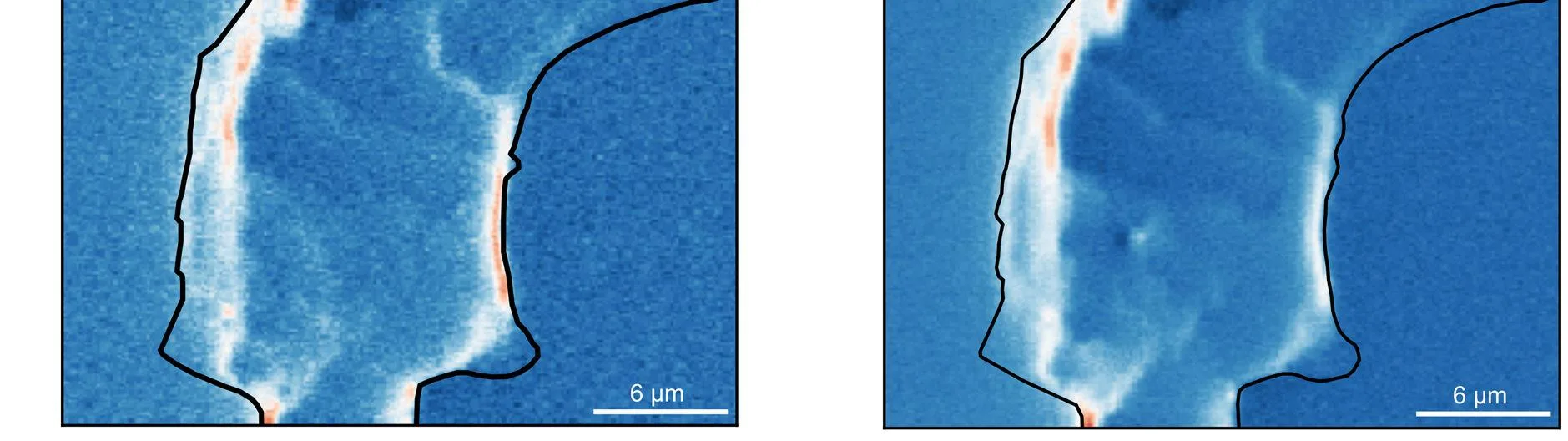
في بلورة CsV3Sb5-xSnx، التي تصبح موصلًا فائقًا عند درجات حرارة منخفضة، لا يسري التيار كتدفق متصل، بل عبر مسارات ضيقة متعرجة. ساعد في رصد هذه المسارات مجهر ماسح مزود بمستشعر حساس للمجال المغناطيسي، يلتقط أدق التيارات كما يفحص مسبار الصدى قاع البحر. الصورة تذكرنا بشبكة جداول تشق الصخر: بعض المناطق تسمح بمرور التيار، بينما تظل أخرى محجوبة.
تظهر هذه القنوات الحاملة للتيار عند درجة الحرارة نفسها التي يفقد فيها المعدن مقاومته. بعد ذلك تعيش حياتها الخاصة: لا تختفي عند التسخين ولا تتلاشى حتى لو مررنا تيارًا أقوى. سلوكها غير خطي — فالتيار لا يزداد بسلاسة بل بقفزات. يكشف هذا أن القنوات تعمل كسلسلة من وصلات جوزيفسون (مواضع يتسرب فيها التيار الفائق عبر حاجز رقيق). هذا النقل "الجدولي" يفسر بشكل طبيعي ألغازًا قديمة: لماذا يحدث في المادة تأثير صمام ثنائي تلقائي (يسري التيار بسهولة أكبر في اتجاه واحد) ومن أين تأتي وصلات جوزيفسون الداخلية.
لأول مرة، قدمت التجربة خريطة مكانية لكيفية تدفق التيار الفائق في موصلات الكاغومي الفائقة. في السابق، كان يُحكم على البنية الداخلية فقط من القياسات الكهربائية العامة — كما لو كنا نخمن تضاريس القاع من تموجات الماء. الآن نرى أن المادة نفسها تنقسم إلى خيوط موصلة، وهذا الانقسام يتعزز بالشوائب. يفتح هذا النهج الطريق لدراسة محلية لأنظمة أخرى تتعايش فيها وتتنافس أنواع مختلفة من النظام.
الملخص الأصلي
كما كتبه المؤلفون، بالإنجليزية arXiv:2606.20157
Superconductors are many-body quantum states in which current flows without dissipation. Theory predicts that supercurrents follow a relatively simple spatial pattern in both conventional and unconventional superconductors. Recent studies into the AV3Sb5 (A = Cs, K, Rb) family of Kagome superconductors indicate that CsV3Sb5 has unconventional transport properties that cannot be accounted for with these simple theories, including reports of intrinsic Josephson junctions, higher order Cooper pairing and the zero field diode effect. Attempts to interpret these findings have focused on the interplay of superconductivity with the unconventional charge density wave (CDW) order in these materials, with which superconductivity competes. A current roadblock to understanding how these kagome superconductors give rise to their intriguing properties is the lack of spatially resolved information about transport. Here we show, using a recently developed superconducting quantum interference device (SQUID) microscope, that flakes of CsV3Sb5-xSnx host a network of narrow supercurrent channels. These supercurrent channels emerge at the critical temperature and remain stable for all temperatures and currents. Their non-linear behaviour is consistent with a network of Josephson junctions linked by narrow supercurrent filaments, which naturally leads to the observed transport anomalies. Intriguingly, these observations are much weaker in undoped samples, which suggests links to the physics of charge density waves, disorder, and electronic correlations, all of which are greatly influenced by the doping strength. These results establish new frontiers for the local investigation of charge transport and competing orders in strongly correlated electron systems, and shine a new light on the anomalous transport properties of the AV3Sb5 kagome superconductors.
الكاغومي هو نمط سلة منسوجة من مثلثات متشابكة. في البلورات ذات هذا الشبك، تتصرف الإلكترونات بشكل غريب بشكل خاص بسبب الإحباط الهندسي.