الإجهاد الضوئي والهروب إلى الرمال سريع
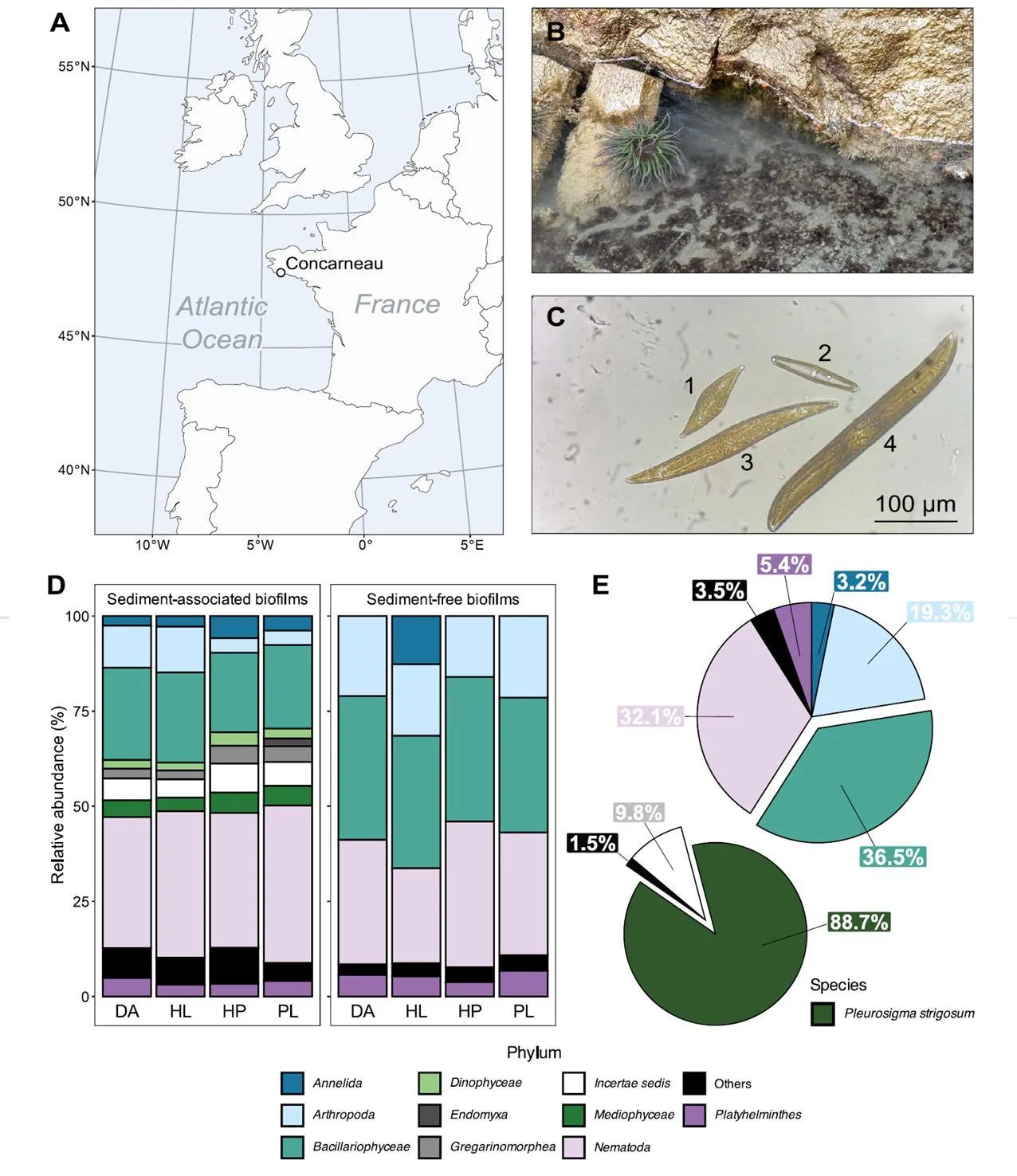
في المياه الضحلة الساحلية، حيث يتراجع الماء ويعود، تخضع الحياة لإيقاع الشمس. الغشاء البني على سطح الطين ليس مجرد قذارة، بل مجتمع كثيف من الطحالب الدياتومية الصغيرة. نهاراً تحصل على ضوء وافر للتمثيل الضوئي، لكن عندما تشتد الشمس، تبدأ عاصفة كيميائية حقيقية داخل الخلايا. فائض الطاقة يولد أنواع الأكسجين التفاعلية — شظايا جزيئية عدوانية قادرة على تدمير الآليات الدقيقة للخلية.
الطحالب ليست بلا حماية. بعضها يشغل «عدة الإصلاح» الداخلية — دورة الزانثوفيل (Xanthophyll Cycle) التي تطفئ الطاقة الزائدة قبل أن تسبب الأذى. لكن هناك طريقة أكثر جذرية: الدياتومات الصغيرة، بالتلوّي داخل غلافها المخاطي، تتعمق في الرواسب. حتى الآن كان من غير الواضح ما الذي يطلق هذه الحركة بالضبط. درس الباحثون مجتمعين: أحدهما كان قادراً على الهجرة بحرية عبر الطين، والآخر حُرم من هذه الإمكانية. عرّضوهما لثلاثة أنواع من الإجهاد: الضوء الساطع، والبلازما الباردة، والتعرض المباشر لبيروكسيد الهيدروجين.
كانت النتيجة قاطعة: عند أي نوع من الإجهاد التأكسدي، تحركت الطحالب بشكل جماعي نحو الأسفل. الإشارة الرئيسية للهروب كانت بيروكسيد الهيدروجين — نفس الجزيء الذي نستخدمه لتنظيف الجروح. لكن بعد ذلك تبدأ التفاصيل الدقيقة. عندما كانت الهجرة محظورة، تنشطت دورة الزانثوفيل بشكل حاد لدى الطحالب — الخطة «ب» لإنقاذ التمثيل الضوئي. هذا يعني أن مسارات التحكم في الحركة والحماية الداخلية منفصلة في الخلية، لكنها تعمل معاً: إذا لم تستطع الهرب، يتم تفعيل درع كيميائي معزز.
الملخص الأصلي
كما كتبه المؤلفون، بالإنجليزية arXiv:2607.03958
Diatom-dominated intertidal microphytobenthic biofilms experience daily fluctuations in irradiance, which can lead to oxidative stress within the photosynthetic apparatus through the production and accumulation of reactive oxygen species. To maintain photosynthetic efficiency, benthic diatoms have developed protective strategies, including mobilization of the antioxidant xanthophyll cycle and the ability to migrate vertically through sediments. However, mechanistic understanding of signaling pathways underlying migration remains poorly characterized. This study investigated the triggering effect of reactive oxygen species on behavioral and photophysiological responses through the analysis of lipophilic pigments and fluorescence parameters. To this end, two microphytobenthic communities, one with sediment allowing vertical migration and another without sediment restricting it, were exposed to irradiance, cold atmospheric plasma, and hydrogen peroxide stresses. Results showed a consistent downward migration response under all oxidative stresses, highlighting the key role of reactive oxygen species, especially hydrogen peroxide, in triggering this microphytobenthic behavior. Moreover, a difference was observed between the pathways involved in vertical migration and those underlying photoprotective responses. Hydrogen peroxide and cold atmospheric plasma stresses highlighted the necessity for substantial microphytobenthic migration, whereas irradiance induced a specific and controlled response involving engagement of the xanthophyll cycle, acting in synergy with the migration strategy by showing stronger activation when migration was impaired.
الطحالب الدياتومية لا تتحرك بالأسواط، بل تفرز المخاط وتنزلق عليه، مثل يرقات صغيرة.