الأفكار والأفعال: ماذا تكشف تحولات المراهقين عن الخطر سريع
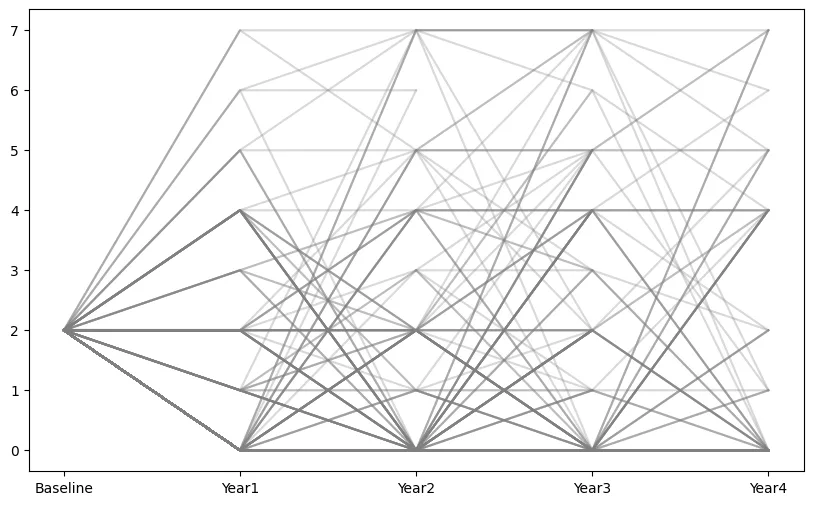
كل عام صفحة جديدة. من سن 9 إلى 13 تتغير حياة الطفل بسرعة، وكذلك المشاعر الداخلية. أخذت مجموعة من الباحثين بيانات المسح الكبير ABCD Study، حيث أخبر 11,864 مراهقًا لعدة سنوات متتالية عن أفكارهم وأفعالهم — هل كانت هناك أفكار انتحارية، هل كانت هناك أفعال، هل ألحقوا الضرر بأنفسهم دون تلك الأفكار. كل ذلك وُضع في نموذج رياضي — سلسلة ماركوف (Markov chain)، التي تصف كيف تتغير الحالة من عام إلى آخر.
ميّز النموذج ثماني حالات — من الغياب التام للشكاوى إلى السلوك الانتحاري. الاستنتاج الرئيسي: معظم الأطفال الذين أبلغوا عن أفكار أو حتى أفعال، عادوا بعد عام إلى حالة خالية من الشكاوى. هذا مطمئن. لكن عندما ظهر في الصورة إيذاء النفس دون نوايا انتحارية (المصطلح العلمي — إيذاء النفس غير الانتحاري، NSSI)، أصبح المسار مختلفًا. هؤلاء الأطفال كانوا أقل عرضة للعودة إلى الحالة "الهادئة"، وأكثر عرضة للبقاء في المناطق الخطرة، وكان مسارهم أقل قابلية للتنبؤ — أظهر النموذج عدم يقين أكبر في التحولات.
هذا يشبه توقعات الطقس في الجبال: عادة يمكن القول إن الشمس ستشرق بعد المطر، لكن إذا هبت رياح خاصة (NSSI)، فقد تبقى الغيوم لفترة طويلة، ويصبح الطريق غير مستقر. النموذج لا يتنبأ بمستقبل طفل معين، لكنه يعطي احتمالات للمجموعات — وهذا بالفعل أداة للأطباء وعلماء النفس. بمعرفة أن الانتقال من الأفكار إلى الأفعال يحدث بتردد معين، يمكن بناء المراقبة والمساعدة بشكل أكثر دقة.
هذا النهج يعمل حتى مع البيانات غير المكتملة — وفي استبيانات الصحة النفسية، الفجوات أمر لا مفر منه. تمكن العلماء من تقدير ليس فقط المخاطر، بل أيضًا استقرار المسارات، وهو ما كان يصعب التقاطه سابقًا. الخلاصة: إيذاء النفس دون نوايا انتحارية ليس مجرد علم أحمر، بل مؤشر على أن مسار الطفل أصبح أكثر فوضوية ويتطلب اهتمامًا خاصًا.
الملخص الأصلي
كما كتبه المؤلفون، بالإنجليزية arXiv:2608.02896v1
Understanding the dynamics of suicidal ideation and behaviour in youth and the factors associated with transitions from thoughts to behaviours is critical for early identification, monitoring, and prevention. Using longitudinal self-report data from the Adolescent Brain Cognitive Development (ABCD) Study (n = 11,864) spanning ages 9 to 13 years, we developed a time-inhomogeneous discrete-time Markov chain framework to model transitions across eight states defined by suicidal ideation and behaviour and the co-reported presence or absence of non-suicidal self-injury (NSSI). The framework enables inference of year-to-year and multi-year transition probabilities, quantification of transition stability and uncertainty, and statistical comparison of transition likelihoods. We identified structured but developmentally changing transition patterns, including a generally high probability of recovery to a no-report state following reports of suicidal ideation or behaviour. Co-reported lifetime NSSI marked a distinct trajectory profile characterized by both greater risk and lower predictability: children with NSSI were more likely to transition to or persist in suicidal behaviour, were less likely to recover to a no-report state, and exhibited greater uncertainty in their transition likelihoods compared to those reporting suicidal ideation and/or behaviour alone. These findings suggest that NSSI marks not only elevated risk but also greater trajectory instability during pre- to early adolescence. By estimating probabilities of escalation, remission, persistence, and fluctuation in longitudinal cohort data, the framework provides a systematic, interpretable, and scalable approach to characterising suicidal trajectory dynamics in large, sparse mental health datasets, with potential to inform future research on monitoring, early prevention, and time-varying risk in youth mental health.
عند معظم الأطفال، الأفكار الانتحارية أو حتى الأفعال لا تستمر — بعد عام لم يعودوا يبلغون عنها. هذا يشير إلى مرونة عالية للنفسية في هذا العمر، ولكن أيضًا إلى أن لحظة الخطر قد تكون قصيرة.