درع مغناطيسي للبحث عن عدم تماثل الإلكترون سريع
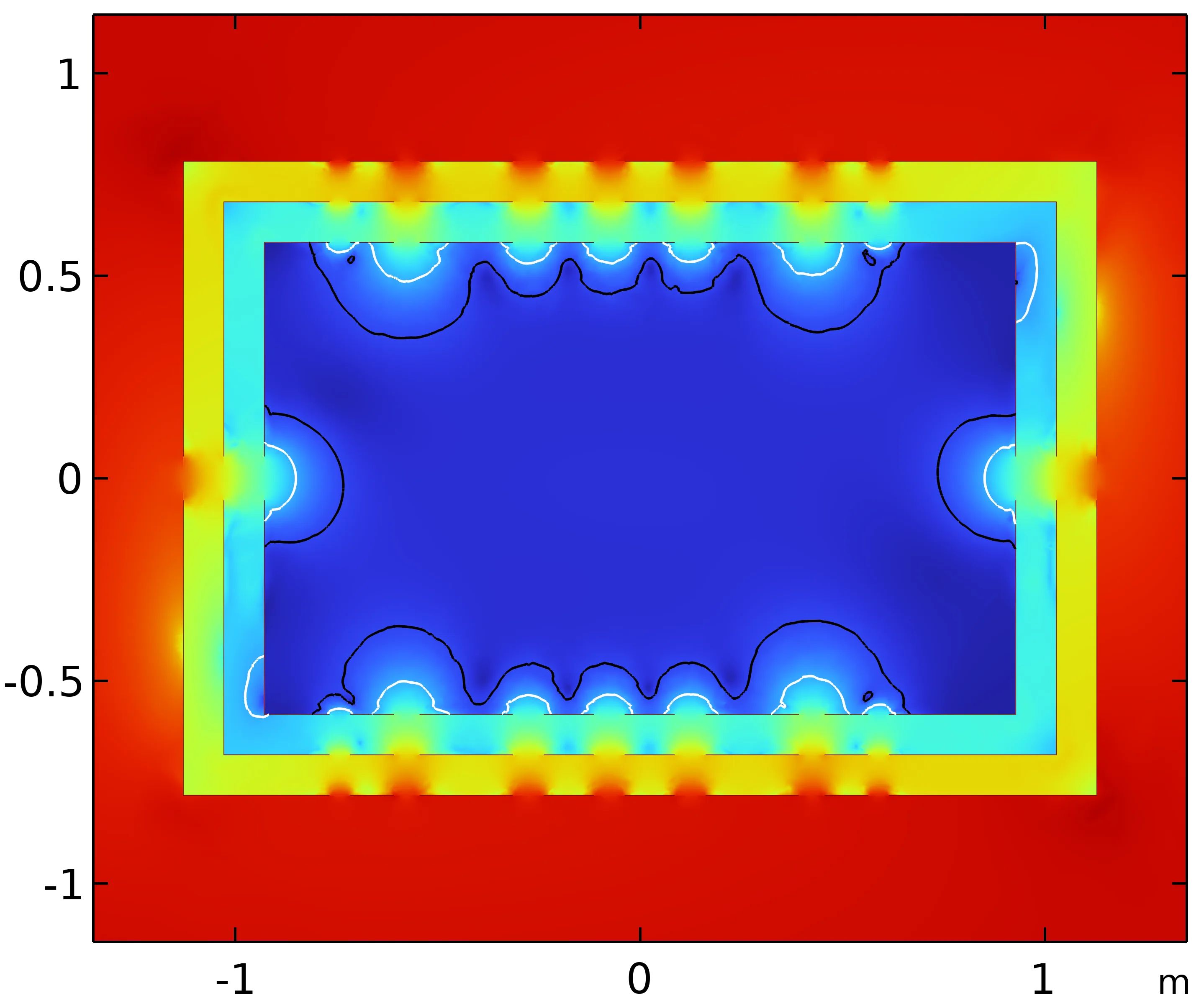
يجب أن يكون المجال المغناطيسي في هذا الجهاز منتظمًا كالزجاج: فأدنى تموج سيشوه الإشارة. صمم المهندسون ملفين يعوضان مجال بعضهما خارجيًا، وغلّفوهما بثلاث طبقات من الألواح المغناطيسية الحديدية. في الداخل حصلوا على حجم بطول متر وعرض أربعة سنتيمترات، حيث يتغير المجال بأقل من جزء من مليار من التسلا — وكأن مستوى سطح البحر لا يتقلب أكثر من سمك شعرة.
ألواح الميوميتال — وهي سبيكة تسحب خطوط المجال المغناطيسي إليها كالإسفنجة للماء — مصنوعة قابلة للفك. أكبرها يزن 19 كيلوغرامًا ويُحمل بسهولة بين شخصين. كان التحدي الأهم هو عدم ثني الألواح أثناء التجميع: فالانحناء يترك إجهادًا في المعدن ويجعله "يتذكر" المجال القديم. لذلك صُممت التثبيتات بحيث لا يحدث أي التواء.
عندما يُعكس المجال داخل الملفات لعزل الأخطاء، لا يتسرب المجال الخارجي تقريبًا. بفضل هذا، لا تتمغنط الدروع ولا تحتاج إلى إزالة المغنطة بعد كل تبديل. يبقى المجال المتبقي أقل من جزء من مليار من التسلا لمدة تصل إلى 17 ساعة، حتى لو تم تبديل المجال كل 30 ثانية.
النتيجة: مقارنة بالجهاز السابق، انخفضت الأخطاء المرتبطة بالمجال المغناطيسي بنحو 40 مرة. كما أصبحت منطقة العمل أطول بخمس مرات، وعدد طبقات الدروع ثلاثة بدلًا من خمسة. أصبح البحث عن "الانحراف" الإلكتروني أكثر ثقة الآن.
الملخص الأصلي
كما كتبه المؤلفون، بالإنجليزية arXiv:2608.11439v1
A system of actively-shielded coils and mu-metal shields is devised, constructed and shown to provide the stable and spatially uniform magnetic field needed for the ACME III electron electric dipole moment (eEDM) measurement. Two layers of current-carrying coils, enclosed within three layers of ferromagnetic shields, produce a field that varies by less than 1 nT (10 $$\uG$$) within the 1 m $$\times$$ 4.2 cm $$\times$$ 4.2 cm interior volume in which a beam of ThO molecules are probed as they precess. The demountable shields are constructed from rectangular mu-metal plates. The largest, with a mass of 19 kg and an area of 2.18 m $$\times$$ 0.75 m, is easily carried by two people and just fits within a large available annealing oven. The assembly design facilitates low-stress mounting and handling to suppress changes in the magnetic properties of the mu metal, and also provides modular access to apparatus within the coils for maintenance and upgrades. The nearly static external ambient field is reduced within the shielded precession volume by up to a factor of $$10^5$$. During the magnetic field reversals that ACME uses to suppress systematic uncertainties, the ``actively-shielded'' coil largely cancels out its external fringing field to minimize the magnetization of the mu metal. Even though the shields are only 10 cm outside the coils, shield degaussing after every magnetic field reversal is not required. The non-reversing residual field stays below 1 nT for up to 17 hours when the field is reversed every 30 seconds, for example. The measured performance, compared to the previous generation ACME II apparatus, suggests that the magnetic-field-related systematic uncertainties for ACME III will be smaller by an estimated factor of 40 despite a five times longer precession volume and the use of three magnetic shielding layers rather than five.
المويميتال حساس جدًا للتشوه لدرجة أن ضربة خفيفة بمطرقة قد تفسد خصائصه المغناطيسية، لذلك تُنقل الألواح في حاويات خاصة ولا تُسقط أبدًا.