عناقيد حجرية من فجر النظام الشمسي سريع
في أعماق الفضاء الباردة تسبح صخور أقدم من الأرض نفسها. داخل بعضها تختبئ كريات زجاجية صغيرة — تُعرف بالكوندريولات (chondrules). تشكلت هذه الكريات عندما كان قرص من الغاز والغبار يدور حول الشمس الفتية.
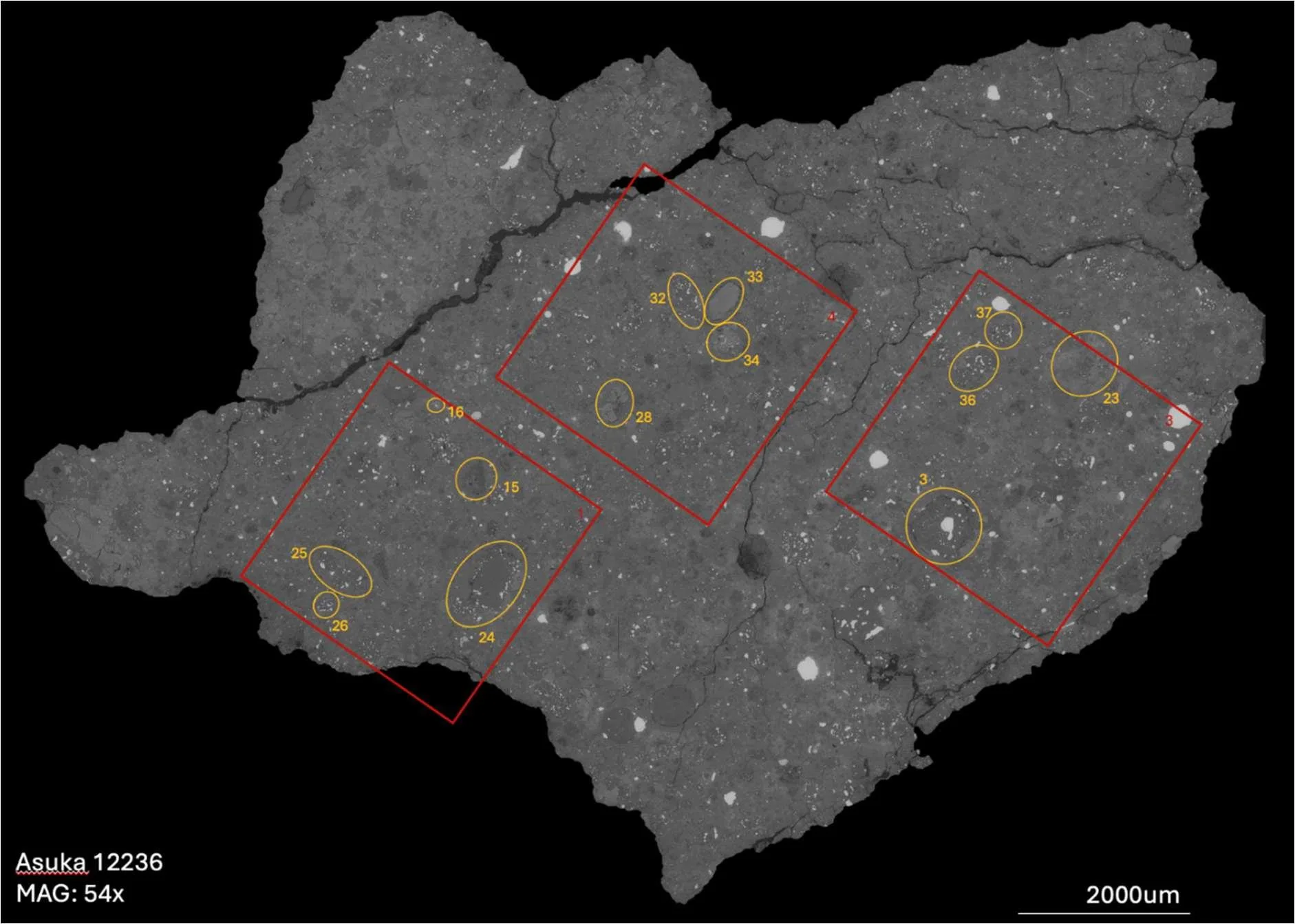
الكربونية النيازك Asuka 12236 وParis وMaribo حافظت على هذه الكريات شبه سليمة. قام العلماء بفحص 66 كوندريولًا بالأشعة السينية وقياس تركيبها الكيميائي. اتضح أن كل كوندريول يشبه قطرة متجمدة من فرن صهر. عند التسخين، تطايرت منه المعادن وبخار السيليكات. هذا البخار تكثف حوله على شكل جسيمات دقيقة تشبه الرماد الكوني.
ثم يبدأ الجزء الأكثر إثارة. العديد من الكوندريولات تلاصقت في عناقيد تشبه عناقيد العنب. في البداية تشكلت قطرات صغيرة جدًا — كريات ميكرونية. جذبت هذه القطرات الغبار والجليد إليها، ثم التحمت ببعضها. هذا يفسر لماذا يكمل تركيب الكوندريولات والغبار المحيط بها بعضهما البعض: المادة التي تبخرت من الكريات استقرت قريبًا، مثل التكاثف على زجاج بارد.
هذه الصورة تغير نظرتنا إلى ولادة الكواكب. الغبار والحصى لم تكن فقط تلتصق في كتل — بل مرت عبر النار والتبخر وإعادة التجميع. وفي هذه العناقيد الحجرية سُجلت ذاكرة كيميائية لأول ملايين السنين من عمر النظام الشمسي.
الملخص الأصلي
كما كتبه المؤلفون، بالإنجليزية arXiv:2608.12931v1
Chondrules and their associated fine-grained rims record key processes in the early protoplanetary disk, yet the links between chondrule chemistry, morphology, and matrix complementarity remain poorly constrained. We investigate the major, minor, and trace element compositions of 66 chondrules and FGRs from the relatively unaltered CM carbonaceous chondrites Asuka 12236, Paris, and Maribo, together with their 3D morphology, using LA-ICP-MS and X-ray tomography. CM chondrules record systematic metal loss and evaporation of Si-rich mesostasis, driving initially CI-like precursor compositions toward more Mg- and Si-rich bulk compositions along the CI ratio line and toward increasingly Si-poor forsteritic assemblages. GEMS-like materials in pristine CM matrices closely mirror chondrule compositions and likely represent complementary condensates derived from evaporated mesostasis. Dust accreted onto chondrules is predominantly CI-like but contains about 14 wt.% complementary condensate material represented by chondritic amorphous silicates, reconciling Mg/Si complementarity between chondrules and matrix with the preservation of primordial organics and presolar grains. Morphological observations show no significant sectioning bias, consistent with CM chondrules being dominated by agglomerates of ~100 um microspherules. Many display grape-bunch textures produced by welding of smaller chondrules with metal-rich or CI-like rims. This structure may explain the chondrule moderately volatile-element plateau at about 0.3xCI. We propose a "micro-chondrule-first" scenario in which localized heating events produced small molten droplets that subsequently accreted CI-like dust and ice, aggregated, and experienced limited aqueous alteration. These observations place new constraints on chondrule formation in the outer disk and highlight the importance of localized melting and aggregation processes.
بعض الكوندريولات تبدو مثل عناقيد العنب: عشرات الكريات الدقيقة ملتحمة معًا، وكل واحدة منها كانت يومًا قطرة ملتهبة منفصلة.