الرصاص بدلاً من الكربون: كيف نقيس النواة بدقة أكبر سريع
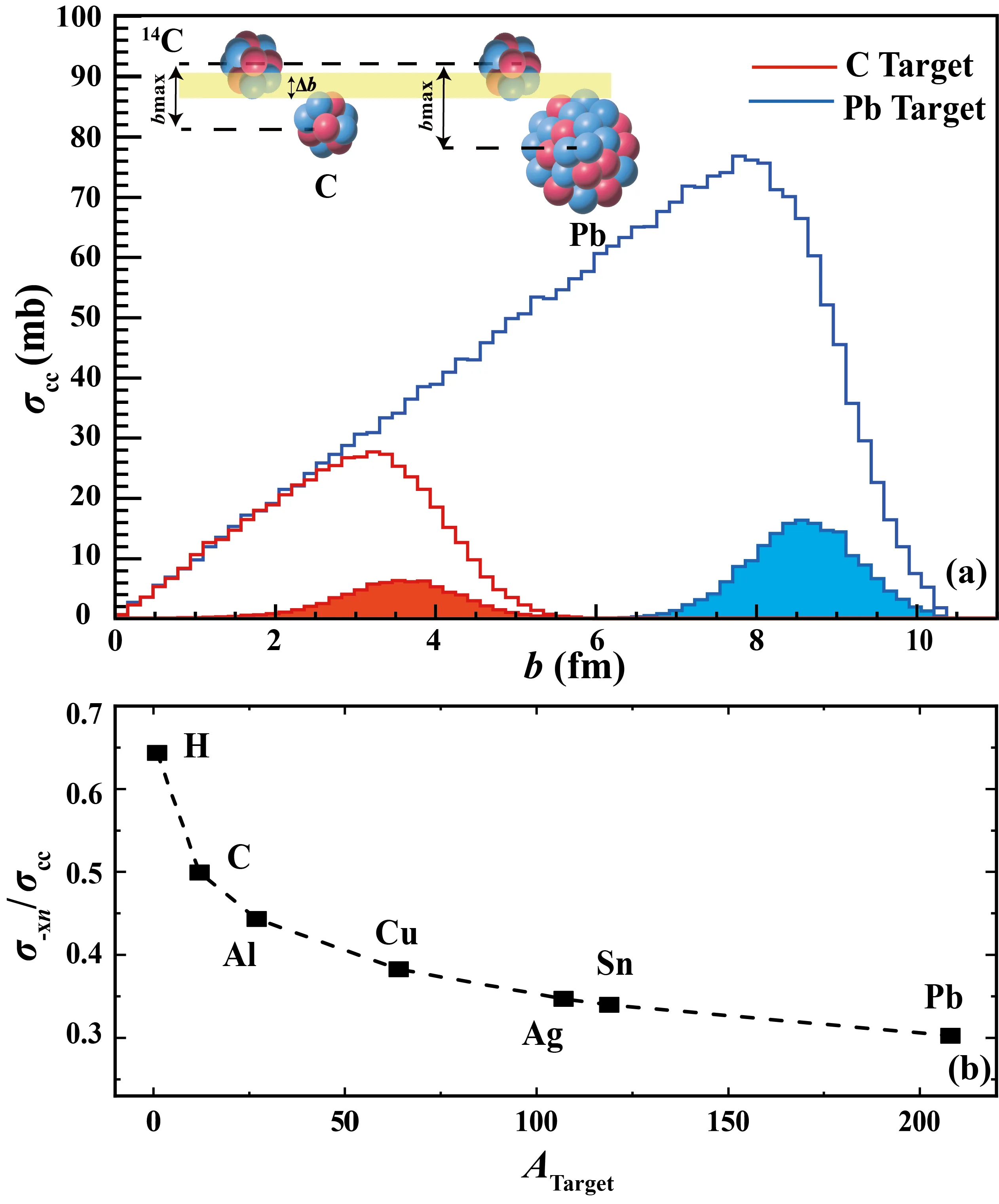
لمعرفة حجم سحابة البروتونات في النواة الذرية، يصطدم الفيزيائيون بنواة غير مستقرة بهدف ويراقبون عدد البروتونات التي فقدتها. كلما كانت النواة المقذوفة أكبر، كلما اصطدمت بأنوية الهدف أكثر وفقدت جسيمات أكثر. ولكن عندما يكون الهدف خفيفاً، مثل الكربون، تتطلب الحسابات معامل تصحيح — وإلا فإن الحجم الناتج يكون مبالغاً فيه.
في العمل الجديد، تم قياس فقدان البروتونات لـ 18 نواة من الغلاف p (من البورون إلى النيون) على أهداف من الهيدروجين والكربون والفضة والرصاص عند طاقة حوالي 240 ميجا إلكترون فولت لكل نيوكليون. وتبين أن معامل التصحيح يتناقص تدريجياً مع زيادة كتلة الهدف، ويصبح مساوياً لواحد بالنسبة للرصاص. أي أنه مع هدف الرصاص لا تكون هناك حاجة لتصحيحات على الإطلاق — الحجم المقاس يتطابق مباشرة مع الحجم الحقيقي.
يفتح هذا النهج الطريق لقياس دقيق لأنصاف أقطار البروتونات للنوى قصيرة العمر، التي تعيش لميلي ثانية. في السابق، كان يتعين إدخال معاملات تجريبية لها، والآن يمكن الاستغناء عنها — ببساطة عن طريق اختيار هدف ثقيل. وهذا مهم لفهم كيفية تنظيم النوى على حدود الاستقرار، ولحساب العمليات في النجوم حيث تولد وتموت هذه النوى.
الملخص الأصلي
كما كتبه المؤلفون، بالإنجليزية arXiv:2608.14957v1
We found that a heavy target such as Pb is most suitable for determining the proton distribution radii of unstable nuclei through charge-changing cross-section ($$\sigma_\text{cc}$$) measurements. As a heavy ion probe, low-$$Z$$ targets are routinely used to determine nucleon distribution radii of unstable isotopes. This approach has recently been extended to study proton distribution radii from $$\sigma_\text{cc}$$ measurements. However, empirical scaling factors have to be introduced to apply the Glauber models. In the present work, we systematically investigated the scaling factor using 39 new $$\sigma_\text{cc}$$ data of 18 $$p$$-shell nuclei on hydrogen, carbon, silver, and lead targets at around 240 MeV/nucleon. Together with the existing data, we reveal a universal dependence of the scaling factor on both the masses of target nuclei and the separation energies of projectile nuclei. The scaling factors decrease with increasing target-nucleus mass and converge to 1 for the highest-$$Z$$ target, making the scaling unnecessary. We conclude that instead of a low-$$Z$$ target, employing a heavy target such as Pb in $$\sigma_\text{cc}$$ measurements is the best option to determine the proton distribution radii of unstable nuclei.
تحتوي نواة الرصاص على 82 بروتوناً، ونصف قطرها أكبر بنحو 6 مرات من نصف قطر البروتون. إذا كان البروتون بحجم حبة البازلاء، فإن نواة الرصاص ستكون بحجم كرة القدم.