Meng Wang

6 articles · 30 co-authors · latest: 2026-09-09
30 citations · h-index 3 · 7 papersData: Semantic Scholar

We have retold 6 papers by this author. 1 of them with a full read. most often about: band structure, wave-particle duality, Cooper pair. 30 co-authors across our retellings.

Links in the knowledge graph
Superconductivity2026-04-031 minarXiv:2604.02843express
The Mystery of Two Gaps in a New Superconductor
Electrons in a crystal sometimes behave like a stadium crowd doing the wave: areas of higher density alternate with nearly empty ones. This wave blocks the free flow of charges — under normal conditions, the material is not superconducting. But apply pressure, and the wave vanishes, letting electrons move without resistance.

Nuclear Experiment2026-07-122 minarXiv:2607.10894express
Lead's Nuclear Shell Gets Stronger
At the center of every atom lies a nucleus — a dense ball of protons and neutrons. These particles don't just crowd together randomly; they fill strict energy levels, much like floors in a skyscraper. When a floor is completely filled, the nucleus becomes especially stable — physicists call this a magic number.
q-bio.PE2026-07-131 minarXiv:2607.11011express
How a Tumor Builds Its Family Tree
Every tumor writes its own cosmology. Its cells are galaxies, and mutations are stellar flares marking the branches of a genealogical tree. The key to its history is the rhythm of accumulating genetic typos.
The Underground Guardian of Purity
A huge pool of clear liquid is hidden deep underground. Inside, there is nothing but a pristine 'broth' that flashes with faint light when an invisible particle flies through. This is the JUNO detector—20,000 tons of liquid scintillator built to hunt for neutrinos. The main enemy of such a hunt is not darkness but its own noise.
Nuclear Experiment2026-08-151 minarXiv:2608.14957express
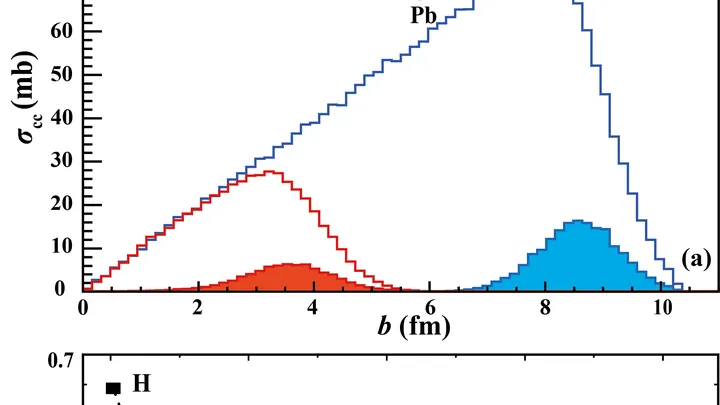
Lead Instead of Carbon: A Sharper Way to Size Up the Nucleus
To determine the size of the proton cloud in an atomic nucleus, physicists collide an unstable nucleus with a target and observe how many protons it loses. The larger the projectile nucleus, the more often it grazes target nuclei and loses particles.
Silence in a Noisy Room: Hunting a Decay Nobody Has Seen
Picture a room where hundreds of people are talking at once while you strain to hear a pin drop. That is essentially how physicists with the PandaX-4T collaboration listened for silence inside 3.7 tonnes of liquid xenon.