Dark Start: How Vacuum Decay Birthed the Big Bang ✦
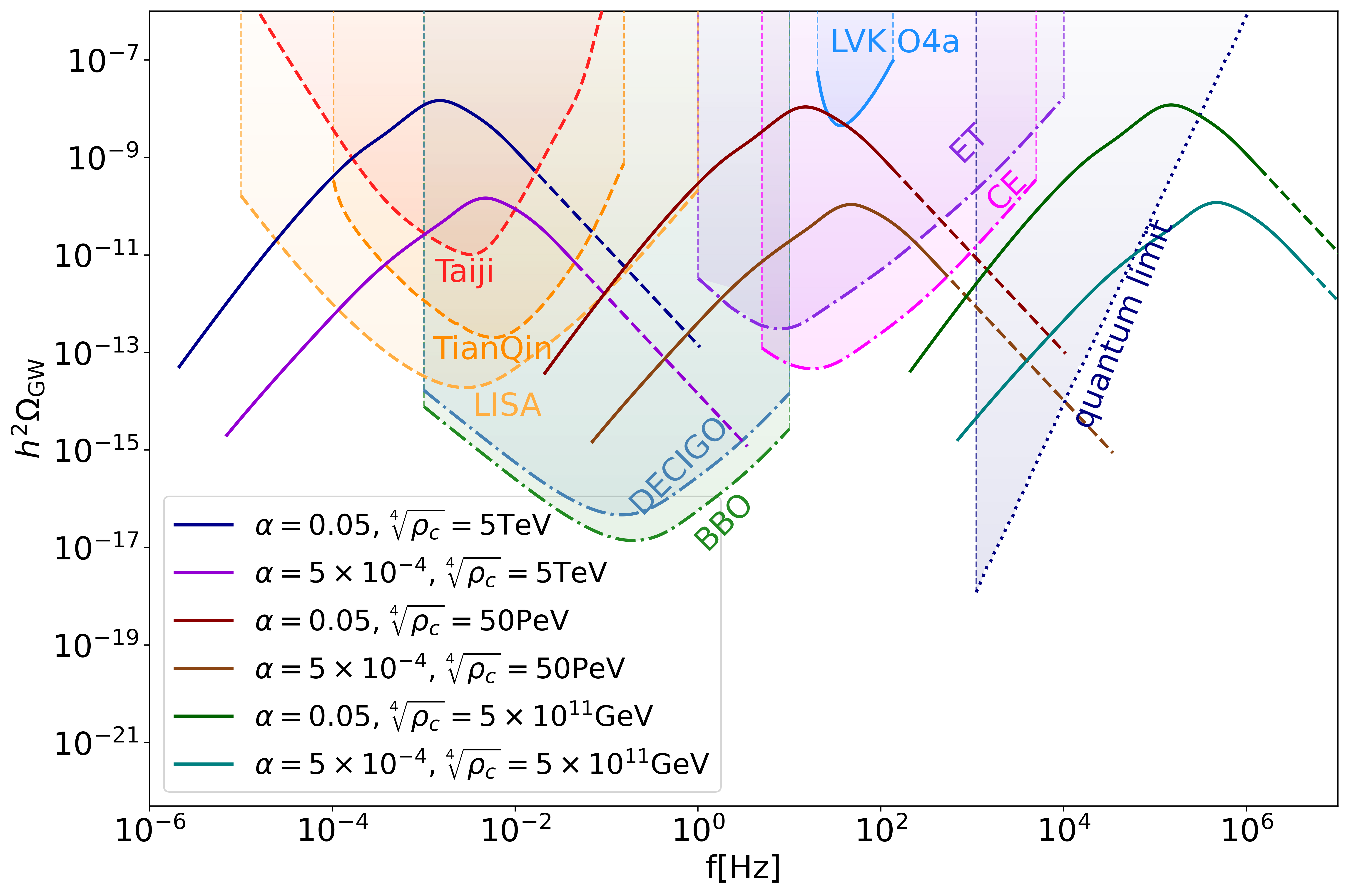
After inflation, the Universe was dark and cold, like a supercooled liquid in a flask. Expansion slowed — and a quantum flick spawned an avalanche of true-vacuum bubbles, whose walls accelerated to nearly the speed of light. Their collisions sparked a gravitational-wave hum — an echo of that first 'unsealing' that may yet reach our detectors.
🎯 If a bubble wall at rest were as thick as a football field, at a Lorentz factor of 10¹⁵ it would compress to a million times thinner than an atomic nucleus. This relativistic 'pancake' is perhaps the thinnest macroscopic object in history.
🎬 The idea of vacuum decay as a cosmic catastrophe is dramatically presented in Greg Egan's novel 'Schild's Ladder': there, a false vacuum threatens to engulf all existence. But here, the decay doesn't destroy — it creates, a kind of reverse apocalypse.