Cosmic Metamorphosis: How Quasars Shed Their Dust Cocoons
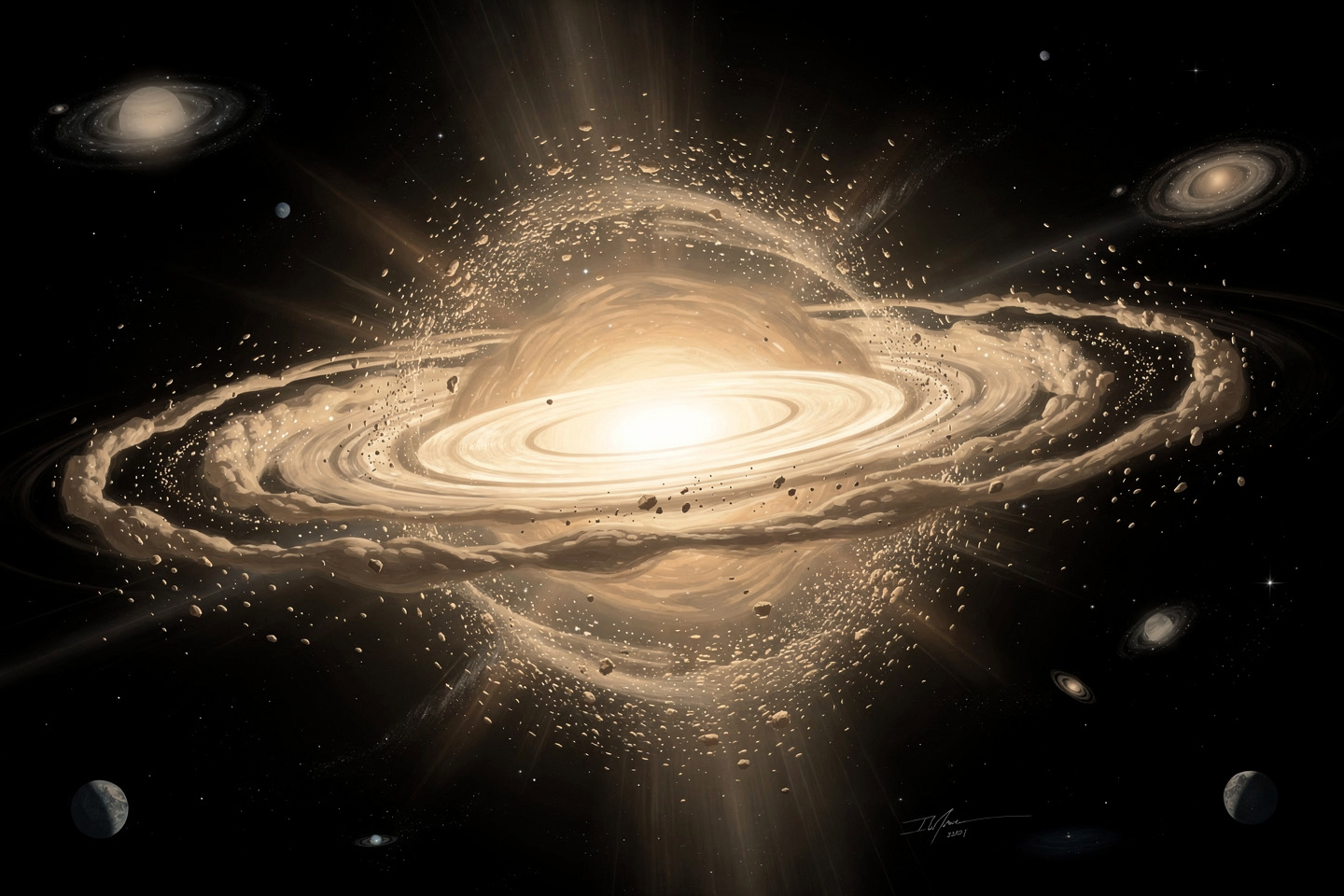
Quasars are the brightest beacons of the Universe. But some hide inside dense dust cocoons, like caterpillars before metamorphosis. For the first time, astronomers have witnessed the moment when such an object blows off its shell at 48,000 km/s, shattering dust grains into ultraviolet crumbs. In the future, these transitional forms will explain how black holes govern galaxy growth and spawn the most powerful winds in the cosmos.
🎯 One quasar, GQ 1309+2904, long stumped astronomers: its emission line was so shifted that its systemic redshift couldn't be determined until a faint extended Lyman-alpha emission from the host galaxy was noticed. That finally revealed the true distance to the dusty fugitive.
🎬 The sight of a dust cocoon tearing away evokes scenes from 'Interstellar,' where matter swirls around a giant black hole, or the motif of a superintelligence shedding shells in Lem's 'Solaris.' But here, the cosmic theater plays out according to real physical laws, without fantastic assumptions.