Les tremblements des étoiles naissantes express
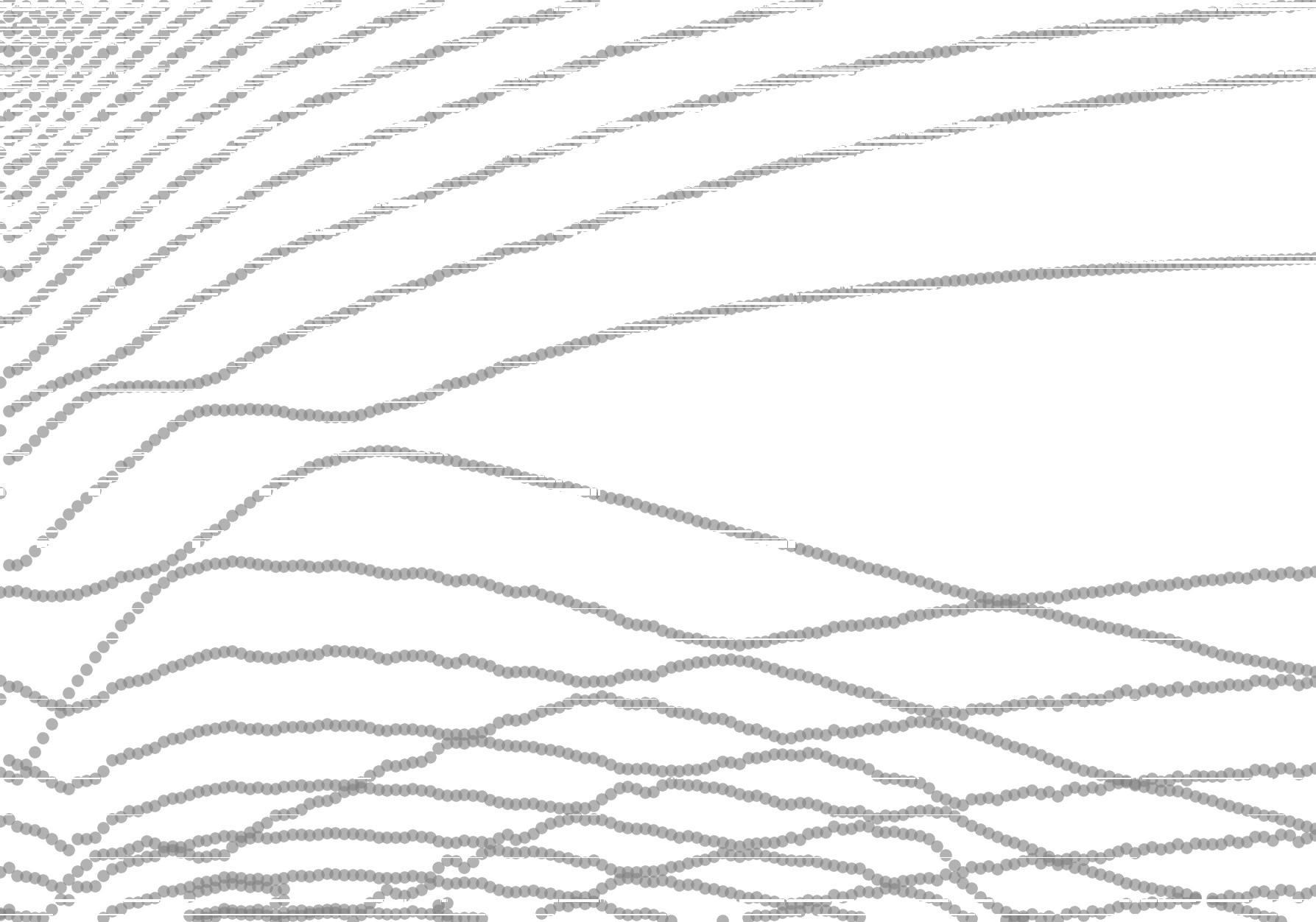
Après l'explosion d'une supernova, il reste au centre une boule dense de la taille d'une ville : une étoile à neutrons naissante. Elle est chaude, comprimée, et vibre comme une cloche après un coup. Ces vibrations – les oscillations de l'étoile – émettent une ondulation gravitationnelle que des détecteurs sensibles sur Terre pourraient capter.
Mais comment savoir ce qui vibre exactement à l'intérieur de l'étoile ? Les auteurs de l'article ont décomposé les oscillations en familles, comme un musicien décompose un accord en notes. Il s'avère que certaines oscillations vivent dans le noyau de l'étoile, d'autres à sa surface, d'autres encore dans l'onde de choc qui l'entoure. Le ton principal et aigu est celui de la surface, où la densité chute brutalement.
Cette analyse aidera les futurs détecteurs d'ondes gravitationnelles : en entendant le ton, on pourra déterminer la masse et la taille de l'étoile naissante, même sans la voir au télescope.
Résumé original
tel que rédigé par les auteurs, en anglais arXiv:2608.10264v1
Newborn proto-neutron stars (PNS) are potential targets of gravitational wave asteroseismology, the study of the (inner) structure of stars via their oscillation modes. To prepare for the eventual detection of such modes by current and future gravitational wave observatories, theoretical studies have obtained the possible spectrum of oscillations. However, there has been disagreement when it comes to identifying and classifying specific modes according to the physical mechanism that excites them. In this paper, we present a novel scheme to classify the oscillation modes of a newly born PNS surrounded by a stalled accretion shock in core-collapse supernovae (CCSNe). Our classification is physically motivated, as it is based on the energy of the restoring forces of the mode. We investigate the nature of the modes by considering the different regions of the CCSN that they stem from. We apply this scheme to a set of 28 non-rotating 1D, 2D and 3D CCSN simulations performed with two different numerical codes and using different progenitors and equations of state. In that way, we find that there are different families of f-, p- and g-modes in the system, living in different areas. More specifically, we identify two families of f- and p-modes associated with the PNS and the shock, respectively, and two families of g-modes originating from the two convectively stable regions, one in the PNS core and one near its surface. We also find that the dominant high-frequency emission mode is the f-mode of the PNS, associated with the strong density gradient at its surface. Our classification procedure is automatic, performs consistently for all the models considered, and paves the way to systematic studies of the dependence of the mode frequencies on the PNS properties, with direct application to parameter estimation from future observations of gravitational wave signals.
Une étoile à neutrons naissante vibre à des fréquences de plusieurs milliers de hertz – c'est plus aigu que la note la plus haute d'un piano.
Dans le film « Interstellar », les ondes gravitationnelles aidaient les héros, mais là, elles étaient créées par des trous noirs, alors qu'ici, ce sont des étoiles naissantes qui vibrent.