الألومنيوم-26: بيانات جديدة تغيّر الصورة سريع
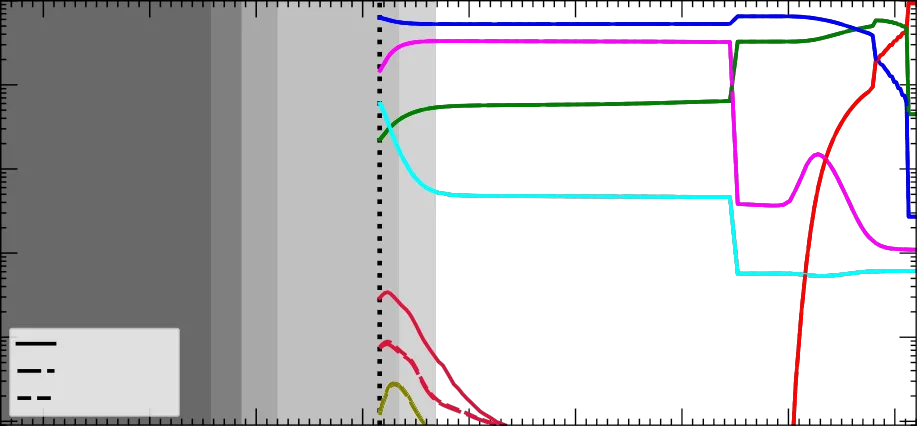
الألومنيوم-26 هو نظير لا يعمر طويلاً بالمقاييس الكونية: حوالي مليون سنة فقط. عندما ينفجر نجم ضخم كمستعر أعظم، يقذف هذا الألومنيوم إلى الفضاء. لاحقًا، يتحلل باعثًا أشعة غاما يمكن التقاطها بالتلسكوبات.
أعاد الباحثون حساب كمية الألومنيوم-26 التي يجب أن يقذفها نجم كتلته 20 كتلة شمسية. استخدموا بيانات أحدث وأدق عن التفاعلات النووية التي ينتج فيها الألومنيوم-26 ويتفكك. وتبين أن الكمية المقذوفة تتغير بثلاثة أضعاف مقارنة بالحسابات القديمة. الأمر أشبه بأن تعدّ كعكة حسب وصفة، ثم تكتشف أنك بحاجة إلى ثلاثة أضعاف الدقيق.
قارن العلماء أيضًا نتائجهم ببيانات من النيازك. فحصوا نسب الألومنيوم-26 إلى نظائر أخرى قصيرة العمر. واتضح أن نجمًا ضخمًا واحدًا لا يمكنه تفسير كل هذه النسب. يبدو أن هناك حاجة إلى مصدر آخر، مثل نجم آخر انفجر أيضًا ولوّث السحابة التي تشكل منها النظام الشمسي لاحقًا.
الملخص الأصلي
كما كتبه المؤلفون، بالإنجليزية arXiv:2601.05672
Over the last three years, the rates of all the main nuclear reactions involving the destruction and production of $$^{26}$$Al in stars ($$^{26}$$Al(n, p)$$^{26}$$Mg, $$^{26}$$Al(n, $$\alpha$$)$$^{23}$$Na, $$^{26}$$Al(p, $$\gamma$$)$$^{27}$$Si and $$^{25}$$Mg(p, $$\gamma$$)$$^{26}$$Al) have been re-evaluated thanks to new high-precision experimental measurements of their cross sections at energies of astrophysical interest, considerably reducing the uncertainties in the nuclear physics affecting their nucleosynthesis. We computed the nucleosynthetic yields ejected by the explosion of a high-mass star (20 Msun, Z = 0.0134) using the FRANEC stellar code, considering two explosion energies, 1.2 10$$^{51}$$ erg and 3 10$$^{51}$$ erg. We quantify the change in the ejected amount of $$^{26}$$Al and other key species that is predicted when the new rate selection is adopted instead of the reaction rates from the STARLIB nuclear library. Additionally, the ratio of our ejected yields of 26Al to those of 14 other short-lived radionuclides (36Cl, 41Ca, 53Mn, 60Fe, 92Nb, 97Tc, 98Tc, 107Pd, 126Sn, 129I, 36Cs, 146Sm, 182Hf, 205Pb) are compared to early solar system isotopic ratios, inferred from meteorite measurements. The total ejected 26Al yields vary by a factor of ~3 when adopting the new rates or the STARLIB rates. Additionally, the new nuclear reaction rates also impact the predicted abundances of short-lived radionuclides in the early solar system relative to $$^{26}$$Al. However, it is not possible to reproduce all the short-lived radionuclide isotopic ratios with our massive star model alone, unless a second stellar source could be invoked, which must have been active in polluting the pristine solar nebula at a similar time of a core-collapse supernova.
يُستخدم الألومنيوم-26 لتأريخ الأحداث في النظام الشمسي المبكر: فكميته في النيازك تخبرنا متى تشكلت أول أجسام صلبة.
في رواية آرثر كلارك «موعد مع راما»، يلاحظ الفلكيون إشعاع غاما شاذًا من الألومنيوم-26، مما يلمح إلى عمليات غير عادية في الفضاء.