نبض الشمس في صمت ما بين النجوم سريع
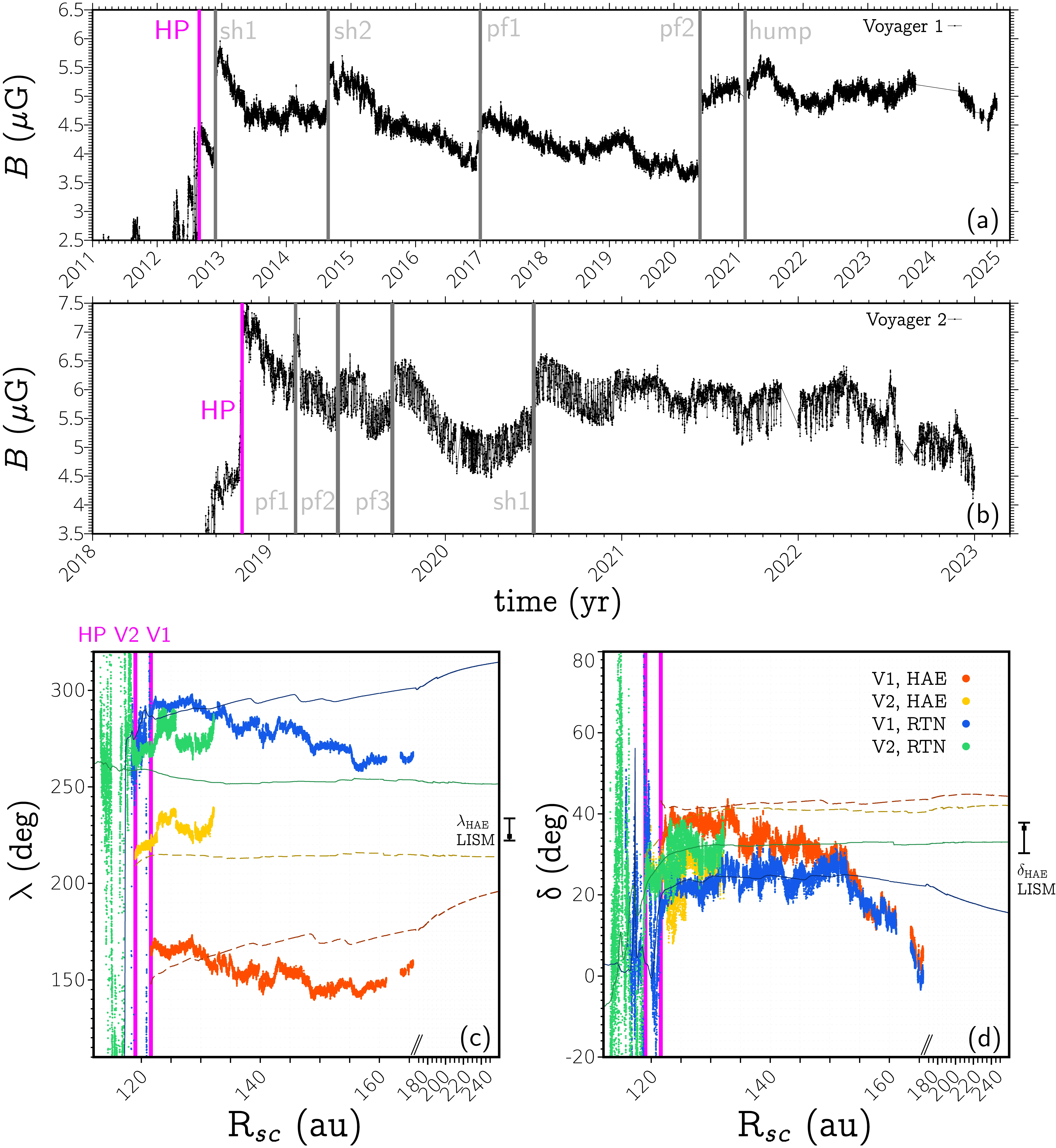
يطير جهازان قديمان، أُطلقا في عام 1977، عبر الفضاء بين النجمي — المنطقة التي ينتهي عندها تأثير الشمس. الشمس لا تضيء فحسب؛ بل تنفث باستمرار تيارًا من الجسيمات المشحونة يشكل حول نظامنا فقاعة عملاقة تُعرف بالغلاف الشمسي (heliosphere). خلف هذه الحدود، على مسافة نحو 150 وحدة فلكية (الوحدة الواحدة هي المسافة من الأرض إلى الشمس)، شعر «فوياجر-1» باهتزاز غريب. في عام 2020، سجلت الأجهزة ارتفاعًا حادًا في المجال المغناطيسي، ثم «سنامًا» طويلًا وتقوية للمجال استمرت شهورًا.
بنى العلماء نموذجًا حاسوبيًا يحاكي سلوك الرياح الشمسية واصطدامها بالوسط بين النجمي. واتضح أن الاهتزاز هو موجة انضغاط وُلدت من الشمس نفسها. تعيش شمسنا دورات تستمر 11 عامًا: تارة تهدأ، وتارة تغلي بالبقع والتوهجات. عندما يزداد النشاط، تصبح الرياح الشمسية أكثر كثافة وأسرع، وهذه الموجة، مثل قرع طبلة بطيء، تنتشر حتى حدود الغلاف الشمسي. وعند اصطدامها بها، تضغط الغاز بين النجمي والمجال المغناطيسي — وهذا بالضبط ما رصده «فوياجر-1».
أظهر تحليل الاضطراب (turbulence) — التذبذبات الصغيرة الفوضوية للمجال — أنها تخفت مع المسافة. حتى 165 وحدة فلكية، لا تزال التموجات بفترة أقل من 10 أيام ملحوظة، لكن التموجات القصيرة جدًا (أقل من ساعة) كادت تختفي بعد عام 2022. هذا لا يعني أن الوسط تغير؛ بل إن الموجة ضعفت، مثل تموجات الماء بعد رمي حجر. «فوياجر-2»، الذي يطير في اتجاه مختلف، من المتوقع أن يواجه عدة موجات من هذا القبيل حتى عام 2026، ثم ضربة قوية من الدورة الشمسية التالية حوالي عام 2030. المسبار «نيو هورايزنز»، الذي يلحق بهما حاليًا، سيعبر حدود موجة الصدمة الشمسية في عام 2031 على مسافة نحو 80 وحدة فلكية.
الملخص الأصلي
كما كتبه المؤلفون، بالإنجليزية arXiv:2602.10446
Voyager spacecraft (V1 and V2) provide unique in situ measurements of perturbations propagating beyond the heliopause through the very local interstellar medium (VLISM), including the shocks and pressure fronts whose origin is debated. In particular, a jump in magnetic field strength, observed by V1 in 2020.4 at 149.3 au from the Sun, was followed by a distinct "hump" and persistently strong magnetic field, both requiring theoretical explanation. This paper offers an interpretation of those observations using a self-consistent, MHD model of the solar wind - LISM interaction driven by the OMNI and interplanetary scintillation data combined with a turbulence analysis of Voyager data. Our simulations convincingly demonstrate that global, solar-cycle-driven compressions, on hitting the heliopause, can reproduce those puzzling V1 observations. They appear to be associated with solar cycle 24, whereas similar interstellar magnetic field structures can occur once per cycle. The turbulence analysis reveals time-dependent magnetic compressibility that persists up to 165 au at scales below 10 days. Turbulence intermittency at scales below 1 hour is mostly confined to specific intervals, possibly associated with a broad foreshock region. The apparent disappearance of intermittency since 2022 reflects the turbulence weakening rather than a fundamental change in VLISM properties. We predict that V1 will record relatively strong magnetic field strengths until $$\sim$$2030, followed by weaker, infrequent perturbations. At V2, we expect multiple solar-driven compressions before 2026, followed by a major event induced by solar cycle 25 around 2030. New Horizons is expected to cross the termination shock at 80$$\pm$$2 au in 2031.
يقع «فوياجر-1» حاليًا على مسافة تزيد عن 24 مليار كيلومتر من الأرض — وتستغرق إشارته الراديوية ما يقرب من يوم كامل للوصول إلينا.
في فيلم «ستار تريك: الفيلم السينمائي»، يصبح المسبار «فوياجر» كائنًا واعيًا ويعود إلى الأرض — أما المسباران الحقيقيان فلا يزالان يرسلان لنا إشارات من العتمة.