ظلٌّ بدل الصورة الكاملة سريع
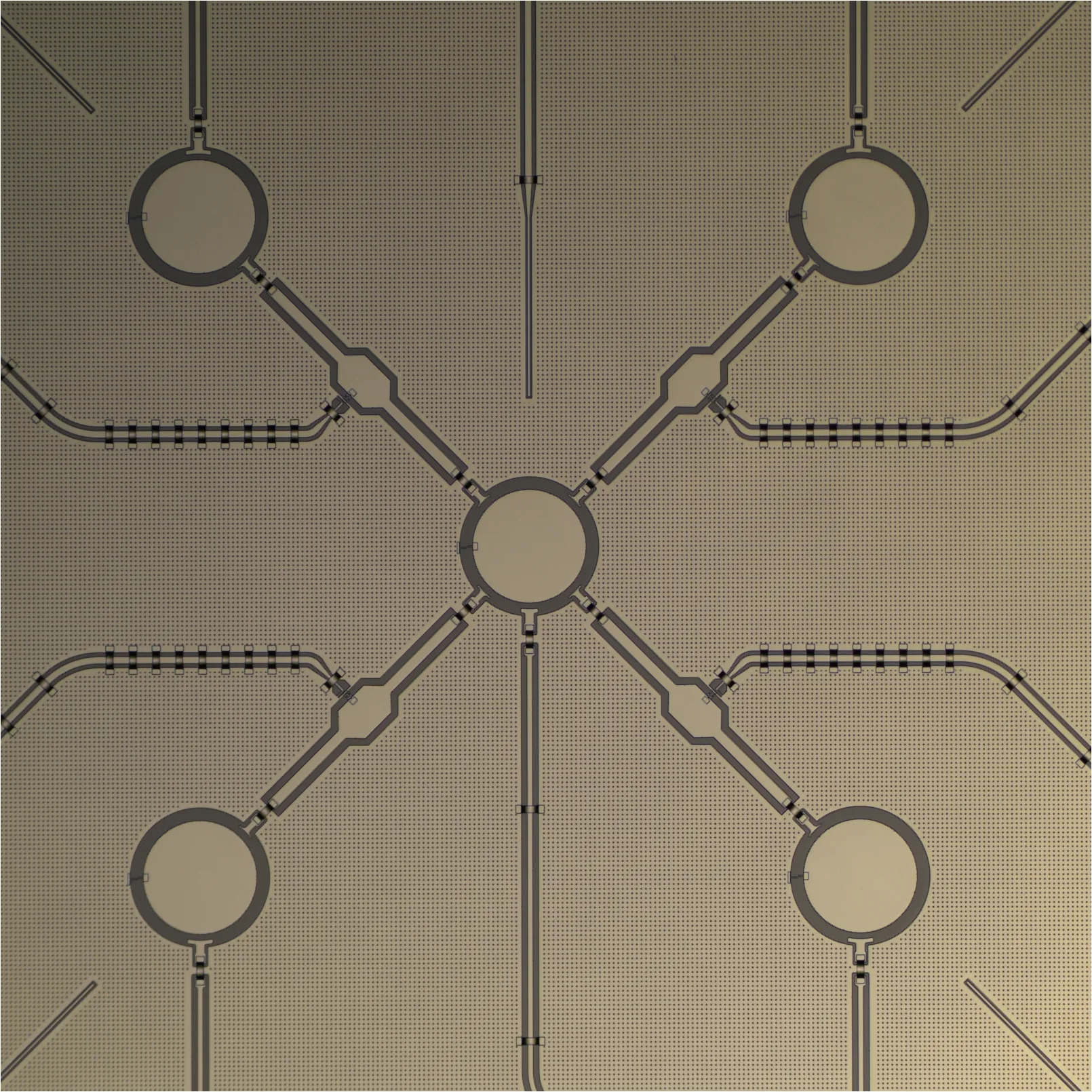
يشبه المعالج الكمومي أوركسترا حيث يجب على كل عازف (كيوبت) أن يعزف دوره بدقة في الوقت المحدد. لكن في الواقع، تختل الآلات: تفقد الكيوبتات طاقتها، وتتشوه تفاعلاتها. لضبط هذه الأوركسترا، يجب أولاً تسجيل كيف تبدو الآن، أي قياس معاملات الضوضاء والروابط. الطريقة المعتادة هي إجراء "توموغرافيا" كاملة: استعراض جميع الحالات الممكنة وتسجيل النتائج. لكن مع كل كيوبت جديد يتضاعف عدد هذه الحالات، وبالنسبة لخمس كيوبتات يستغرق ذلك 58 ساعة من القياسات المتواصلة.
طبق مؤلفو العمل طريقة التوموغرافيا الظلية. بدلاً من الاستعراض الكامل، يقومون بقياسات عشوائية، كما لو أن قائد الأوركسترا لا يستمع إلى كل عازف على حدة، بل إلى مقاطع عشوائية من النوتة بأكملها، ثم يعيد بناء الصورة العامة من هذه الشظايا. اتضح أنه بالنسبة لمعالج من كيوبتات فائقة التوصيل، تعطي هذه "الظلال" العشوائية نفس المعلومات عن الضوضاء والروابط التي يعطيها الاستعراض الكامل، ولكنها تتطلب قياسات أقل بكثير. في التجربة على خمس كيوبتات، انخفض الوقت من 58 ساعة إلى 9 ساعات.
الفائدة العملية واضحة: كلما أسرعنا في معرفة كيف "اختل" الحاسوب الكمومي، أسرعنا في معايرته وجعله يحسب دون أخطاء. بالنسبة للمعالجات المتنامية ذات العشرات والمئات من الكيوبتات، هذا ليس مجرد ترف، بل ضرورة. لم تعد الطريقة الظلية تبدو غريبة، فهي تعمل على أجهزة حقيقية وتعطي أرقاماً دقيقة.
الملخص الأصلي
كما كتبه المؤلفون، بالإنجليزية arXiv:2602.14694
Spurious couplings and decoherence degrade the performance of solid-state quantum processors, demanding careful design, calibration, and mitigation protocols. These strategies often rely on characterization of the idling processor, but tomographic recovery of (time-independent) Lindblad dynamics scales exponentially with qubit count. Here, we experimentally benchmark and demonstrate that randomized ("shadow") measurements accelerate Lindblad tomography on a superconducting transmon processor. We first implement extensible Lindblad tomography, which estimates Lindblad parameters using a complete tomographic dataset, and use it as a baseline to benchmark a shadow tomography approach, shadow Lindblad tomography. The shadow approach recycles randomized configurations to estimate the same Lindblad parameters using far fewer resources under physically motivated locality assumptions. We experimentally verify these assumptions in our processor by implementing the protocols on one- and three-qubit subsystems; here, shadow Lindblad tomography reproduces extensible Lindblad tomography within uncertainties while using exponentially fewer configurations. Leveraging this efficiency, we apply shadow Lindblad tomography to the full five-qubit processor and recover all single qubit dissipation and two-qubit coupling parameters in 9 hours of acquisition time compared to an estimated 58 hours for extensible Lindblad tomography. Additionally, our shadow implementation is compatible with conventional Gaussian error propagation, avoiding the use of median-of-means estimators. Together, these results demonstrate how randomized shadow tomography protocols can be practically implemented to learn quantum processor dynamics at an increasing qubit count.
تذكرنا القياسات العشوائية في ميكانيكا الكم باستطلاع الرأي العام: بدلاً من سؤال كل فرد في البلد، يُسأل عينة عشوائية ويُحكم على الجميع بناءً عليها.