كيف تجعل الإبر النسيجَ يشرب؟ سريع
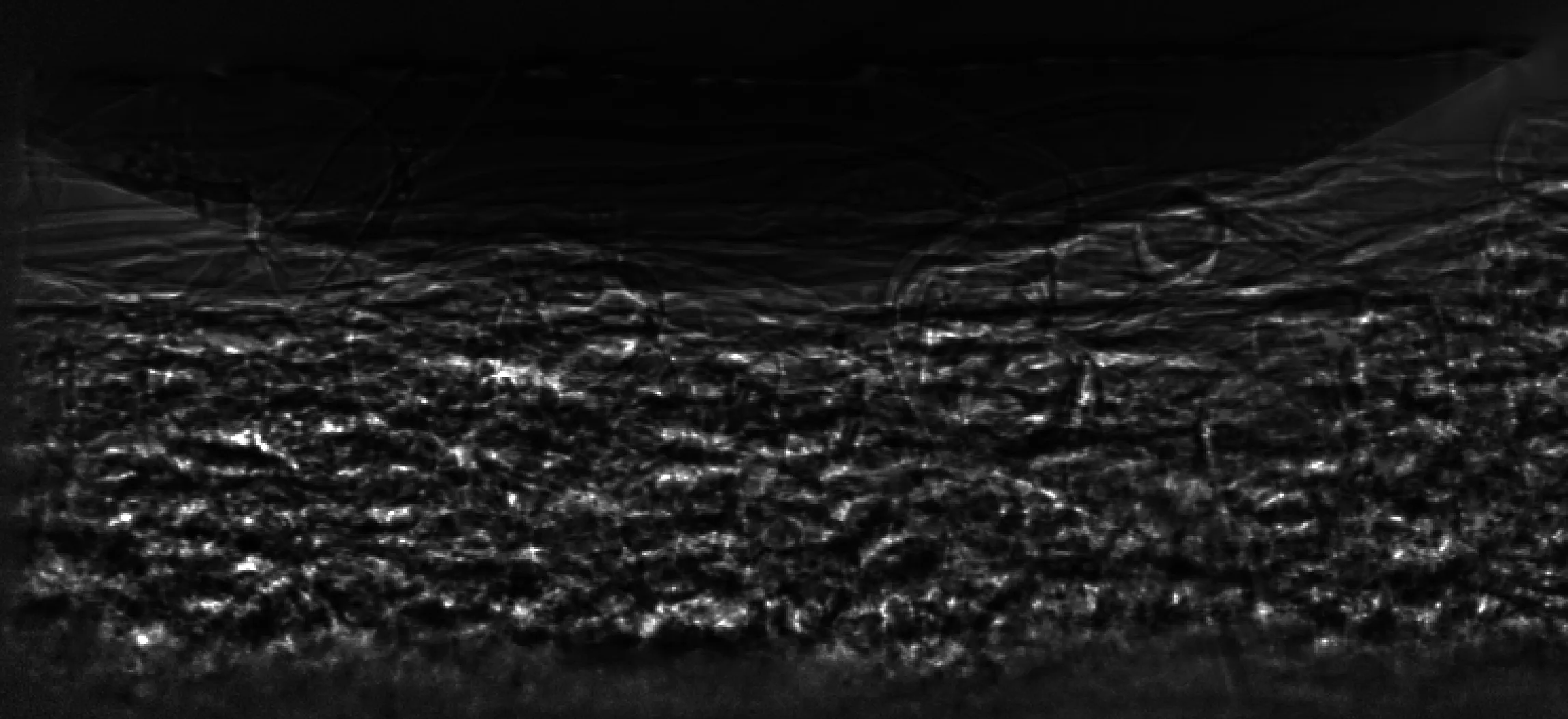
يشبه اللباد كتلة صوف متشابكة، لكن تحت أشعة إكس تظهر فيه مسارات خفية. عندما تسقط قطرة ماء على هذه المادة، لا تنتشر على السطح فحسب، بل يغوص جزء منها إلى العمق، مثل الماء في ورق النشاف. ولأول مرة، التقط العلماء هذه العملية بكاميرا أشعة إكس تلتقط مئات الصور في الثانية.
السر في الإبر. يُصنع اللباد بثقب طبقة الألياف بإبر مسننة. كل إبرة تعلق بالألياف وتسحبها إلى الأسفل، مثل خطاف الحياكة. وكلما زاد عدد الثقوب، زادت الألياف التي تقف عموديًا، فتنشأ «أعمدة» يندفع الماء عبرها إلى العمق أسرع بعشرات المرات من المادة المتشابكة العادية.
كان يُظن سابقًا أن اللباد الكثيف يجب أن يمرر الماء بشكل أسوأ، لأنه يحتوي على فراغات أقل. لكن التجربة أظهرت العكس: إذا عملت الإبر لفترة أطول، زادت سرعة الامتصاص رغم أن المادة نفسها أصبحت أكثر كثافة. الأمر كله يتعلق باتجاه الألياف — فالقنوات العمودية تعمل مثل المصاصات، وليس مثل المتاهة.
الآن يمكن لمصنعي المرشحات والعوازل والمنسوجات الأرضية ضبط «عطش» المادة ببساطة عن طريق تغيير عدد ثقوب الإبرة. إنه مثل ضبط الصنبور: إبر أكثر — امتصاص أسرع، وإبر أقل — امتصاص أبطأ.
الملخص الأصلي
كما كتبه المؤلفون، بالإنجليزية arXiv:2602.15176
Nonwoven fibre networks underpin filtration, insulation and geotextiles, where liquid uptake, redistribution and release govern performance. In needle-punched felts, barbed needles mechanically entangle fibres and partially reorient them toward the thickness direction ($$z$$), creating out-of-plane "pillars" and heterogeneity. While mechanical and structural consequences of needling are well documented, dynamic $$z$$-direction transport in partly saturated networks remains difficult to access due to opacity and sub-second timescales. Here we combine micro-CT ($$\mu$$CT) of dry structure with time-resolved X-ray radiography during droplet addition to quantify through-thickness transport as a function of saturation and needling intensity, using a compact Washburn-type descriptor for dynamics. Results show an exponential dependence of $$z$$-directional liquid transport on saturation, consistent with previous models for in-plane relative permeability of nonwoven networks. Additionally, increased needle-punch intensity reorients fibres toward the $$z$$-direction, forming preferential flow pathways that enhance through-thickness transport, even as single-phase permeability decreases. These findings underscore needle-punch as a key design parameter for tuning liquid transport in nonwoven fibre networks. The approach provides an experimental and modelling framework for dynamic, capillarity-driven transport in opaque fibrous materials.
تصنع إبر اللباد بمسننات مثل سنارة الصيد، بحيث تعلق بالألياف وتقلبها بدلًا من مجرد ثقبها.