كيف تُدوَّم الذرات دون برودة أو مغناطيس سريع
لترتيب لفات الجسيمات في اتجاه واحد، عادةً ما يبرّد الفيزيائيون المادة إلى ما يقارب الصفر المطلق ويضعونها في مجال مغناطيسي قوي. هذا مكلف وضخم.
الطريقة الجديدة تشبه ضبط عدد كبير من القمم بنقرة خفيفة: الجزيئات الوسيطة ترتبط مؤقتًا بالذرات المستهدفة وتنقل إليها انتظامها. تُسمى الطريقة SABRE — تضخيم الإشارة عبر التبادل العكسي. فيها ينقل الهيدروجين من غاز البارا مغنطته إلى جزيئات الهدف مباشرة في المحلول، عند درجة حرارة الغرفة.
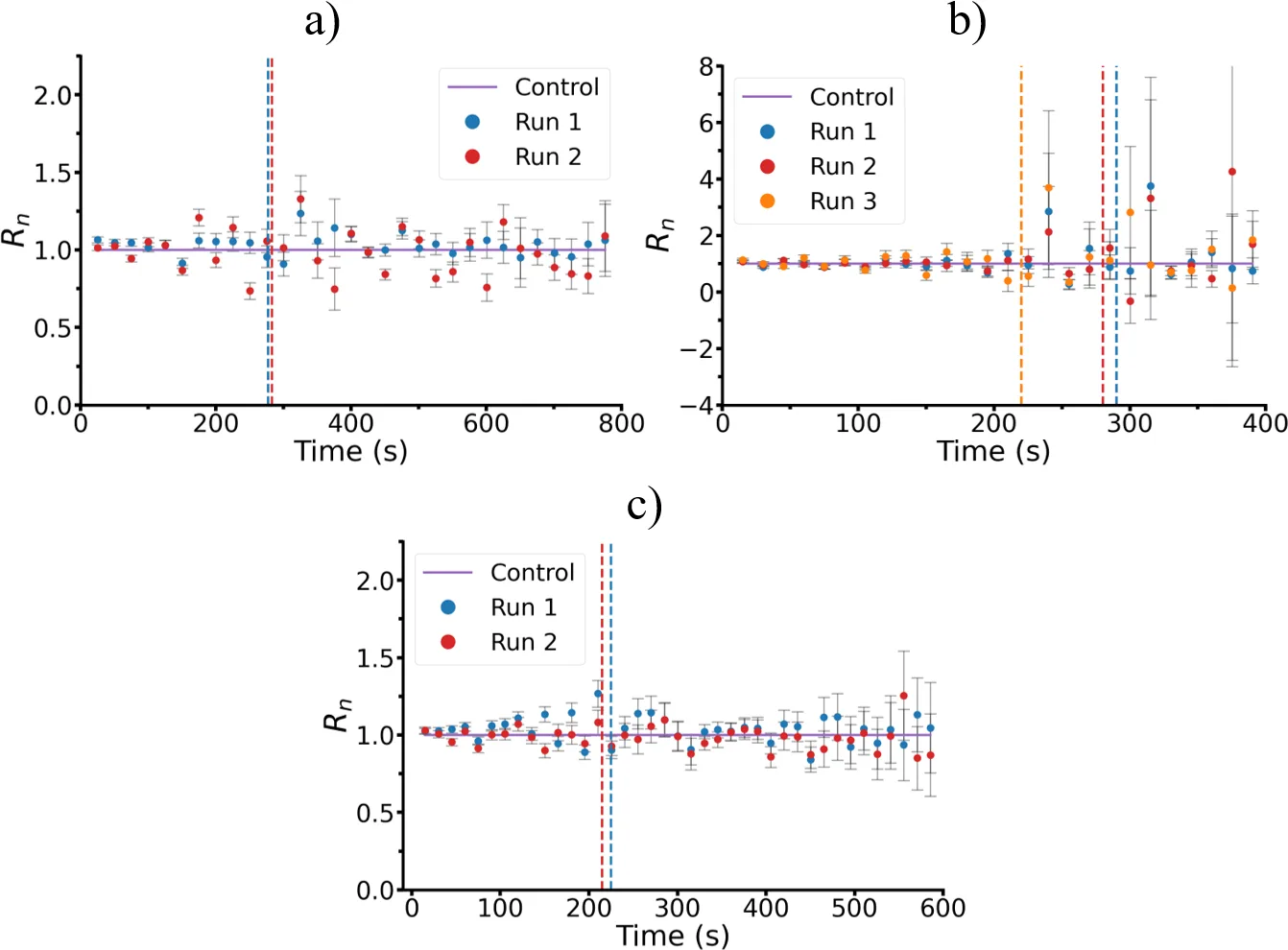
هذه المتانة مهمة للتجارب التي يكون فيها الهدف في مسار الحزمة الجسيمية مباشرة. إذا كانت المادة لا تفقد استقطابها تحت التشعيع، يمكن استخدامها كوسط نشط للكاشف — مثل وميضي (scintillator) أو باعث شيرينكوف.
تستمر القمم في الدوران بثبات حتى تحت وابل من الضربات. هذا يعني أن المبرّدات والمغناطيسات باهظة الثمن قد تُستبدل قريبًا بعملية كيميائية بسيطة.
الملخص الأصلي
كما كتبه المؤلفون، بالإنجليزية arXiv:2603.08750
Spin-polarized solid targets have underpinned many recent key advances in nuclear and particle physics, yet traditional methods to produce them face significant limitations due to the high cost and demanding cryogenic and magnetic field requirements. These factors constrain experimental geometries and present challenges in intense radiation environments where depolarization and materials damage can occur. We present the first results assessing the capabilities of the chemical hyperpolarization (ChHP) method Signal Amplification By Reversible Exchange (SABRE) to act as the polarization method to produce targets or active detector media. We show by using in-beam measurements that there is no depolarizing effect observed with the SABRE-polarized material in the A2 photon beam at the Mainzer Mikrotron (MAMI), as well as showing the resilience of such media to radioactive doses of up to \SI{3}{\kilo\gray}. We also illustrate the capabilities for using SABRE-polarized material as a scintillation or Cherenkov detector.
جرعة 3 كيلوغراي مميتة للإنسان، لكنها تمر على المحلول ذي الجزيئات المستقطبة بشكل شبه غير ملحوظ.