مستشعر موجات الراديو باستخدام البلورات السائلة سريع
تحيط بنا موجات الراديو، لكن العين لا تراها. مستشعر جديد بحجم الظفر يحولها إلى بقعة ملونة على شاشة صغيرة.
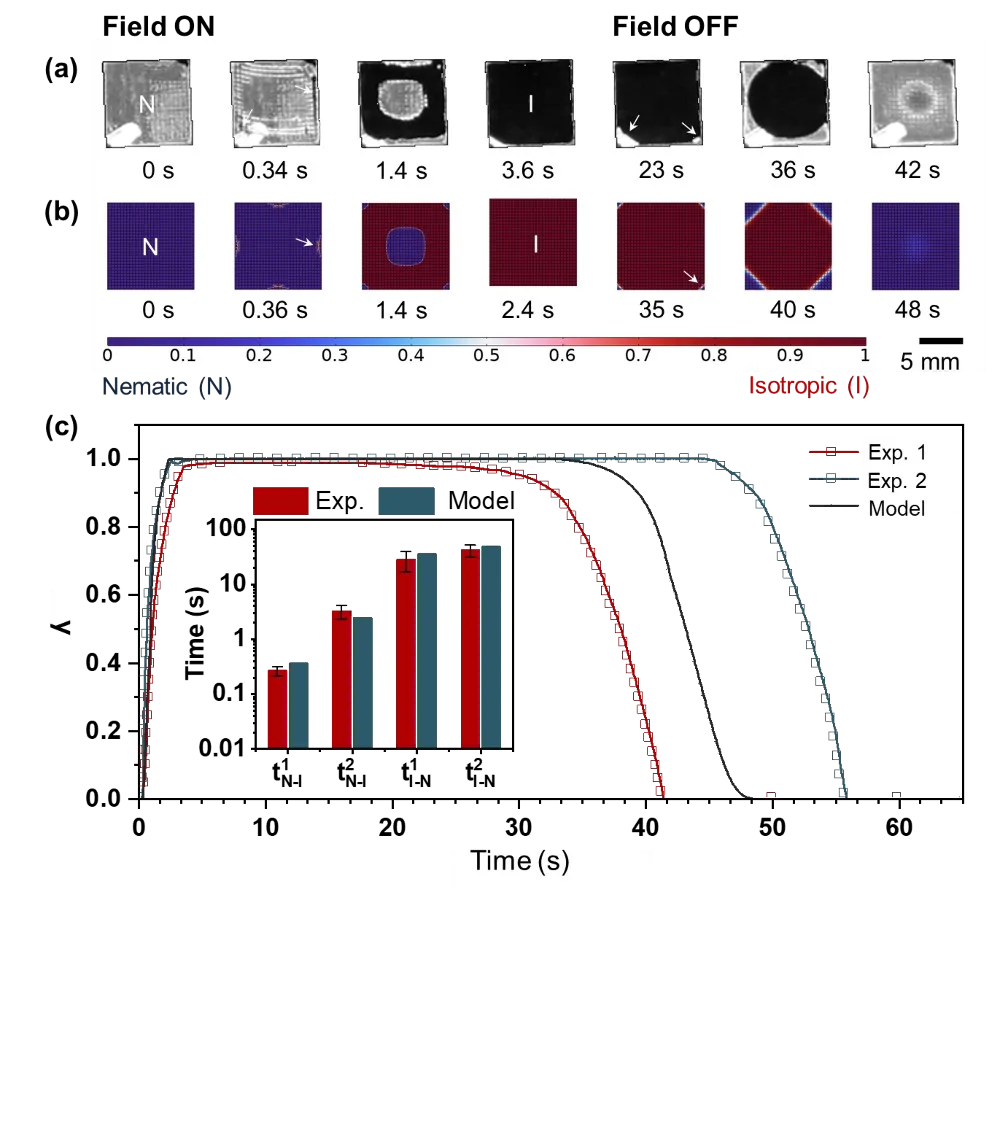
داخل الرقاقة توجد طبقة من البلورات السائلة، وهي نفسها المستخدمة في شاشات الهواتف. ومن بينها أسلاك رفيعة من مادة مغناطيسية حديدية. عندما تصل موجة راديو، تسخن الأسلاك بسرعة. ينتقل الحرارة إلى البلورات، فتغير ترتيب جزيئاتها. الضوء المار عبر البلورات يتغير استقطابه. الأغشية المستقطبة أعلى وأسفل الرقاقة تحول هذا التغير إلى لون مرئي.
يمكن دمج هذا المستشعر في الهاتف أو ارتداؤه كسلسلة مفاتيح. سيلتقط إشارة راديو قوية — مثلًا من رادار أو جهاز تشويش — ويعرضها بلون. سيساعد ذلك في اكتشاف هجوم كهرومغناطيسي في الوقت المناسب، أو ببساطة فحص مستوى الإشعاع حولنا.
الملخص الأصلي
كما كتبه المؤلفون، بالإنجليزية arXiv:2603.12923
High-frequency electromagnetic fields (EMFs) are increasingly recognized either as environmental risk factors or as tools for electromagnetic attacks, which are difficult to detect in situ. Existing high-frequency EMF sensors face significant limitations related to structural simplicity, integration with mobile technology, and low energy consumption. To address these challenges, we propose a novel sensor concept based on a magnetically hybridized liquid crystal (LC) microdevice. The hybrid LC chip is designed to exhibit an optical response to external radio-frequency fields without the need for electronic components or an external power supply, relying solely on ambient light. Both sides of the chip are covered with polymer-based crossed polarizer films. The chip is filled with flexible matrices containing thermotropic LCs, such as the rod-like 4-cyano-4'-pentylbiphenyl, into which a network of thin ferromagnetic wires is embedded. The resulting field-responsive LC microdisplay operates via a simple magnetothermal mechanism, and its optical response is sufficiently strong to be visible to the naked eye.
البلورات السائلة في المستشعر هي نفسها الموجودة في الشاشات، لكنها هنا لا تستجيب للكهرباء بل للحرارة الناتجة عن موجات الراديو.