الضغط يُوقظ الموصلية الفائقة في مادة حرارية كهربائية سريع
قطعة من تيلوريد الفضة والأنتيمون تشبه الإسفنجة: فهي تمتص الحرارة بسهولة وتحولها إلى كهرباء. تُسمى هذه المواد بالمواد الحرارية الكهربائية، وهي تعمل بالفعل في المسابير الفضائية وثلاجات السيارات. لكن إذا ضغطت هذه الإسفنجة، فإنها تبدأ في التصرف كموصل فائق — يتدفق التيار دون أدنى مقاومة.
عند ضغط 0.38 جيجا باسكال فقط (وكأنك وضعت ثقلًا مقداره 4 أطنان على كل سنتيمتر مربع)، تفقد المادة مقاومتها عند درجة حرارة 3.2 كلفن — وهذا أبرد من الفضاء الخارجي. كلما زاد الضغط، ارتفعت درجة حرارة الانتقال: عند 31.9 جيجا باسكال تصل إلى 6.9 كلفن. وعند إزالة الضغط، لم تختفِ الموصلية الفائقة فورًا، بل زادت قليلًا — حتى 7.4 كلفن.
الأكثر إثارة للدهشة: بقيت الشبكة البلورية مكعبة حتى 21.7 جيجا باسكال، ثم فقدت النظام بعيد المدى — توقفت الذرات عن الاصطفاف في صفوف منتظمة. لكن عند إزالة الضغط، استعادت البنية بالكامل، مثل النابض. هذا يعني أنه يمكن ضغط المادة وفك ضغطها عدة مرات دون تدميرها.
يكشف هذا الاكتشاف أن الضغط وسيلة بسيطة وقابلة للعكس لتبديل خصائص المواد الحرارية الكهربائية. في المستقبل، قد لا تقتصر هذه المواد على تحويل الحرارة إلى تيار فحسب، بل قد تعمل أيضًا كعناصر فائقة التوصيل في الإلكترونيات أو أجهزة الاستشعار.
الملخص الأصلي
كما كتبه المؤلفون، بالإنجليزية arXiv:2603.17846
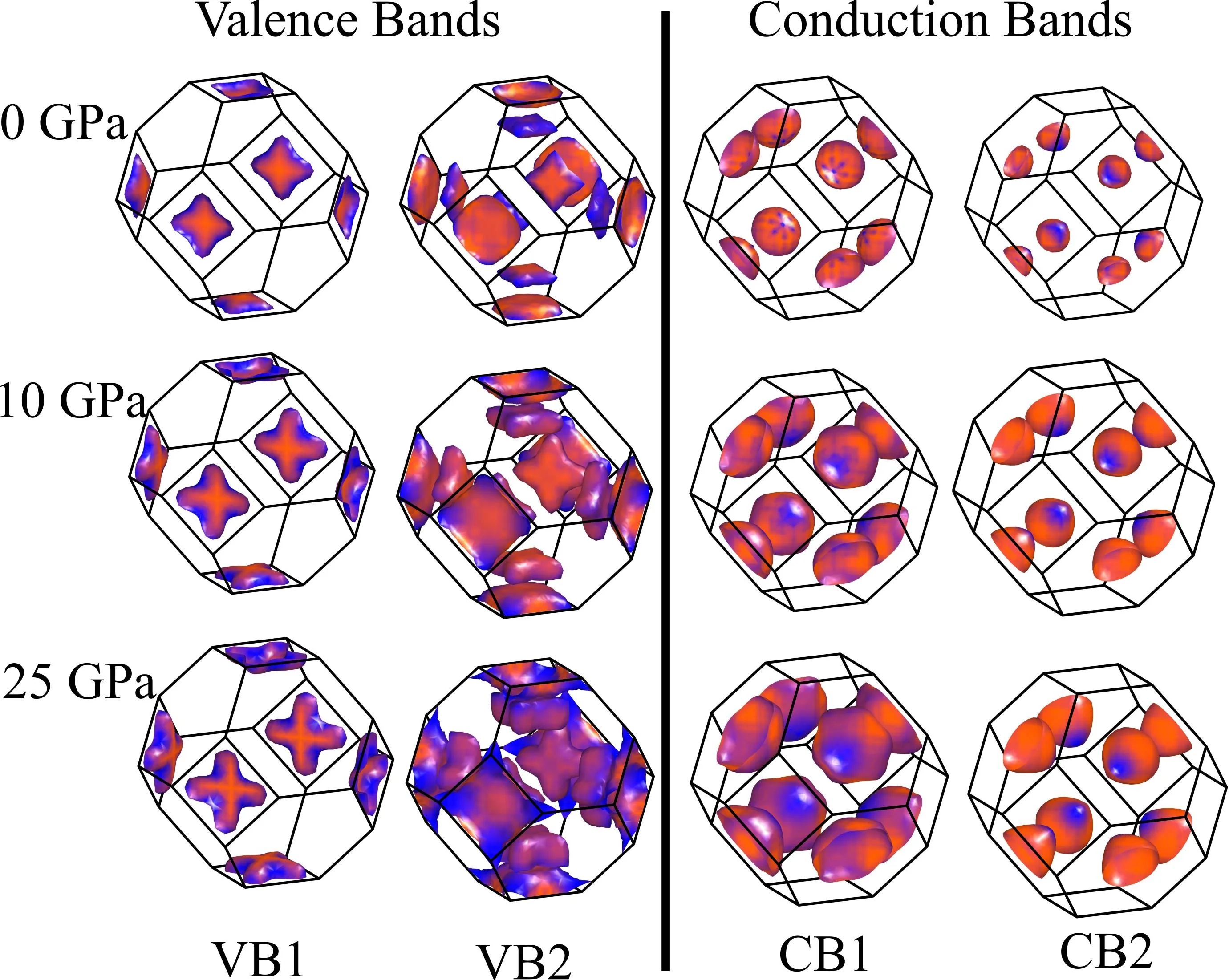
AgSbTe2 is a well-known thermoelectric material with a high Seebeck coefficient and intrinsically low thermal conductivity, but its behavior under pressure remains largely unexplored. Here we report a systematic investigation of the structural, electronic, and transport properties of non-stoichiometric AgSbTe2 under high pressure. At ambient pressure, the material can be described as having a cubic crystal structure that remains stable up to 21.7 GPa beyond which it loses long-range structural order, while its crystal system fully recovers upon decompression. Remarkably, superconductivity emerges at a very low pressure of 0.38 GPa with an onset superconducting critical temperature (Tc) of 3.2 K. Tc increases with increasing pressure, reaching 6.9 K at 31.9 GPa, and peaks at 7.4 K during decompression. Magnetic-field-dependent transport measurements and electronic structure calculations reveal an evolution of the superconducting state driven by an enhanced electronic density of states at the Fermi level under compression. Our findings uncover pressure-induced superconductivity in AgSbTe2 and demonstrate that pressure can effectively tune the electronic ground state of thermoelectric materials, extending their functionality beyond thermoelectric energy conversion.
الضغط 0.38 جيجا باسكال، الذي تظهر عنده الموصلية الفائقة، أكبر بحوالي 3800 مرة من الضغط الجوي — كما لو وضعت سيارة ركاب على ظفر إبهامك.