46 طريقة لحساب المخاطر سريع
يقرأ علماء الوراثة الحمض النووي (DNA) كقائمة طويلة من الحروف. ومنها يستخرجون «درجة الخطر المتعدد الجينات» — وهو رقم يوضح ما إذا كانت فرصة إصابة الشخص بمرض مثل السكري أعلى أو أقل من المتوسط. يوجد اليوم عشرات الطرق لحساب هذا الخطر، وكل طريقة تعمل بطريقتها الخاصة: إحداها تنظر إلى ألف حرف، وأخرى إلى مليون حرف، وثالثة تتطلب حاسوبًا قويًا، ورابعة تتعطل في منتصف البيانات.
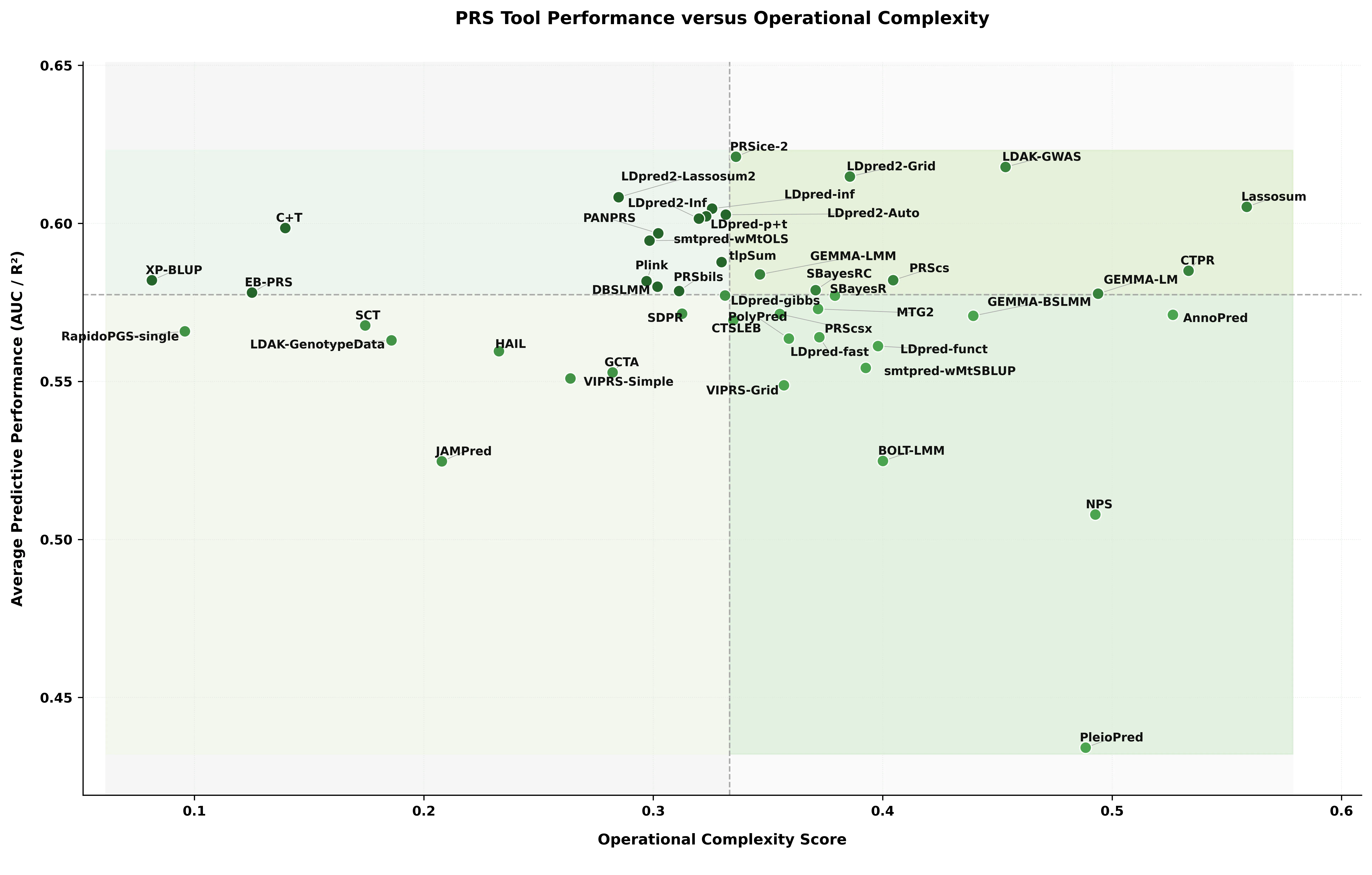
جمع مؤلفو الدراسة 46 من هذه الأدوات وأخضعوها لاختبار نزيه. استخدموا بيانات من البنك الحيوي البريطاني — حيث تُحفظ عينات الحمض النووي والسجلات الطبية لمئات الآلاف من الأشخاص. كان على كل أداة أن تتنبأ بسبعة أمراض وصفة شائعة واحدة (مثل الطول). اختبروها في ثلاث حالات: بدون بيانات إضافية، وبالاعتماد على الحمض النووي فقط، ومع إضافة العمر والجنس ومعلومات أخرى. واتضح أنه لا يوجد فائز شامل: أداة واحدة جيدة لمرض السكري، وأخرى للربو، وثالثة هي الأسرع لكنها أقل دقة قليلًا.
الخلاصة العملية بسيطة: اختيار الأداة لا يتعلق بالرياضيات فقط. يجب أن تنظر إلى كمية البيانات المتوفرة لديك، وقوة حاسوبك، وما إذا كان البرنامج قادرًا على عدم الانهيار في منتصف الحساب. جعل المؤلفون هيكلهم مفتوحًا، بحيث يمكن لأي باحث تكرار المقارنة على بياناته الخاصة وتجنب الوقوع في نفس الأخطاء.
الملخص الأصلي
كما كتبه المؤلفون، بالإنجليزية arXiv:2603.21201
Polygenic risk score (PRS) tools differ substantially in statistical assumptions, input requirements, and implementation complexity, making direct comparison difficult. We developed a harmonized, implementation-aware benchmarking framework to evaluate 46 PRS tools across seven binary UK Biobank phenotypes and one continuous trait under three model configurations: null, PRS-only, and PRS plus covariates. The framework integrates standardized preprocessing, tool-specific execution, hyperparameter exploration, and unified downstream evaluation using five-fold cross-validation on high-performance computing infrastructure. In addition to predictive performance, we assessed runtime, memory use, input dependencies, and failure modes. A Friedman test across 40 phenotype--fold combinations confirmed significant differences in tool rankings ($$\chi^2 = 102.29$$, $$p = 2.57 \times 10^{-11}$$), with no single method universally optimal. These findings provide a reproducible framework for comparative PRS evaluation and demonstrate that tool performance is shaped not only by statistical methodology but also by phenotype architecture, preprocessing choices, covariate structure, computational demands, software robustness, and practical implementation constraints.
إحدى الأدوات في الاختبار قد تستهلك ذاكرة أكبر بمقدار 100 مرة من أداة أخرى، مع دقة تنبؤات شبه متطابقة.