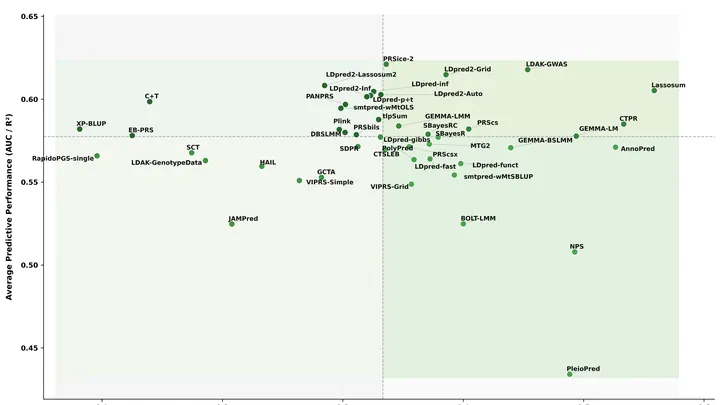
Geneticists read DNA like a long list of letters. From it, they compute a "polygenic risk score" — a number that shows how much higher or lower a person's chance of getting a disease, like diabetes, is compared to average.
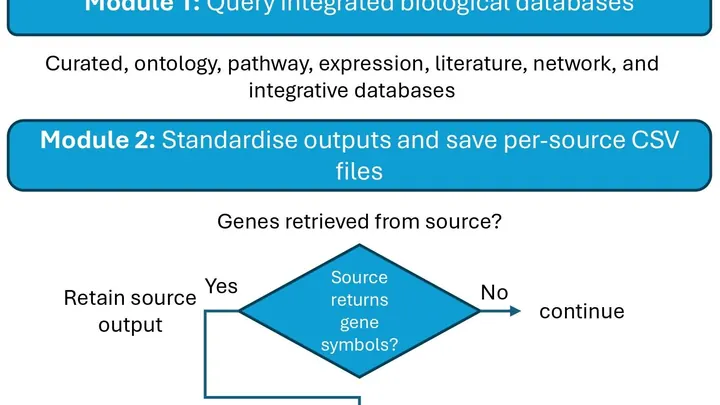
Assembling a puzzle when the pieces are scattered across 13 boxes with different numbering systems: that's roughly what it's like to search for genes linked to a specific disease. The data exist, but they're hidden in databases with their own interfaces, formats, and even descriptive languages.
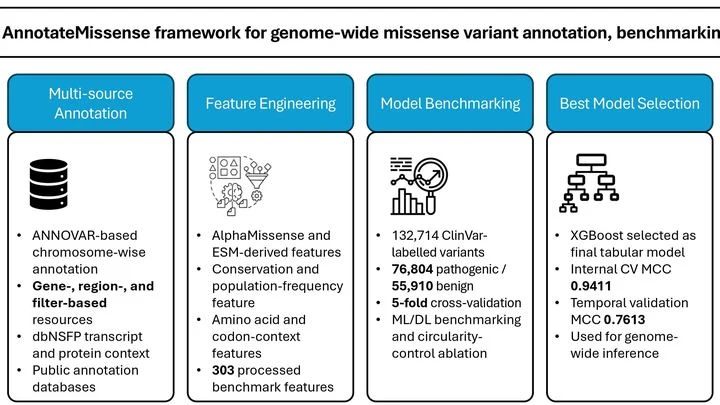
In a vast library where each book is a gene, you need to find a single typo. The error might be harmless, or it might completely change the meaning of the sentence. That's roughly what geneticists do when they hunt for harmful mutations among millions of harmless differences.
The program, named AnnotateMissense, works like a meticulous proofreader.