حرارة عند الحد الأقصى: كيف نقيس حرارة تبلغ 3000 درجة سريع
قطعة معدنية محمّاة في الفرن تشبه مقلاة على الموقد: كلما زادت الحرارة، زادت سرعة انتقالها إلى يدك إذا لمستها. لكن عند درجات حرارة يكون فيها المعدن قريبًا من الانصهار، يصعب قياس هذه السرعة: الحساسات لا تلتصق جيدًا، والحرارة تتسرب إلى الهواء، والعينة نفسها تتوهج وتشوش الأجهزة.
الطريقة الجديدة تتجاوز هذه العقبات. يوجه الليزر شعاعه إلى نقطة صغيرة على السطح، بينما تتابع كاميرا تعمل بالأشعة تحت الحمراء كيفية انتشار الحرارة من تلك النقطة. من الفرق في درجات الحرارة بين نقطة التسخين وباقي المعدن يمكن حساب مدى جودة توصيل المادة للحرارة. يشبه ذلك تقدير قوة حجر أُلقي في الماء من خلال الدوائر التي يحدثها.
كما أتاحت الطريقة قياس كيفية إشعاع الموليبدينوم للضوء في الحالتين الصلبة والسائلة. هذه البيانات ضرورية لصناعة مكونات تعمل في حرارة شديدة: في الطائرات الأسرع من الصوت، والمفاعلات النووية، والطباعة ثلاثية الأبعاد بالليزر للمعادن.
هكذا تتحول قطعة المعدن المحمّاة من لغز إلى مادة يمكن معرفة خصائصها الحرارية بدقة دون لمسها.
الملخص الأصلي
كما كتبه المؤلفون، بالإنجليزية arXiv:2604.09873
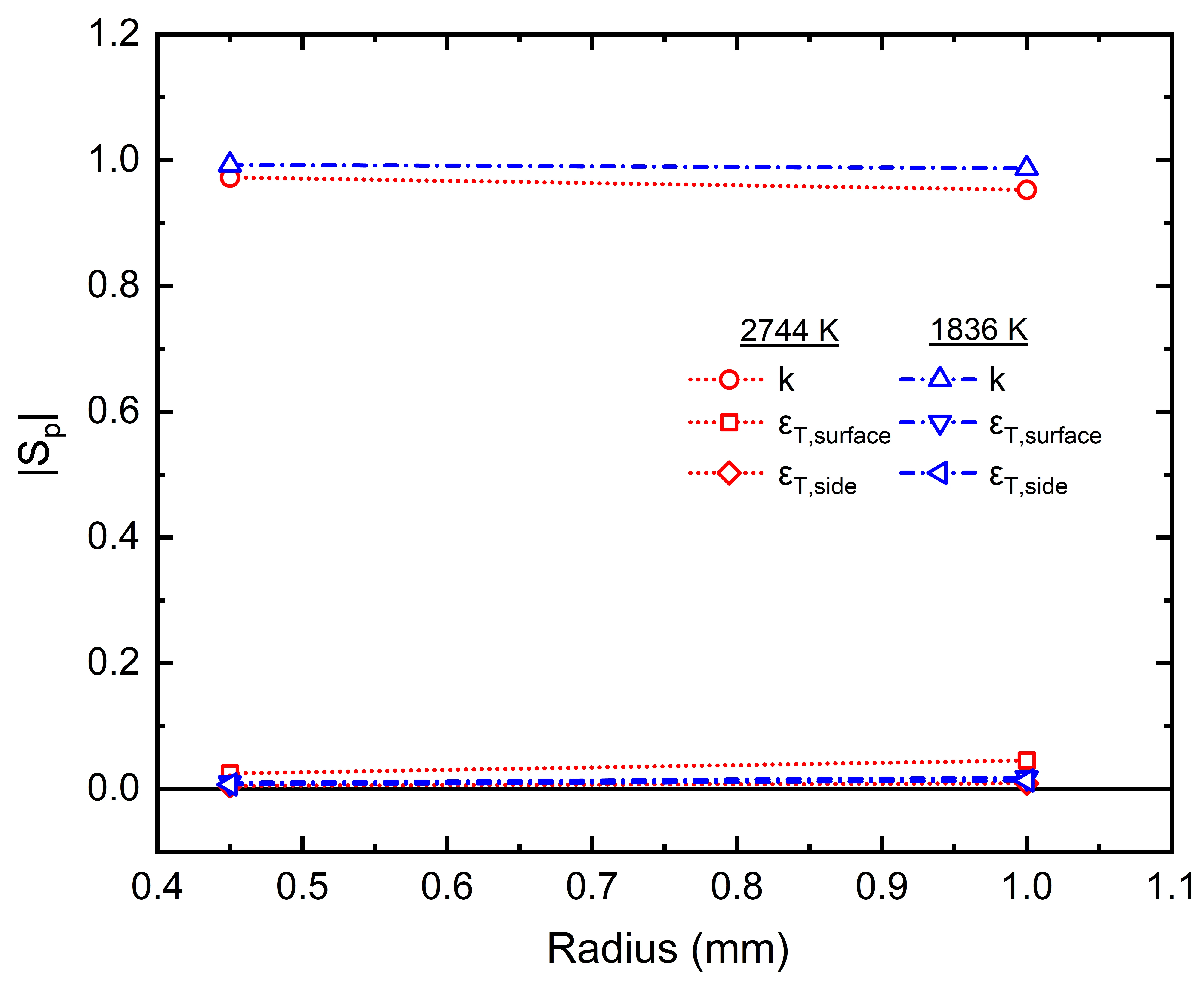
Advances in next-generation hypersonic hot structures, high heat-flux fusion or fission components, and laser based additive manufacturing depend on reliable solid state thermal conductivity data at high and ultrahigh temperatures, where conventional measurements become increasingly sensitive to contact resistances, uncertain boundary conditions, and nonlinear radiative losses. Building on our initial demonstration of ultrahigh temperature steady-state temperature differential radiometry (SSTDR), we present a substantially more robust platform aimed at making high temperature thermal and radiative property measurements more routine. The method integrates lock-in infrared thermography with a spatially localized, modulated perturbation laser to form a conduction dominant differential observable along with hyperspectral pyrometry and a validated 2D axisymmetric steady state heat transfer model. Using high purity molybdenum as a benchmark, we report solid state thermal conductivity k(T) from 1500 - 3000 K (to the onset of melting) with uncertainties of 7.9-11 % enabled by comprehensive uncertainty propagation, sensitivity analysis, and bounding studies. We additionally provide normal spectral emittance of molybdenum in both solid and liquid states over 500-1000 nm. These advances establish SSTDR as an accurate, non-contact route for closing the high temperature k(T) data gap while simultaneously producing much needed phase dependent radiative property data for melt adjacent and extreme heat-flux applications. Note: This is a shortened abstract; full version in manuscript.
ينصهر الموليبدينوم عند 2623 درجة مئوية، وهي درجة حرارة أعلى من درجة حرارة سطح الزهرة، الكوكب الأكثر حرارة في النظام الشمسي.