كيف يغيّر الشدّ الضوء سريع
الضوء الصادر عن طبقات رقيقة من أشباه الموصلات قد يكون مستقطبًا — أي أن موجاته تهتز في مستوى واحد. في السابق، كان يُعتقد أن اتجاه الاهتزاز يُحدد بواسطة إضاءة العينة. لكن تجارب جديدة على طبقتين من مادتين مختلفتين (WSe2 و WS2) أظهرت خلاف ذلك: عند التبريد إلى درجات حرارة فائقة الانخفاض، لا يتغير استقطاب الضوء تقريبًا مهما كانت طريقة الإضاءة.
السبب هو تشوه الشبكة البلورية. حتى الشدّ أو الضغط الضعيف يكسر تماثل البنية، ويصبح الضوء الصادر من مناطق مختلفة من العينة مستقطبًا إهليلجيًا — أي أن موجاته ترسم أشكالًا إهليلجية. بعيدًا عن العينة، تلغي هذه الأشكال الإهليلجية بعضها جزئيًا، لكن ليس تمامًا: يبقى استقطاب خطي ملحوظ. أظهر التصوير التلقائي بدقة الاستقطاب وأطياف تشتت رامان ارتباطًا قويًا بين درجة الاستقطاب الخطي والانزياحات الموضعية للترددات الناتجة عن التشوه.
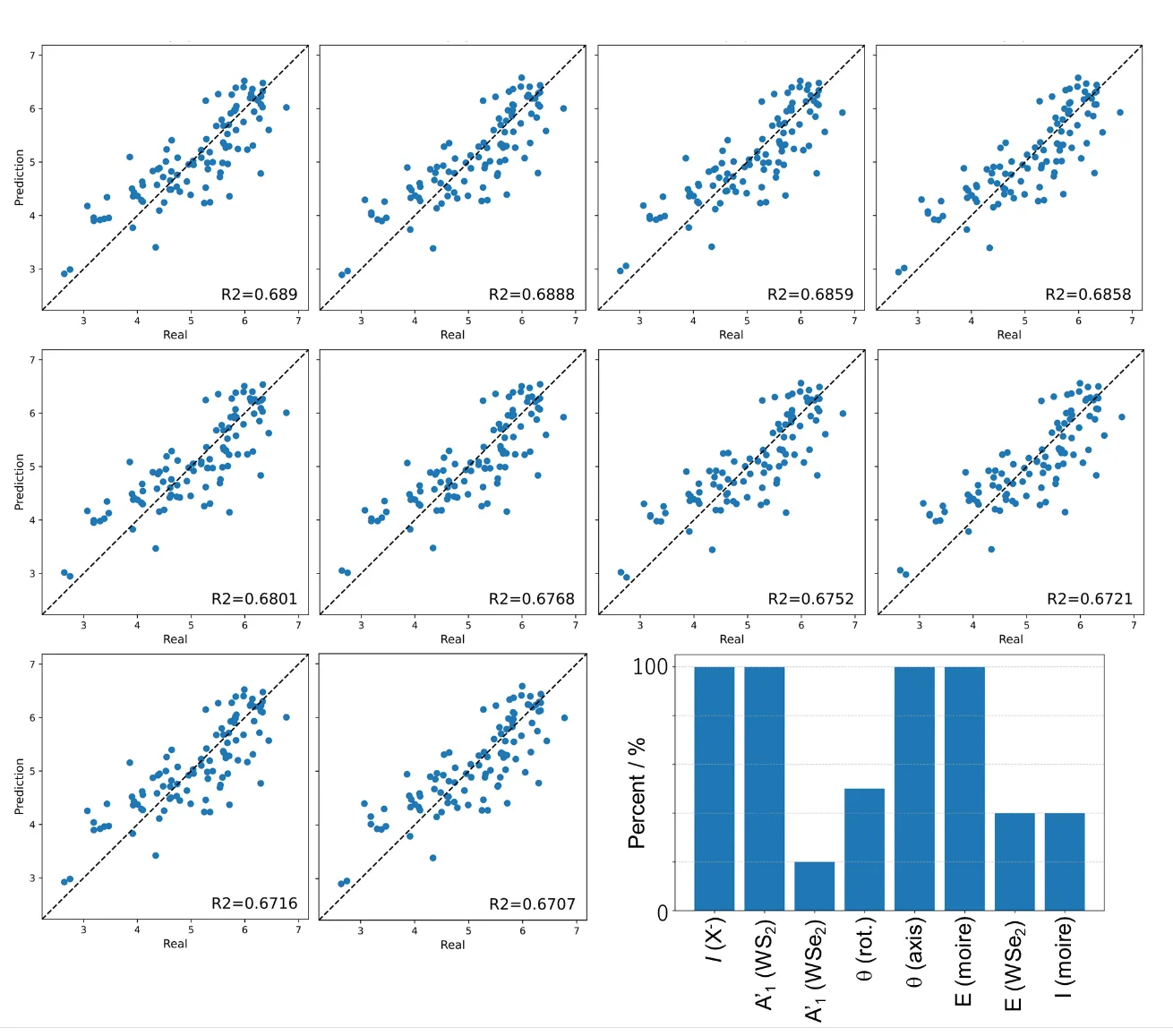
أكد الانحدار الخطي أن معاملات التشوه هي الأفضل تنبؤًا بالاستقطاب المرصود. لذا، من أجل قراءة ضوئية موثوقة في الشبكات الفائقة الموارية، يجب التحكم في التشوه نفسه، وليس في استقطاب الضوء المثير. يقدم هذا الاكتشاف طريقة بسيطة وعملية للتحكم في الضوء في الأجهزة الإلكترونية الضوئية المستقبلية القائمة على المواد ثنائية الأبعاد.
الملخص الأصلي
كما كتبه المؤلفون، بالإنجليزية arXiv:2604.16934
Reliable optical control of valley degrees of freedom in moir\'e excitons requires that the emitted polarization faithfully reflect the underlying valley state. Here, we show that linearly polarized photoluminescence from WSe2/WS2 moir\'e excitons is largely insensitive to the excitation polarization and therefore does not arise from valley coherence. Automated polarization-resolved photoluminescence and Raman mapping at cryogenic temperature reveals that the degree of linear polarization correlates strongly with local Raman shifts and moir\'e-exciton observables, identifying strain as the dominant experimental correlate. Linear-regression analysis further shows that strain-related descriptors provide the best prediction of the observed polarization. Guided by theory, we attribute this behavior to strain-amplified breaking of C3 symmetry in the moir\'e potential: weak uniaxial strain produces only partial cancellation of locally elliptical emission, yielding a finite far-field degree of linear polarization. These results establish strain as a key control parameter for reliable optical readout in TMD moir\'e superlattices.
تنشأ الشبكات الفائقة الموارية عندما تُكدَّس طبقتان بفترات مختلفة قليلًا فوق بعضهما — مثل مشطين بأسنان مختلفة التباعد ينتجان نمطًا.