الساعة النووية: دقات النواة للبحث عن المادة المظلمة سريع
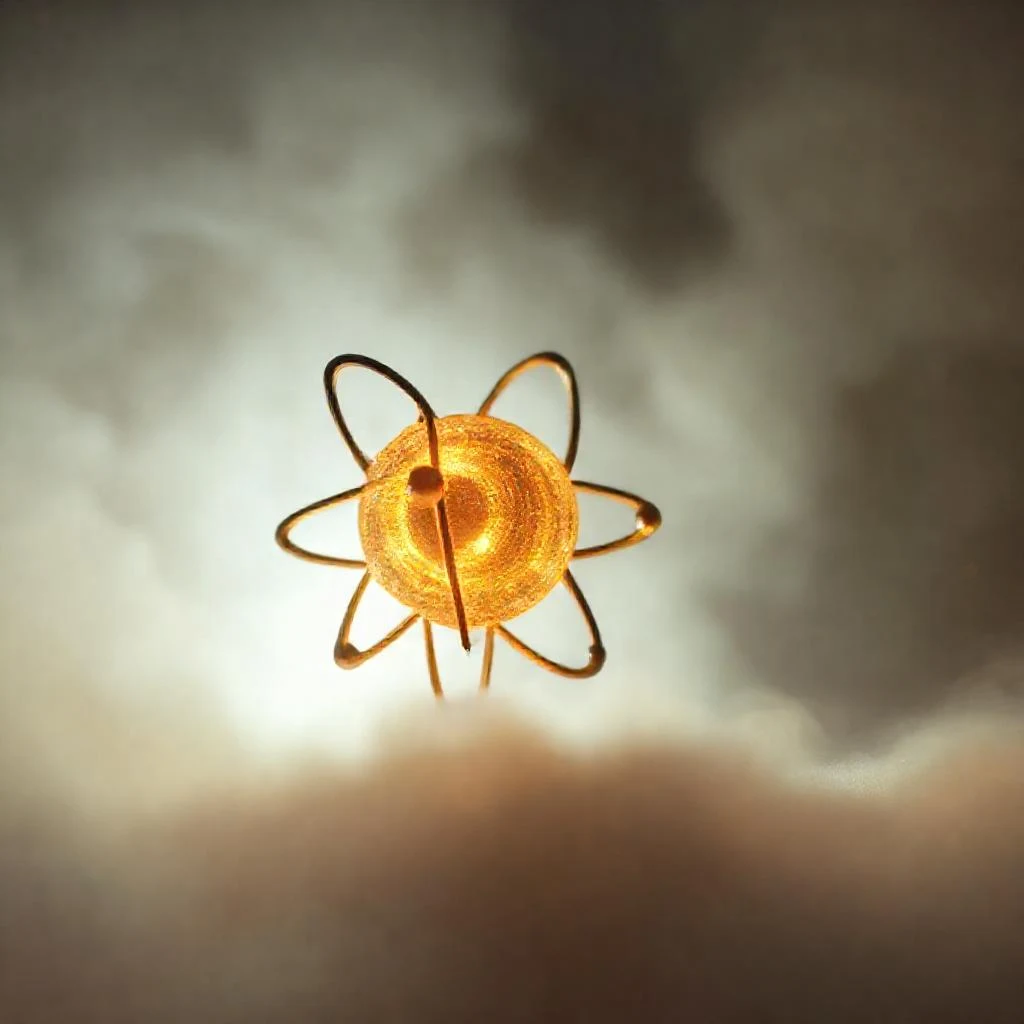
أكثر الساعات الحديثة دقة تحسب الوقت من خلال تذبذبات الإلكترونات في الذرات. لكن حركتها يمكن أن تتأثر — كما يتأثر نابض الساعة الميكانيكية بالاهتزاز. وجد الفيزيائيون بندولاً أكثر موثوقية: نواة الذرة. أخذوا نواة الثوريوم-229، ووضعوها في بلورة، وجعلوها تتذبذب بتسليط ليزر بتردد محدد بدقة. تُعرف هذه التقنية بـ التحليل الطيفي — وهي في جوهرها بحث عن الإيقاع الصحيح لبدء تذبذب البندول. وقد استجابت النواة: فهي تتذبذب بمعدل ٢٠٠٠ تريليون مرة في الثانية — أي أسرع مليون مرة من الكوارتز في الهاتف الذكي.
الدقة مذهلة: خلال يوم واحد، يبلغ الخطأ واحداً من مليار من المليار من الثانية. قد تخطئ هذه الساعات بمقدار ثانية واحدة فقط كل ٣٠ مليار سنة. لكن الأهم أن هذا البندول حساس للغاية لأي "نسمة" خارجية، مثل مرور جسيمات المادة المظلمة. بحث العلماء عن آثارها — دفعات دورية أو انحراف تدريجي في التردد. لم يجدوا شيئاً، ولكن حتى هذه نتيجة: أصبحنا نعرف الآن مدى ضعف تفاعل المادة المظلمة مع نوى الذرات العادية.
في المستقبل، ستزداد دقة هذه الساعات ذات الحالة الصلبة عدة مرات. وستتحقق مما إذا كانت الثوابت الأساسية في النموذج القياسي ثابتة حقاً، وقد تلاحظ أيضاً أن الوقت يتدفق بشكل مختلف على ارتفاعات مختلفة — وفقاً لنظرية أينشتاين. أما مهمتها الرئيسية حالياً فهي التقاط "ظل" المادة المظلمة.
الملخص الأصلي
كما كتبه المؤلفون، بالإنجليزية arXiv:2606.04997
The laser-accessible nuclear transition in the thorium-229 isotope has been identified as a promising candidate for the realization of an optical nuclear clock. Such a nuclear clock might rival or outperform current optical clocks based on electron-shell transitions in atoms or ions, is expected to be more robust against external perturbations, and provides enhanced sensitivity in clock-based tests of fundamental principles of physics. Here, we implement a thorium-229 nuclear clock by stabilizing a continuous-wave laser to the 148 nm nuclear transition with rapid feedback based on continuous absorption spectroscopy. The thorium-229 nuclei are embedded into a millimeter-sized, room temperature calcium fluoride crystal. A subharmonic of the 148 nm radiation is continuously compared to a Yb+ single-ion clock. The nuclear clock shows a simple shot-noise limited scaling of the fractional frequency instability of $$3\cdot 10^{-12} \sqrt{\tau/\text{s}}$$ where $$\tau$$ is the averaging time, approaching $$10^{-15}$$ instabilities over 1 day of continuous operation. Improvements of the instability by several orders of magnitude can be projected for future solid-state nuclear clocks. We use the nuclear clock to constrain models of ultralight dark matter by searching for periodic fluctuations and slow drifts in the nuclear transition energy, on time scales between 20 s and 1 day. Drawing benefit from the enhanced sensitivity of the thorium-229 transition, these constraints compete with the best atomic clocks concerning dark matter coupling to photons and go beyond previous measurements regarding coupling to the strong force and quarks.
الانتقال في نواة الثوريوم-٢٢٩ هو الوحيد في الكون الذي يمكن "التقاطه" بالليزر بتقنيات اليوم. ولهذا السبب تم اختياره للساعات النووية الأولى.