الفقاعة المظلمة والعالم المصغر: الجاذبية على أجزاء من المليون من المتر سريع
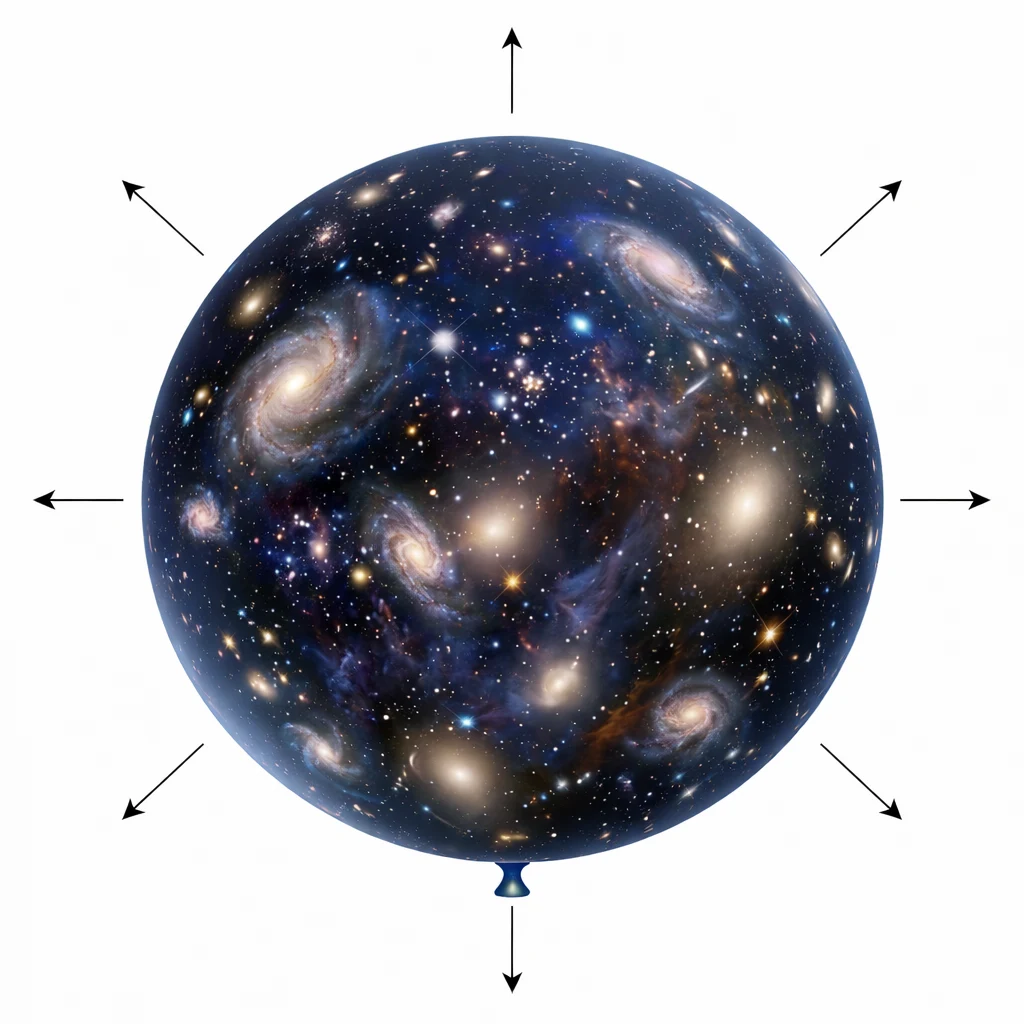
الكون يتصرف مثل فقاعة صابون تتمدد في رغوة متعددة الأبعاد. نموذج الفقاعة المظلمة يفسر لماذا يتمدد بسرعة متزايدة: فقاعة الزمكان تنمو، ويكتسب غشاؤها سُمكًا صغيرًا للغاية — حوالي ميكرون، مثل حجم البكتيريا. عند هذه المسافات، 'تنتشر' الجاذبية في هذا السُمك وتضعف.
يمكن التحقق من ذلك بقياس التجاذب بين الجسيمات الميكروسكوبية. على مسافة ميكرون، ستكون القوة أقل بنسبة مئوية قليلة مما يتوقعه قانون نيوتن من الكتب المدرسية. هذا الضعف مرتبط ارتباطًا وثيقًا بـ التوسع المتسارع للكون — كلاهما مظهران لظاهرة واحدة. يشير النموذج أيضًا إلى انحناء طفيف في الفضاء، يأمل علماء الفلك في رصده.
الملخص الأصلي
كما كتبه المؤلفون، بالإنجليزية arXiv:2606.20942
The dark bubble model explains the existence of a positive cosmological constant by making explicit use of the instabilities underlying the de Sitter swampland conjectures to make the accelerated expansion of the universe inevitable. A distinctive consequence of the construction is a unique hierarchy connecting cosmological, gravitational, string, and higher-dimensional scales. In particular, the model naturally predicts the existence of a dark dimension of micron size, an idea that has been argued for on independent grounds in the literature. The same framework also predicts a weakening of gravity at distances of order the dark-dimension scale, leading to a fading of the gravitational force at micron distances. We argue that the dark bubble therefore provides a concrete realization of both the dark dimension proposal and Sundrum's fat graviton scenario, in which gravity effectively ceases to probe shorter distances. Additional predictions include a string scale of order tens of TeV and a measurable positive spatial curvature of the universe. We review these key aspects of the model, discuss their implications for gravity and cosmology, and highlight its key predictions.
الميكرون (جزء من مليون من المتر) هو الحجم المعتاد للبكتيريا. إذا وُجد مثل هذا البُعد، لكان حرفيًا تحت مجهرنا.