كيف كشفت البلورات النقية عن تناظر خفي سريع
أحيانًا يتصرف البلورة كمترجم يشتت انتباهه عند كل حفيف في القاعة، فتتحول ساعة الاجتماع إلى ساعتين. في معدن ScV₆Sn₆، تترتب الذرات في نمط كاغومي (نسيج من السداسيات والمثلثات)، وعند التبريد تنشأ فيه موجة كثافة شحنة — تشوه دوري لسحابة الإلكترونات. لكن حتى الآن، لم تكن البلورات نقية بما يكفي لسماع كل تفاصيل هذه العملية.
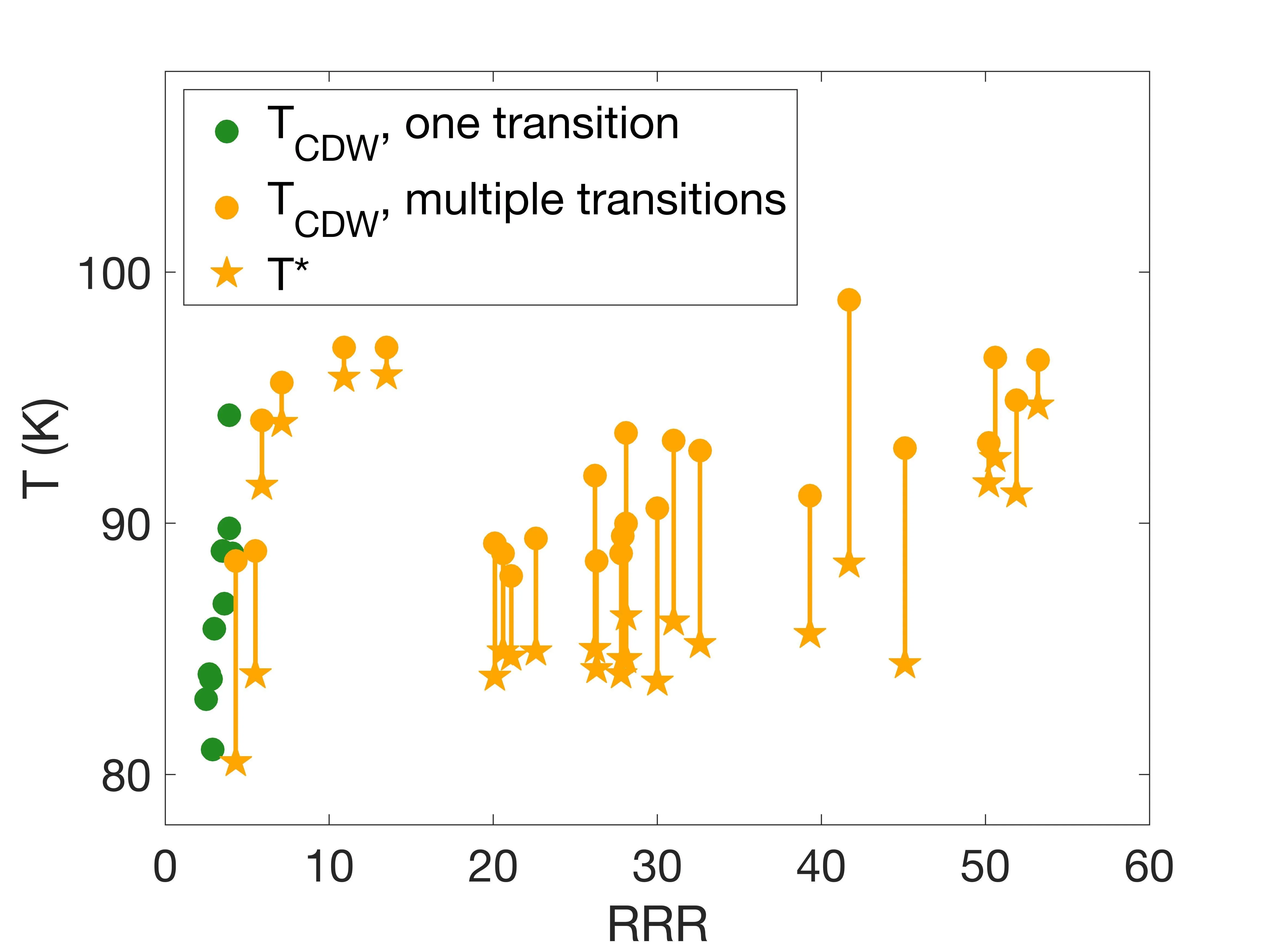
غيّرت مجموعة من العلماء وصفة النمو: أضافوا المزيد من القصدير إلى محلول النمو وخفضوا درجة الحرارة. فنتجت بلورات مفردة بنسبة مقاومة (RRR) أعلى من 50 — أي أفضل بخمس مرات من السابق. هذا يشبه تسجيل الصوت على شريط بدون أزيز: أصبحت نغمات جديدة مسموعة. بالقرب من درجة حرارة الانتقال إلى موجة كثافة الشحنة، ظهرت سلسلة من القفزات المتقاربة، والطور الوسيط، كما تبين بقياس المرونة، يكسر التناظر الثلاثي للشبكة الأصلية.
مع الصوت النقي جاء فهم اللغز القديم. سابقًا، لُوحظ في مجال مغناطيسي ضعيف تأثير هول الشاذ — انحراف للحاملات نُسب إلى مغناطيسية داخلية للمادة. لكن القياسات الجديدة على بلورات بنقاوات مختلفة ومع إضافات من الكروم أظهرت: أن التأثير يوصف تمامًا بالحركة العادية للإلكترونات عبر عدة نطاقات، حيث توجد جيوب صغيرة لكنها شديدة الحركة. وأكدت التذبذبات الكمومية وجودها.
الآن لا يشتت المترجم انتباهه. البلورة النقية أخبرتنا أن سلوكها "الشاذ" ليس سوى عمل منسجم لأصوات عديدة، وليس عزفًا منفردًا لشيء غريب. طريقة الضبط المنهجي للحركية تصبح شوكة رنانة للأبحاث المستقبلية: ستساعد في تمييز تأثير هول الشاذ الحقيقي عن صدى متعدد النطاقات في مواد كاغومي أخرى.
الملخص الأصلي
كما كتبه المؤلفون، بالإنجليزية arXiv:2606.29048
The kagome metal ScV$$_6$$Sn$$_6$$ has attracted attention as a platform for exploring the interplay between charge density wave (CDW) order and symmetry-breaking phenomena, including a recently reported intermediate phase and a low-field Hall anomaly that has been attributed to an anomalous Hall effect (AHE). The interpretation of both observations has been limited by the modest sample quality achieved by previous growth procedures, which produced crystals with in-plane residual resistivity ratios (RRR) of at most $$\approx$$9. Here, we report a simple modification of the flux growth procedure that yields ScV$$_6$$Sn$$_6$$ single crystals with RRR exceeding 50, more than five times the previous highest reported value, and use this expanded mobility range to revisit both the symmetry and the magnetotransport of the CDW phase. We resolve a sequence of closely spaced transitions in the immediate vicinity of $$T_{CDW}$$ that emerges above a sharp threshold of RRR $$\approx 4$$, and demonstrate through elastoresistivity that the intermediate phase breaks the three-fold rotational symmetry of the parent lattice. We examine the Hall response from both the parent samples across the full RRR range as well as Cr-doped samples, and conclude it is quantitatively inconsistent with an intrinsic AHE and is instead explained by ordinary multi-band transport involving small, high-mobility pockets identified through quantum oscillations. These results refine the symmetry-breaking landscape of ScV$$_6$$Sn$$_6$$ and establish systematic mobility tuning as a diagnostic for disentangling an intrinsic AHE from multi-band Hall contributions in kagome CDW systems.
شبكة كاغومي سُميت على اسم سلة يابانية مضفورة، ونمطها يوجد في بلورات حيث يمكن للإلكترونات أن تتصرف كسائل بخصائص غير عادية للغاية.