عضو حي في طبق بتري يُظهر حلقات مترابطة سريع
مدينة ليلاً: في بعض النوافذ يضيء الضوء، وفي البعض الآخر يظلم. إذا وصلت بخطوط النوافذ التي تضيء في نفس الوقت، ستحصل على شبكة عنكبوتية من الاتصالات. هذه الشبكة درسها الباحثون على عضيات دماغية صغيرة — تجمعات حية من الخلايا العصبية نمت في المختبر.
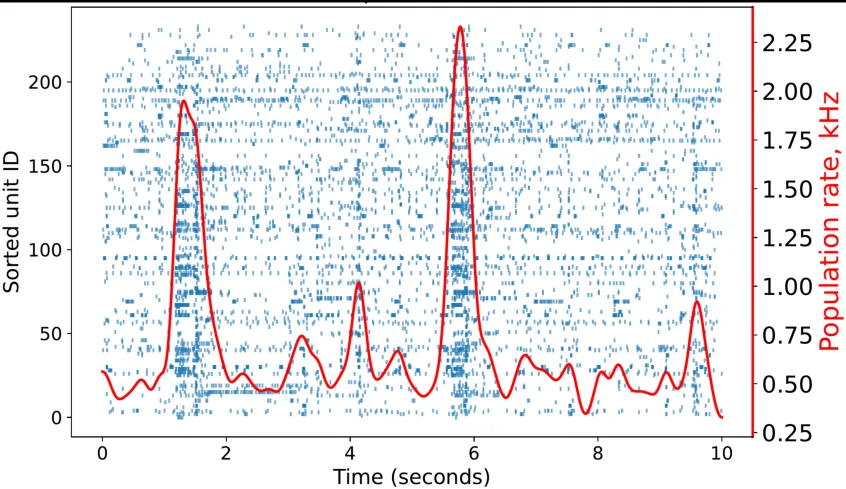
سجلوا الإشارات الكهربائية لعشرات الخلايا العصبية وبنوا شبكة تعتمد قوة الاتصال بين الخلايا فيها على مدى تزامن نشاطها. ثم بطريقة رياضية — التحليل الطوبولوجي — بحثوا في هذه الشبكة عن حلقات: سلاسل مغلقة من ثلاث خلايا عصبية أو أكثر. الحلقة ليست مجرد مجموعة أصدقاء، بل بنية قادرة على نقل الإشارة في دائرة.
اتضح أن هذه الحلقات عنيدة بشكل مدهش. الإزالة العشوائية للخلايا العصبية كادت لا تكسرها. لكن بمجرد إزالة الخلايا التي كانت جزءًا من الحلقات بشكل مستهدف — انهارت البنية. مع نمو العضية ظهرت أشكال أكثر تعقيدًا — فراغات في الشبكة تشبه التجاويف في الإسفنج.
هكذا، في الضجيج الكهربائي للخلايا العصبية الحية، ظهر هيكل هندسي واضح. الحلقات نفسها التي كانت تومض في الشبكة أصبحت الآن مرئية كأساس للإيقاعات والموجات المستقبلية — مثل أضواء المدينة التي تتشكل في نمط ثابت.
الملخص الأصلي
كما كتبه المؤلفون، بالإنجليزية arXiv:2607.16517
Neural activity is widely held to organize on low-dimensional structure embedded in a high-dimensional state space. Persistent homology reads such structure directly from the pattern of pairwise correlations, without assuming in advance which variables are relevant. We apply persistent homology to microelectrode-array (MEA) recordings of spontaneous activity from human (Lancaster) and mouse (Pa\c{s}ca) cortical organoids, spanning $$26$$--$$234$$ simultaneously sorted units, and ask whether topological data analysis resolves structure at the node counts that neural recordings actually deliver. Building weighted networks in correlation space and characterizing them by Vietoris--Rips filtration, we find that the first homology ($$H_1$$, loops) rises significantly above a rate- and population-preserving null in $$14$$ of $$18$$ datasets. This loop structure occupies a non-redundant core: it is robust to random removal of units yet disrupted by targeted removal of the units that carry it. Topological richness grows with network size, and second homology ($$H_2$$) emerges significantly above the null only in the larger networks. These results show that persistent homology resolves structured topology in neural recordings at the scale experiments actually deliver.
تُزرع العضيات الدماغية من الخلايا الجذعية، ويمكنها توليد نبضات كهربائية تلقائيًا تشبه نشاط الدماغ الحقيقي.