كيف تلتقي الحركة والإحساس في حلقة مفرغة سريع
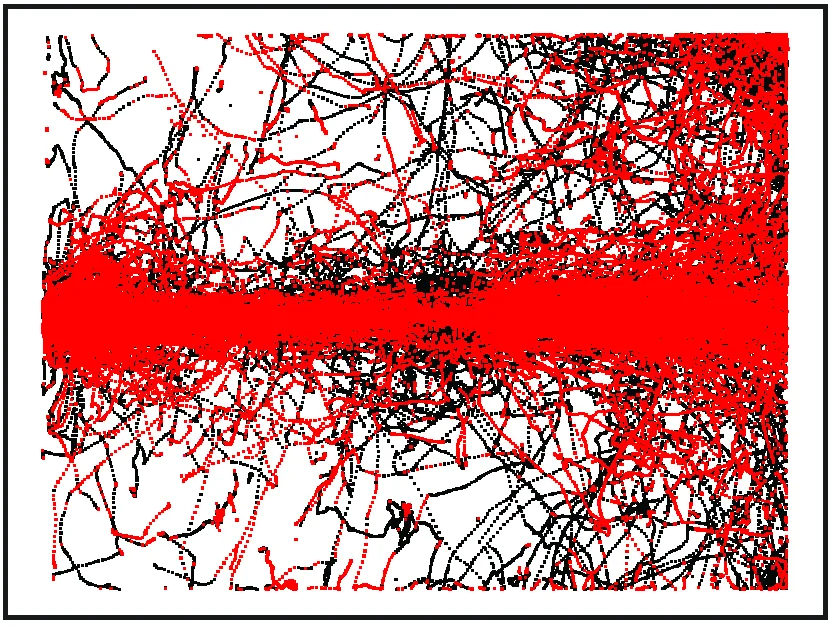
بكتيريا تسبح نحو الطعام. إشارة كيميائية تقودها إلى الأمام، لكن مع كل حركة تتغير الإشارة. تنشأ حلقة: إحساس — فعل — إحساس جديد. حوّل مؤلفو العمل هذه الحلقة إلى كمية قابلة للقياس.
طبقوا فكرة من نظرية المعلومات: يمكن حساب عدد البتات (وحدات المعلومات) التي تتدفق من أعضاء الحس إلى الأمر الحركي وبالعكس. أطلقوا على التدفق الأول اسم "التفاعلي" (reactive) — وهو الاستجابة الكلاسيكية للمنبه. والثاني "النشط" (active): هنا يشكل الفعل نفسه الأحاسيس المستقبلية، مثلما ندير رؤوسنا لنرى شيئًا بشكل أفضل.
بنى الباحثون نموذجًا بسيطًا يمكن من خلاله ضبط هذين التدفقين. أظهر النموذج: إذا كان التدفق النشط صغيرًا جدًا، يتحول الكائن إلى مستشعر سلبي ولا يستكشف البيئة. وإذا كان كبيرًا جدًا، يتجاهل الإشارات المهمة. الأمثل يقع في مكان ما بينهما، ويختلف باختلاف المهام. عند البكتيريا، على سبيل المثال، يهيمن الجزء التفاعلي: فهي تتبع بشكل أساسي تدرج المادة الكيميائية. أما عند الذباب الذي يبحث عن رائحة، فتتغير الاستراتيجية اعتمادًا على مدى قربه من المصدر.
التبادل الثنائي للمعلومات بين الإحساس والحركة سمة مشتركة بين جميع الملاحين، من البسيط إلى الاصطناعي. بقياس هذا التبادل، يمكن ليس فقط التنبؤ بنجاح البحث، بل أيضًا فهم الاستراتيجية التي يستخدمها الوكيل دون النظر إلى "دماغه". هكذا تصبح الحلقة التي بدأت ببكتيريا تسبح مفتاحًا لسلوك أي باحث عن هدف.
الملخص الأصلي
كما كتبه المؤلفون، بالإنجليزية arXiv:2607.26295
As organisms navigate the environment to locate critical resources, their behavioral actions must be tightly coupled to their sensory inputs. Here, we introduce an information-theoretic framework that quantifies this coupling using transfer entropy, which measures information flow between sensory inputs and behavioral outputs. Information flow from sensory inputs to behavior defines a "reactive" component of a navigational strategy, whereas information flow from behavior to sensory inputs defines an "active" component, whereby actions shape subsequent sensory experiences. Analyzing these bidirectional information flows enables us to both predict navigational performance and dissect navigation strategies from trajectories. Using a minimal model that captures the active and reactive components, we connect macroscopic performance to microscopic information flows. We then apply the framework to experimentally measured trajectories of bacteria, worms, and flies, as well as to machine learning agents navigating sensory landscapes. Across systems, bidirectional information flow reliably predicts navigation efficiency, revealing a common behavioral-environment feedback loop. Decomposing active and reactive information flows further exposes distinct strategies underlying bacterial chemotaxis, the spatial dependency of the navigation strategy in fly olfactory navigation, and the learned policies of a reinforcement-trained agent. Together, these results establish bidirectional information flow as a unifying principle for understanding navigation in biological and artificial systems.
تقوم الإشريكية القولونية "بالتفكير" في حوالي 10 بتات من المعلومات في الثانية لتقرر إلى أين تسبح. وهذا تقريبًا نفس المقدار اللازم لاختيار واحد من بين ألف مسار محتمل.