كيف نلتقط إلكترونًا خفيًا سريع
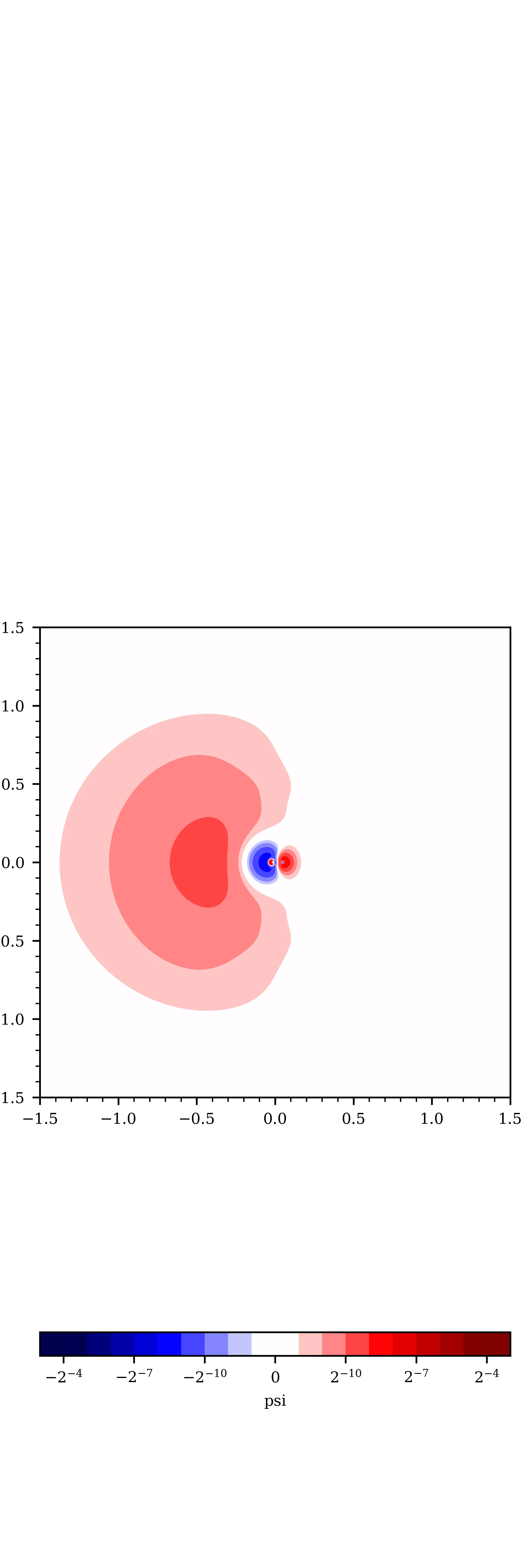
الإلكترون الإضافي في الجزيء يشبه راكبًا يتشبث بصعوبة بدرجة قطار مغادر. هذا «الراكب» يجعل الجسيم أنيونًا — أيونًا سالبًا. دراسته صعبة: الرابطة ضعيفة، والسحابة الإلكترونية مشوشة، وأي دفعة قد تقتلع الإلكترون بعيدًا.
أخذت مجموعة من الباحثين على عاتقها دراسة الأنيونات ثنائية الذرة من الفلزات — القلوية (الليثيوم، الصوديوم، البوتاسيوم، الروبيديوم، السيزيوم، الفرانسيوم) والقلوية الترابية (البيريليوم، المغنيسيوم، الكالسيوم، السترونتيوم، الباريوم، الراديوم). المجموع 57 جزيئًا. باستخدام طرق حسابية قوية، بنوا منحنيات الطاقة الكامنة — رسومًا بيانية توضح كيف تتغير الطاقة عند اقتراب الذرات أو ابتعادها. ثم حسبوا عزوم ثنائي القطب الكهربائية والاستقطابية — قدرة الجزيء على التشوه تحت تأثير مجال كهربائي.
لكن المفاجأة الكبرى كانت في الحالات المثارة. اتضح أن بعضها يتقاطع مع الحالة الأساسية للجزيء المتعادل. هذا كما لو أن درجة القطار أصبحت للحظة بمحاذاة الرصيف — يسهل على الإلكترون القفز أو النزول. هذه التقاطعات قد تعزز الالتقاط الرنيني للإلكترون بواسطة الجزيء المتعادل وما يتبعه من اضمحلال الأنيون. هذا الاكتشاف سيفيد في تجارب مع خلائط من الجزيئات فائقة البرودة وذرات ريدبيرغ — ذرات بإلكترون ابتعد بعيدًا جدًا.
الملخص الأصلي
كما كتبه المؤلفون، بالإنجليزية arXiv:2608.05067v1
Studies of anions are inherently more challenging than investigations of neutrals and cations because of the diffuse and weakly bound character of an anionic electron. Here, we present a comprehensive computational examination of ground-state diatomic molecular anions composed of alkali-metal (Li, Na, K, Rb, Cs, Fr) and alkaline-earth-metal (Be, Mg, Ca, Sr, Ba, Ra) atoms. We study 21 alkali-metal diatomic anions in the X$$^{2}\Sigma^{+}$$ electronic state and 36 alkali-metal--alkaline-earth-metal diatomic anions in the X$$^{1}\Sigma^{+}$$ electronic state. The calculations employ a hierarchy of the coupled cluster methods, combined with large Gaussian basis sets and small-core relativistic energy-consistent pseudopotentials for heavier elements. We compute potential energy curves, permanent electric dipole moments, and static polarizabilities, and we assess convergence and uncertainties of our results. Additionally, using the multireference configuration interaction and equation-of-motion electron-attachment coupled cluster methods, we investigate excited electronic states of alkali-metal molecular anions, including valence-bound and dipole-bound states. We predict crossings between ground neutral and excited anionic states, which may enhance resonant electron attachment and subsequent anion dissociation. This finding may be relevant for experiments with mixtures of ultracold ground-state alkali-metal molecules and Rydberg atoms.
الأنيونات القلوية غير مستقرة بحد ذاتها — الإلكترون الإضافي يُحتجز فقط بفعل تفاعل ضعيف. حتى درجة حرارة الغرفة تكفي «لإسقاطه».