كيف تشيخ النجوم: المفتاح في سرعة الدوران سريع
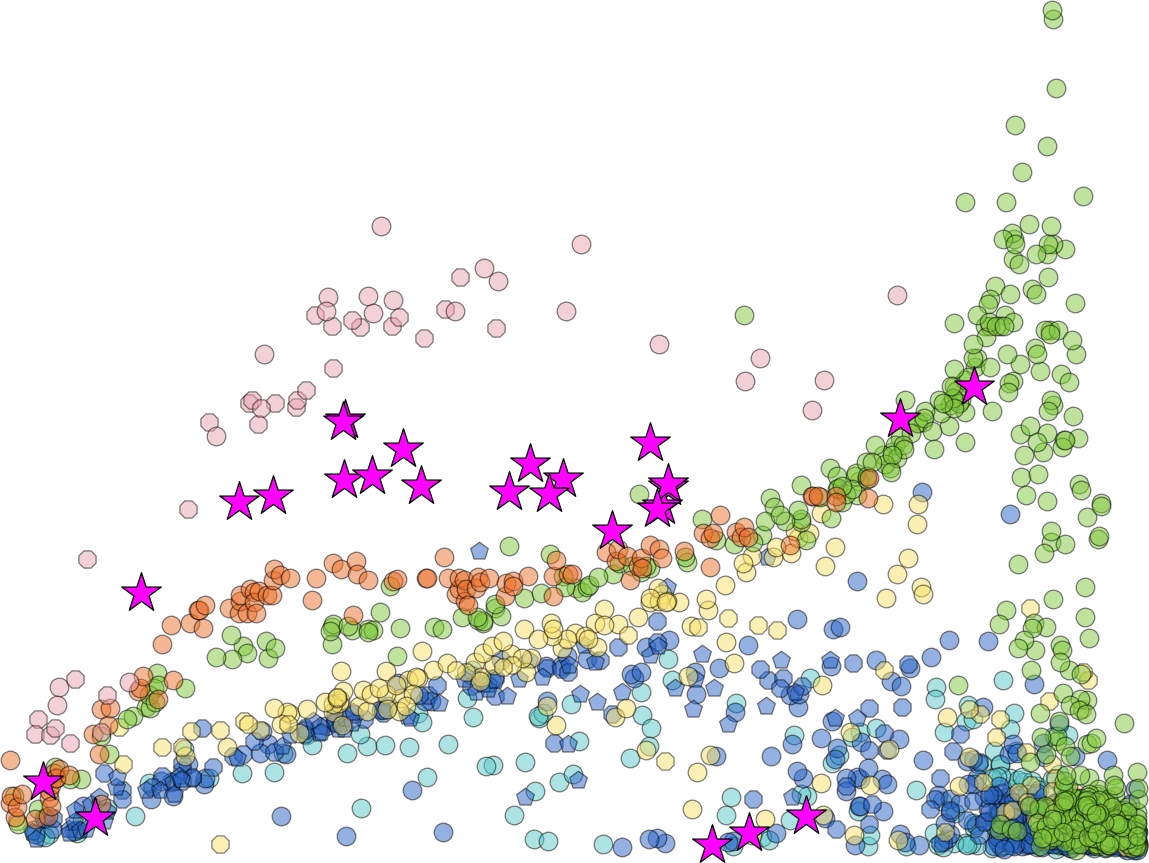
النجوم تشبه القمم الدوّارة: تولد سريعة الدوران، ثم تتباطأ مع الزمن. هذه العملية مثل الساعة الرملية: كلما كان دوران النجم أبطأ، كان أكبر سنًا. يستخدم علماء الفلك هذا النمط لتحديد أعمار النجوم، لكنهم يحتاجون إلى مجموعات مرجعية من النجوم ذات أعمار معروفة.
العنقود المفتوح NGC 752 هو إحدى هذه المجموعات، حيث وُلدت نجومه معًا منذ حوالي 1,3 مليار سنة. إنه يسد الفجوة بين العنقود الأصغر NGC 6811 (1 مليار سنة) والعنقود الأكبر NGC 6819 (2,5 مليار سنة). سابقًا، لم يكن من الممكن قياس سرعات دوران النجوم المطلوبة في NGC 752، لذا كانت معايرة "العمر-الدوران" غير دقيقة.
المقارنة مع النماذج أظهرت أن الطرق الحالية تبالغ في تقدير أعمار العديد من النجوم بنسبة 20–50%. السبب هو نقص البيانات للأعمار المتوسطة. الآن، يعمل NGC 752 كمرساة موثوقة لتحسين تقديرات العمر. هذا مهم بشكل خاص لأن البعثات الفضائية المستقبلية مثل Gaia DR4 وRoman وPLATO ستقيس فترات دوران عشرات الملايين من النجوم، وستصبح دقة المعايرة هي القيد الرئيسي.
الملخص الأصلي
كما كتبه المؤلفون، بالإنجليزية arXiv:2608.10077v1
Empirical gyrochronology relies on co-eval stellar associations to map stellar rotation as a function of mass and age. The accuracy of its age predictions is therefore limited by the number and quality of benchmark rotation sequences. The well-characterized clusters NGC-6811 (t ~ 1 Gyr) and NGC-6819 (t ~ 2.5 Gyr) bracket an intermediate-age interval in which stellar spin-down remains poorly constrained due to lack of available rotation data. At t ~ 1.3 Gyr, NGC-752 provides a critical benchmark within this gap, but previous measurements could not define the G- and K-dwarf rotation sequence needed for calibration. Here, we combine Gaia-based NGC-752 membership lists with literature rotation periods to map NGC-752's slow-rotator sequence for the first time. We identify a well-defined sequence intermediate between those of NGC-6811 and NGC-6819. Stars near Teff ~ 4500 K rotate more slowly than their counterparts in NGC-6811, indicating that stars experiencing stalled spin-down at ~1 Gyr have resumed appreciable spin-down by the age of NGC-752. Adopting an age of 1.3 Gyr for NGC-752, we further show that existing empirical gyrochronology models overestimate the ages of many G and early-K dwarfs by 20--50% because they lack intermediate-age calibration data, although uncertainty in the absolute age of NGC-752 may account for part of this offset. NGC-752 therefore provides a necessary anchor for improving rotational age estimates. This calibration is especially timely because Gaia DR4, Roman, and PLATO are expected to yield rotation periods for tens of millions of stars, making the age coverage of benchmark sequences a principal limitation on large-scale gyrochronology.
يمكن رؤية العنقود NGC 752 حتى بالمنظار الثنائي في كوكبة المرأة المسلسلة، وهو أقدم من الجبال على الأرض، لكنه أصغر من أقدم الأحافير.