Andrew W. Mann

4 articles · 30 co-authors · latest: 2026-08-10
376 citations · h-index 9 · 33 papersData: Semantic Scholar

We have retold 4 papers by this author. most often about: red dwarf, brown dwarf, Sun. 30 co-authors across our retellings.

Links in the knowledge graph
Exoplanets2026-01-092 minarXiv:2601.05799express
A Warm Belt Around Red Dwarfs
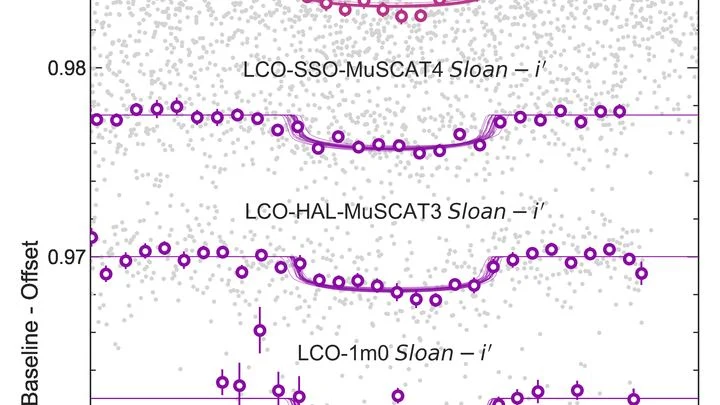
Two new planets are circling dim red stars. One is nearly the size of Earth, the other is three and a half times larger. Both lie in what astronomers call the warm zone: a region where starlight doesn't scorch the surface but also doesn't leave it in perpetual cold. The host stars are red dwarfs, the most common stars in the galaxy.
Exoplanets2026-01-151 minarXiv:2601.10598express
Four Teenage Planets Around a Young Star
350 light-years away, four planets orbit the star V1298 Tau. They are 5–10 times larger than Earth but lighter than they appear. For nine years, astronomers tracked their motion to understand what they are made of and how they lived in the past. The planets are lined up in a chain: their orbital periods are nearly in 3:2, 2:1, and 3:1 ratios.
Exoplanets2026-02-181 minarXiv:2602.16646express
Two Restless Planets: Light but Different Inside
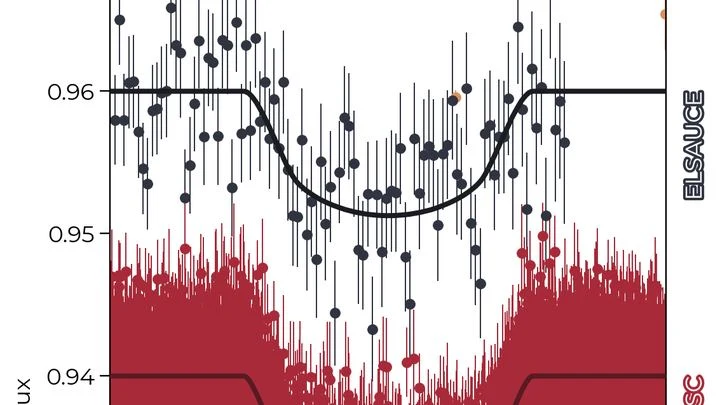
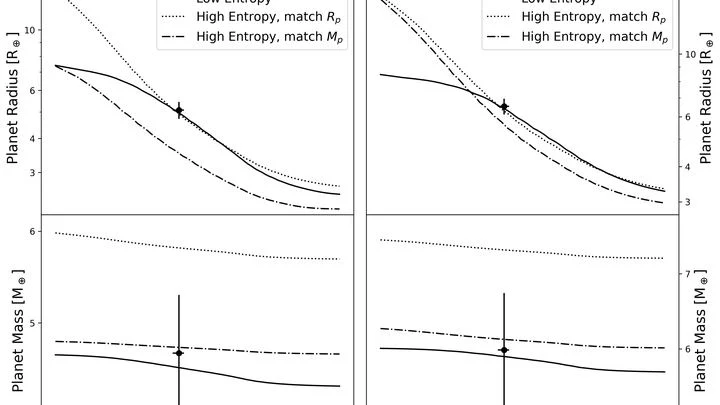
NASA's TESS space telescope monitors thousands of stars, catching the moment when a planet crosses its star's disk — the star's light dims slightly. That's how astronomers spotted two planets orbiting stars similar to our Sun. One, TOI-883 b, completes an orbit in ten days; the other, TOI-899 b, takes nearly thirteen.
Stellar2026-08-101 minarXiv:2608.10077express
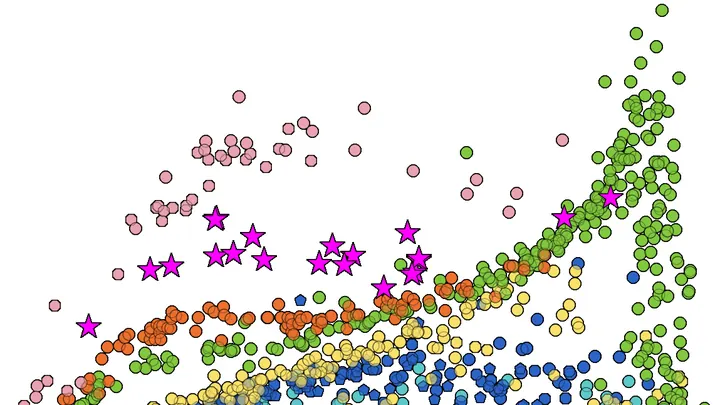
How Stars Age: The Spin Rate Connection
Stars are like spinning tops: they start fast and gradually slow down. This process acts like an hourglass — the slower a star spins, the older it is. Astronomers use this relationship to estimate stellar ages, but they need reference groups of stars with known ages.