ذكاء اصطناعي يبحث عن المواد كطاهٍ محترف سريع
البحث عن مادة جديدة يشبه الطبخ دون وصفة: تجرب وتجرب، وكثيرًا ما ترمي النتيجة. في السابق، كان العلماء يقلّبون المقالات يدويًا ويفحصون التركيبات واحدًا تلو الآخر. الآن ظهر «طاهٍ آلي» يقرأ الأدبيات بنفسه، ويمزج المكونات، وينظر إلى ما خرج.
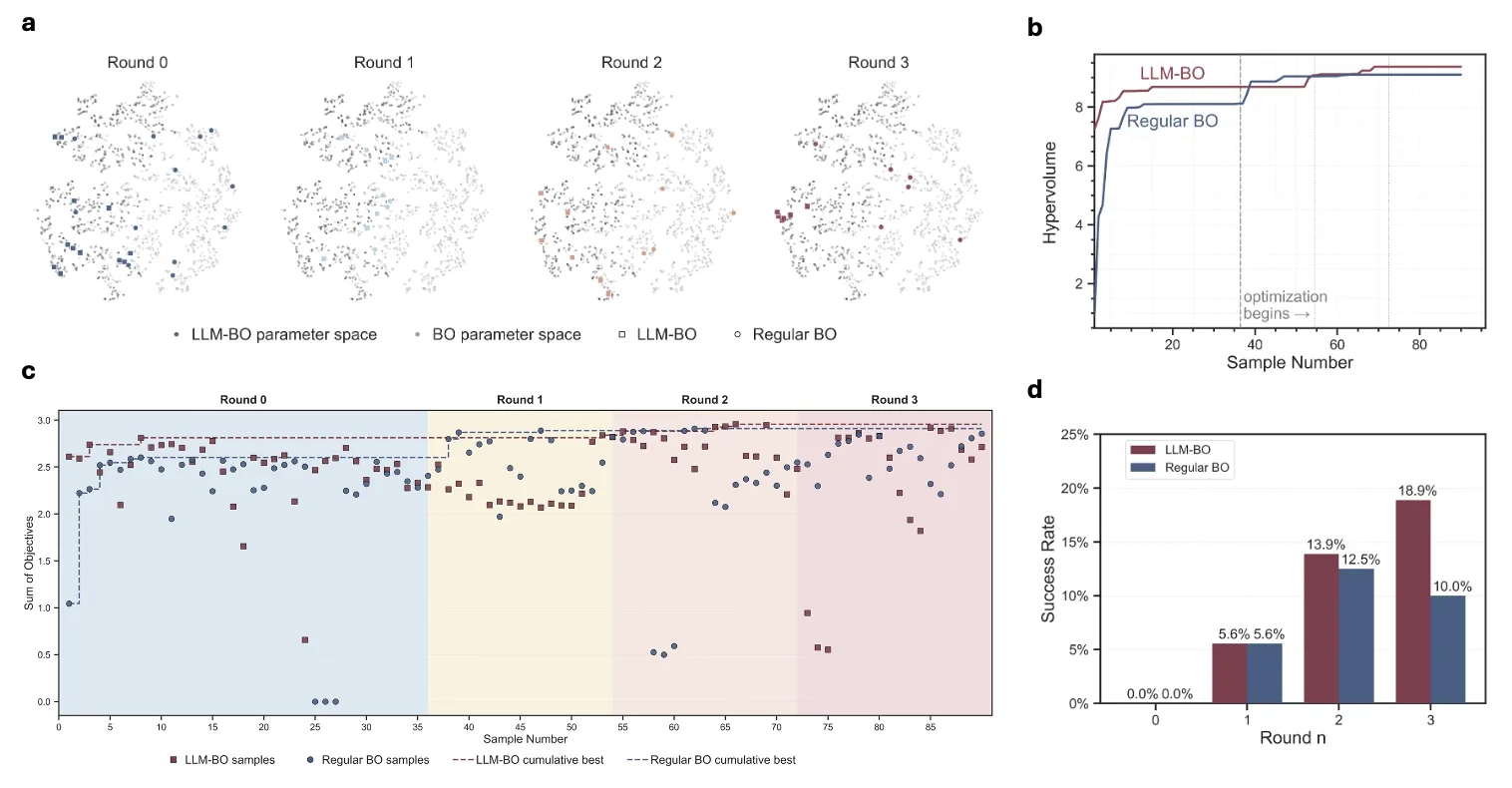
الآلي لا يكتفي بتكرار وصفات الآخرين. بعد كل محاولة، يتذكر ما نجح وما فشل، وفي المرة التالية يجرب خيارًا أكثر نجاحًا. في الاختبارات، أعطى هذا الأسلوب منذ البداية عينات جيدة أكثر من التجريب العشوائي.
الآن، يتحول البحث عن المواد من التخمين إلى التعلّم: فالنظام يصبح أذكى مع كل محاولة. هذا هو الطريق إلى مختبرات آلية بالكامل، حيث تُكتشف مواد جديدة للإلكترونيات والخلايا الشمسية في أيام، لا في سنوات.
الملخص الأصلي
كما كتبه المؤلفون، بالإنجليزية arXiv:2608.15928v1
Most computationally predicted materials are never synthesized because conventional synthesis optimization is slow, expertise-dependent, and iterative. Here we present a closed-loop framework that automates this expert workflow by placing human tacit knowledge in the loop through a large language model (LLM) that distills synthesis knowledge from the literature, high-throughput hyperspectral imaging for rapid film evaluation, and multi-objective Bayesian optimization guided by experimental feedback. In a paired optimization campaign, LLM-assisted initialization produced more Pareto-optimal samples and higher hypervolume than a Latin hypercube sampling baseline at matched trial counts, and this advantage persisted throughout iterative optimization. We demonstrate the framework by synthesizing the previously unreported perovskite-inspired compound Rb3BiI6 as thin films and validating the optimized films by optical bandgap analysis and X-ray diffraction. The framework transforms synthesis prediction from single-shot recommendation to iterative learning, providing a generalizable strategy to accelerate automated and fully autonomous experimental materials discovery.
النموذج اللغوي يقرأ المقالات ككيميائي متمرس: فهو يلتقط من النص وصفات التخليق التي ربما لم يذكرها المؤلفون إلا عابرًا.