How a tiny satellite makes a black hole 'sing' ⚡ экспресс
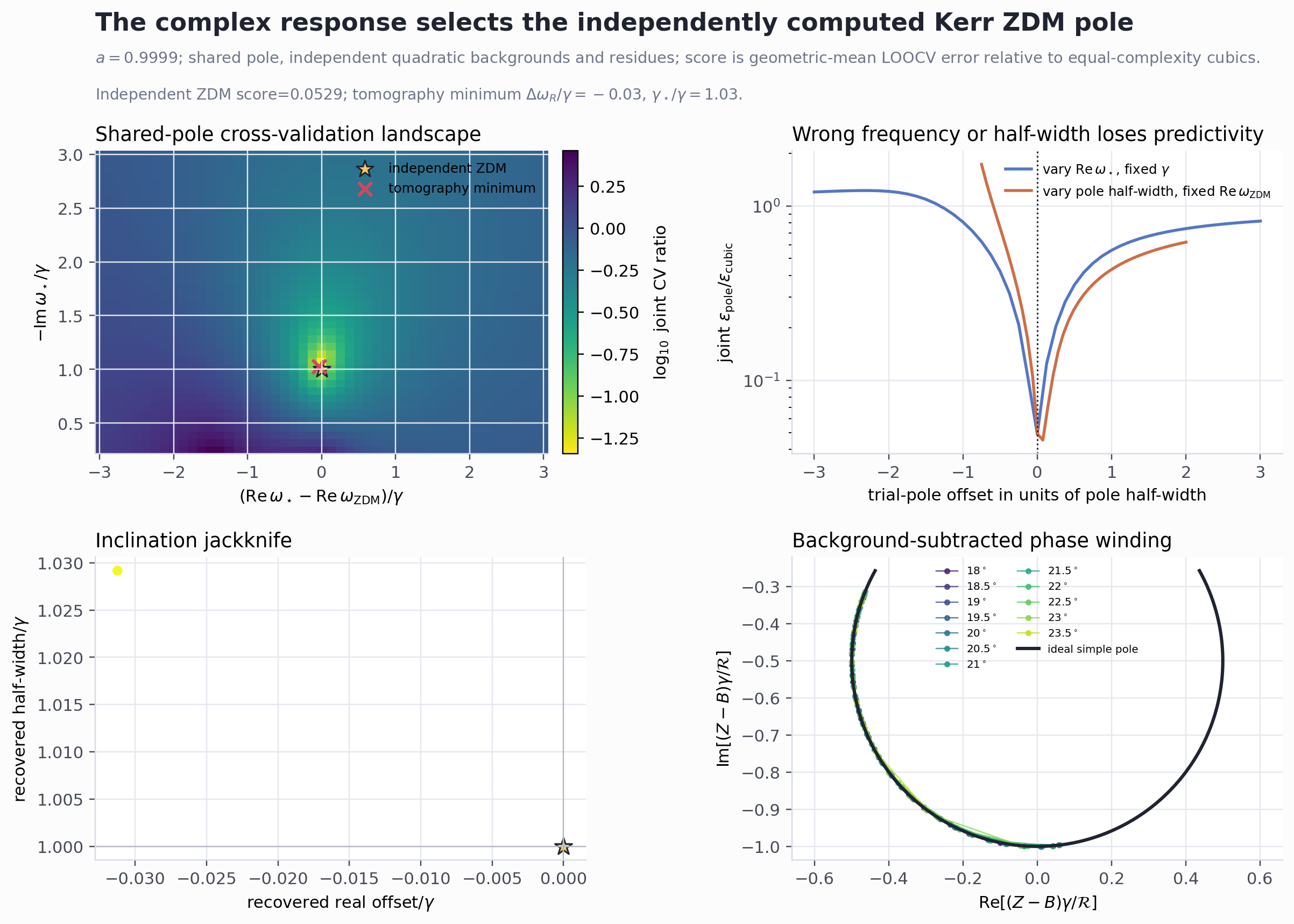
Black holes have a 'voice'—long-lasting oscillations that barely die out. A tiny satellite, falling into such a hole, can make it 'sing' louder, much like a rhythmic hammer tap swinging a bell. And from the purity of the sound, we can measure the strength of gravity on its surface.
🎯 Such nearly eternal oscillations are only possible for black holes spinning at the limit—their 'surface' moves at a speed close to light. For slow holes, the sound fades almost immediately.
🎬 Stealing energy from black holes has been described in science fiction—from novels to the concept of the 'Dyson sphere'. Now it's not fiction but an observable phenomenon: a satellite's resonance sucks out the rotation, converting it into gravitational waves—and we will soon be able to hear it.