Orchestra Without a Conductor: An Elastic Gang for LLM Inference ✛
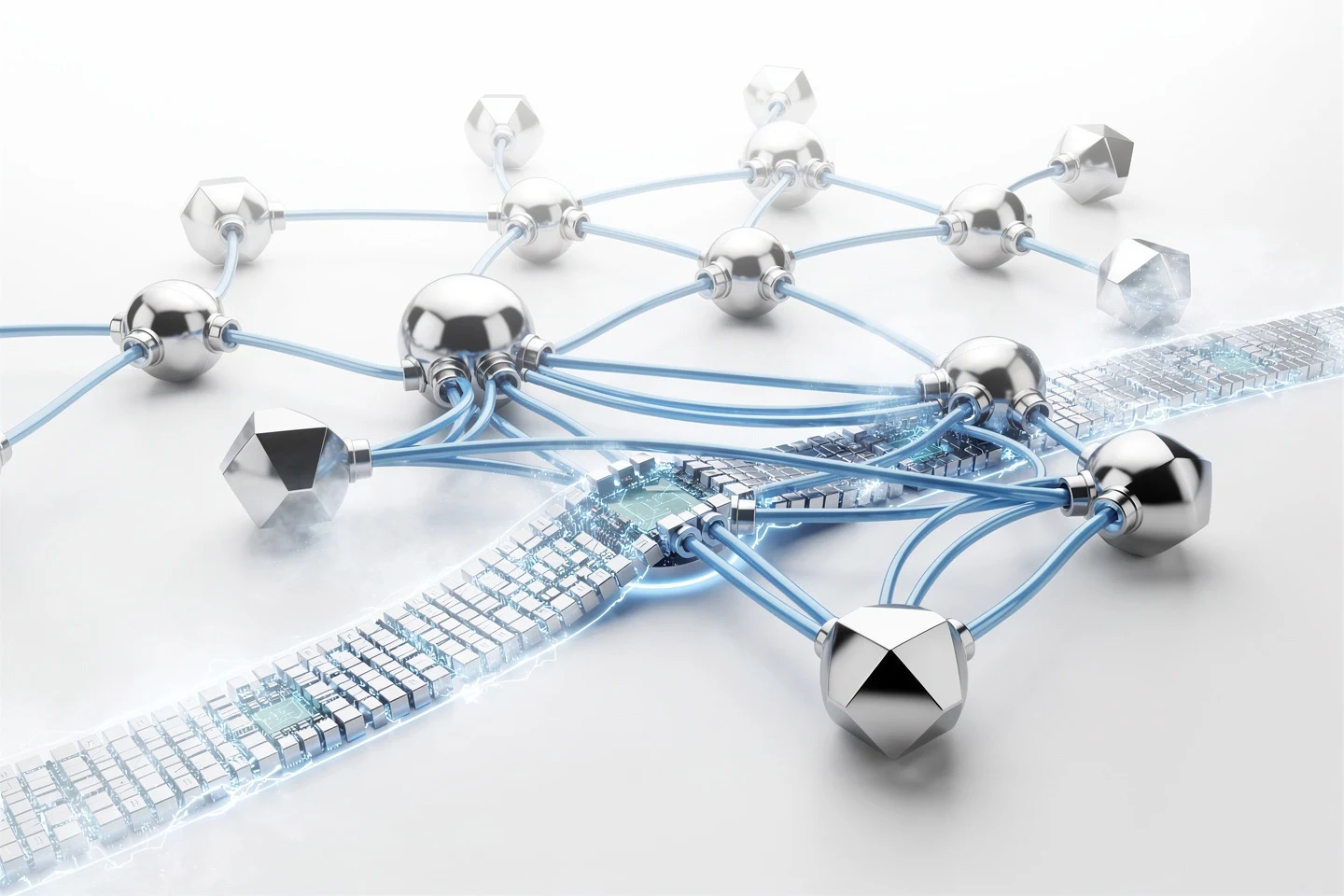
Seven cores froze at an invisible barrier. The eighth lingered on someone else's process, and the entire LLM inference hung. That's the central collision of machine learning tasks and ordinary processes sharing a CPU. An inference gang demands that all cores strike in perfect unison — otherwise silence. But the operating system can't just freeze a core mid-token: the barrier will never wait for the latecomer, and allowing a new participant to join would silently distort the result.
In Anima OS, an operating system written in Rust, they solved this by turning the gang into an elastic orchestra without a conductor. Each core-musician can join or leave the ensemble strictly between measures: that is, between tokens. The ACK-latch protocol works like this: before generation begins, an activity flag is set and the epoch number is incremented. Every core that can lend itself acknowledges the current epoch, having first saved its process state, like a musician pausing their instrument and nodding. The lineup for the next token is frozen in a single atomic word — a bitmask containing only those whose acknowledgment matches the epoch at the moment of fixing. This mask is published before the token starts, and each barrier-waiting point reads exactly that. A core that didn't acknowledge in time simply isn't included in the current token — no one waits for it, and its work is stolen by its neighbors.
Tests on an AMD Ryzen 9 9800X3D (Zen 5 architecture) with SmolLM2-135M and Qwen2.5-7B models showed: when a quarter of the time was spent on inference, overall throughput for ordinary processes rose by 1.75× compared to static core partitioning — from 327 to 574 service quanta per second. Generation speed didn't drop, and model output remained bit-identical to a fixed configuration. The hash of final logits — numerical probability scores for tokens—0x9a2917eca1a62bd1 never changed in any scenario. Core return latency after generation ended was a median of 0.22 microseconds — practically instant. And capturing a busy core, under a conservative policy, takes one scheduler quantum (about 16 milliseconds): the borrowing process doesn't interrupt its quantum; the core joins the gang only after the quantum expires.
The elastic gang shatters the conventional wisdom that hard-barrier computations are incompatible with dynamic core reallocation. The ACK-latch protocol turns an inference group into a full-fledged scheduling object: it shares resources with the rest of the system without sacrificing correctness. This opens the door to operating systems where LLM inference is not an isolated task but a routine service that adapts to load, much like an orchestra changing its lineup between symphony movements. The mechanism could be ported to Linux with the SCHED_DEADLINE scheduler, adapted to heterogeneous architectures (big.LITTLE), and integrated with power-saving policies. Thus the elastic gang, synchronizing on a single word-score, takes a step toward solving the fundamental problem of peaceful coexistence for synchronous and asynchronous computations in one system. Now a stalled core is not a disaster. Missing the barrier, it simply skips a beat, and the elastic orchestra plays on, and not a single note rings false.
Even with 301 process migrations within a 10-second window, inference remained bit-identical, and throughput measurement variance stayed below 0.9%.