Computation, in the broadest sense, is the performance of operations on information. While we typically associate it with electronic computers, the concept extends to any system that processes inputs to produce outputs — including living organisms. In biology, computation happens at multiple scales: from the molecular machinery inside cells that reads and expresses genes, to the neural networks in brains that process sensory data, to the collective behavior of organisms like slime molds that solve optimization problems without a central brain.
History
The idea that biological systems compute dates back to the mid-20th century, with figures like Alan Turing and John von Neumann exploring self-reproducing automata and the computational power of simple rules. However, the modern field of biological computation gained momentum in the 1980s-90s with research on neural networks and artificial life.
How it works
Biological computation relies on physical and chemical processes rather than silicon transistors. Neurons compute through electrochemical signals: they integrate inputs from thousands of synapses and fire an action potential when a threshold is crossed. Slime molds compute by physically reshaping their body to find efficient paths between food sources, effectively performing a distributed optimization. Even bacteria perform a form of computation when they sense chemical gradients and decide whether to tumble or swim straight, integrating noisy signals over time to make a biased random walk.
In practice
Understanding biological computation inspires algorithms like neural networks and ant colony optimization, and helps design synthetic biological circuits for medical and industrial applications.
Fun fact
A single slime mold can solve a maze and find the shortest path between two food sources, a task that requires sophisticated computation, yet it has no neurons at all.
The brain doesn't just react to the world: it's constantly guessing what will happen next. This principle is called predictive coding: neurons compare expectations with reality and update their internal picture when an error occurs. But how such a complex system could be wired into the living tissue of the cortex remained unclear.
In 1970, mathematician John Conway invented the Game of Life — a cellular field where just three rules generate surprisingly complex patterns. Forty years later, SmoothLife appeared: a version where space is no longer cellular but smooth, like a blurred patch. The authors of the new study took an even simpler variant of this continuous game: now everything changes smoothly in time as well.
A bacterium swims toward food. A chemical signal guides it forward, but with each movement the signal changes. A loop emerges: sensation, action, new sensation. The authors turned this loop into a measurable quantity.
Inside every cell, logistics is in full swing: tiny protein motors, like couriers, haul cargo along a network of microtubules. One of the main workhorses is kinesin, which steps using the energy of ATP (the cell's main energy currency). For a long time, researchers tried to evaluate it like a car: how much fuel it burns, how fast it gets there.
A city at night: lights on in some windows, dark in others. If you connect with lines the windows that light up simultaneously, you get a web of connections. Researchers studied such a web in tiny brain organoids — living clusters of nerve cells grown in the lab.
Tomographs don't produce ready-made pictures. They collect numerous 'shadows' — projections of innards from different angles or using various signals — and mathematically reconstruct a 3D picture from them.
The classical neuron is a chamber musician, drawing only one note from each string: it takes a weighted sum of inputs, adds a bias, and passes it through a nonlinearity.
Imagine a book being simultaneously copied by trillions of scribes. As long as most of them check against the original, the narrative remains meaningful. But once control weakens, the text accumulates typos, which multiply until the manuscript turns into gibberish.
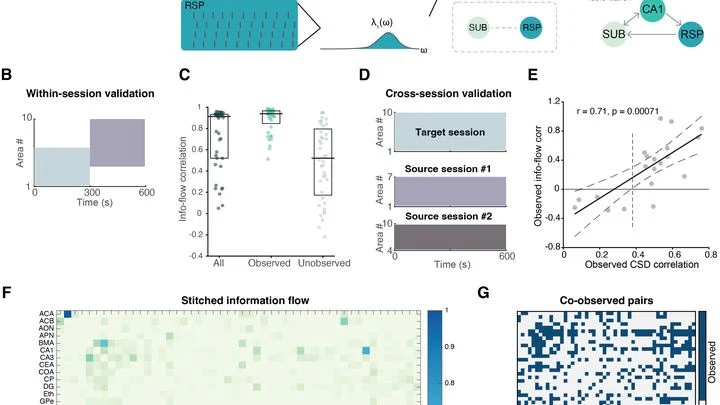
A patchwork quilt where each patch is a recording of activity from a small brain region. One patch was stitched on Monday in London, another on Tuesday in New York, and a third a month ago in Tokyo. This mosaic covers the brain only partially, and there is no common seam to join them.
In the 1990s, philosopher John Searle devised a thought experiment: a person sits in a room and, without knowing Chinese, follows instructions to produce correct answers in Chinese. From the outside, it seems they understand the language, but inside, it's just mechanical rule-following.
Imagine an interpreter sitting in a meeting room, translating every word. But then they notice their translation could improve if they learned from their mistakes. They start noting which phrases caused confusion and adjust them. Within an hour, their translation is more accurate and the meeting runs smoother.
In a grand courtroom, a meeting is in session. Hundreds of translator-neurons simultaneously hear fragments of phrases, and must piece them into a single coherent picture. This is exactly how large brain networks turn scattered signals from the eyes into a unified object image.
Molecules float in a test tube. Their abundance (say, the concentration of some protein) becomes the input signal. And the output isn't just a cloudy solution but a clear yes-or-no answer.
The authors build a chemical cascade that does exactly that.
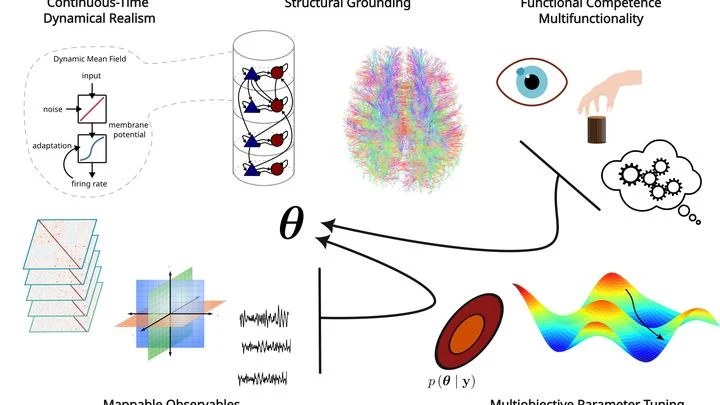
Engineers are building a car. Some assemble an exact replica of the engine, every piston and spark plug, but the car doesn't move: there's no steering wheel or wheels. Others build a fast self-driving go-kart, but its engine is made of playdough and doesn't resemble a real one. This is roughly the situation in brain science.
A person hunting for keys mentally runs through places where they might be. A bird that tucked hundreds of seeds into crevices in autumn retrieves them flawlessly in winter. How can a brain hold so many addresses when all birds have roughly the same number of neurons? The answer lies in geometry.
Inside every cell, life is bustling: tiny protein machines tirelessly haul cargo, read genes, and fix errors. But their work is far from perfect: they often 'spin their wheels,' take backward steps, or get stuck in futile cycles. It's like a city traffic jam where cars dart around aimlessly, burning fuel.
In the kitchen, the sequence of actions is strictly dictated by the recipe: first chop, then fry, and nothing else. In quantum physics, the role of the recipe is played by causality — one event causes another, and they cannot be swapped. But in recent years, theorists have devised clever scenarios where the order of events seems to 'hang' in uncertainty.
Every time you mull over a risky move, whether to invest in stocks or hold off, an inner dialogue runs through your head. Usually, scientists try to reconstruct that dialogue from the final choice alone, as if a detective were reconstructing a conversation between two people from a photo of the meeting spot.
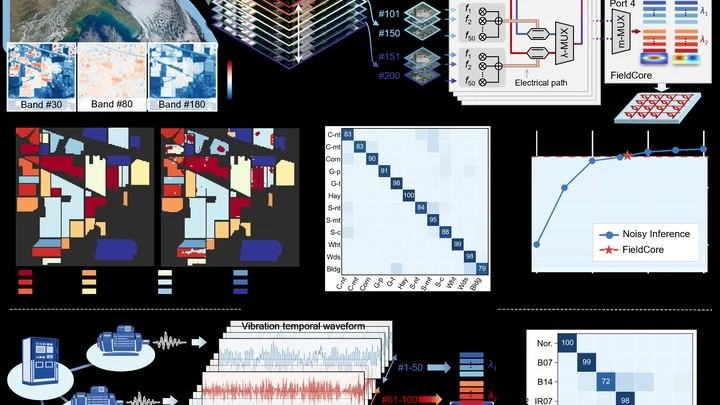
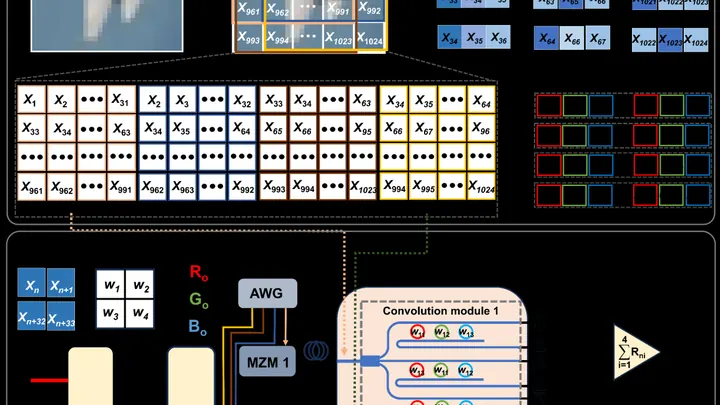
A typical computer shuttles electricity along copper traces, and every operation is a queue: first one thing, then another. Light works differently. In a single beam, you can mix dozens of signals without them interfering, like different voices in a choir, singing at once but each heard distinctly.
The new FieldCore chip uses five such "voices" at once.
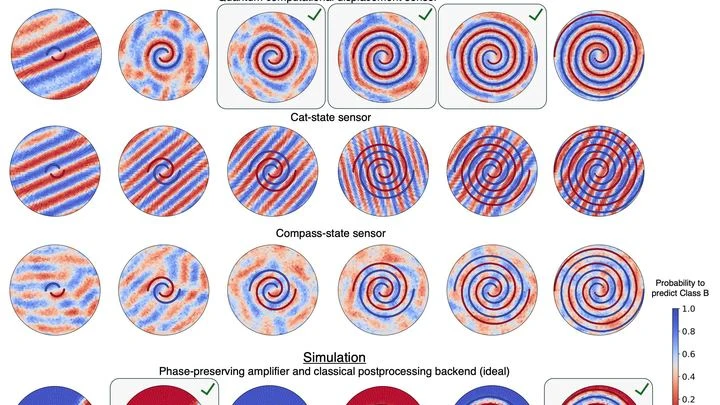
A judge walks into the courtroom but doesn't look at the evidence: he immediately delivers the verdict. That's how the new quantum sensor works: it doesn't measure the signal but directly decides which class it belongs to.
In conventional quantum sensing, it's all like a detective story: first you gather clues (measure the signal), then you analyze them.
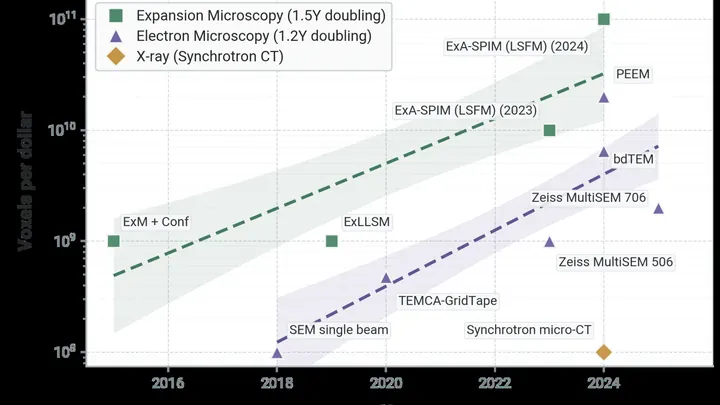
Modern microscopes see the brain in exquisite detail: not just the synapses themselves, the contact points between neurons, but also the molecules they are made of. Such images are becoming more common and cheaper to produce.
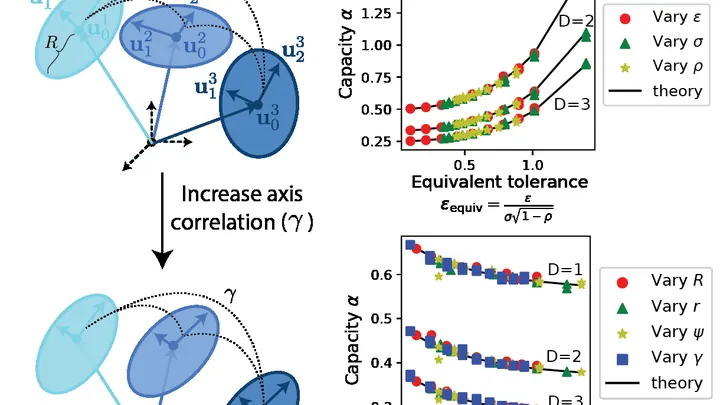
Neurons in the brain and nodes in artificial neural networks don't just fire with simple yes/no signals; they also handle smoothly varying quantities, like where an object is and how big it is. But neural responses are finicky: the same stimulus triggers slightly different bursts of activity each time.
A chef's knife and a peeler each handle different tasks, but when a cook learns a new recipe, they often grab the same knife for everything. The brain seems to do the same when mastering a new skill of distinguishing patterns.
In the experiment, monkeys trained for weeks to tell apart barely noticeable differences in complex patterns.
Microbial communities are like a noisy orchestra: thousands of instruments, and it's hard to tell who's playing the lead. In the gut, ocean, or soil, millions of bacterial species live, and scientists need to figure out which ones truly matter for human health or soil fertility.
The new approach works like smart laundry sorting.
At night, the brain doesn't switch off. Instead, it sorts through the day's events like a librarian arranging books on shelves. But where do those strange, sometimes nonsensical dream images come from? Many have assumed they're just random noise with no meaning.
A new computer model shows that randomness doesn't hinder: it helps.
A conventional computer sees the world flat: numbers are just points on a line. But a color image or a 3D scene demands more — four numbers that describe both position and rotation. Such quadruples are called quaternions, and until now electronics handled them clumsily, breaking them apart and reassembling them.
The new chip changes the approach.
An orchestra plays inside a giant refrigerator. The musicians are qubits, the elementary cells of a quantum computer. To play in harmony, they need silence: thermal noise drowns out the melody. That's why the heart of a quantum processor is cooled to nearly absolute zero — minus 273 degrees Celsius.
Plants employ an army of perfect couriers to deliver energy. Each photon of sunlight is absorbed, and its energy is instantly, with almost no loss, transferred to reaction centers where nutrient synthesis occurs.
Physarum polycephalum is a tiny brainless slime mold, resembling spilled lemonade. But this blob, living in humid environments, can solve mazes. Its secret lies in a unique way of processing information: it uses fluid flows and chemical signals, turning its entire body into a kind of liquid processor. Every movement, every reaction becomes a computational step.
A quantum computer is like an orchestra: each musician plays their part, but the slightest false note ruins the symphony. The physical qubits it is built from are noisy and error-prone. To protect computations, they are combined into logical qubits using quantum error correction.
A team assembling a jigsaw puzzle from random pieces: how many simultaneous moves does it take to complete the picture? If the pieces are independent, they all go down at once. If each piece depends on the previous one, you have to work one at a time. So it is with systems: some states assemble instantly, others require a long sequential effort.
Fog thickens over the line "def max(a: Int, b: Int): Int". What does it do? It returns the larger of two numbers, but how can you verify that? You could write a dozen tests with specific pairs: max(2,3)=3, max(5,5)=5, max(-1,0)=0. Still, a nagging doubt remains: what if it breaks for, say, a million and minus a million?