Popular

Artificial Intelligence cs.AI

9 articles

Artificial intelligence, excluding vision, robotics, machine learning, multiagent systems and NLP: expert systems, theorem proving, knowledge representation, planning, uncertainty in AI.

articles

How Artificial Intelligence Becomes a Scientist's Partner

Algorithms sift through millions of options, suggesting new ideas to scientists—from medicines to distant planets. Robotic labs then test these hypotheses immediately, making science faster and more accessible.
arXiv:2511.20976 · 2025-11-26

Why neural networks are like black holes: a lesson from 'bald' models

Inside language models like LLaMA lie tangled patterns, their strength depending on the training method. But to an outside observer, the model always yields the same result—much like a black hole that 'forgets' every detail of the matter it swallows. This explains why simple fine-tuning methods are
arXiv:2601.06788 · 2026-01-11

AI Assistant Masters Quantum Circuits

A chatbot-style AI now controls superconducting circuits, designing and executing measurements—including a famous quantum trick. This turns complex quantum hardware into a tool as easy as a smartphone, speeding up progress.
arXiv:2603.08801 · 2026-03-09

Quantum Entanglement Helps Play Pong

Quantum entanglement, where particles are linked at a distance as if by an invisible thread, helps a computer learn Pong faster. A hybrid algorithm with quantum vision sees hidden connections and outperforms ordinary programs. Quantum effects step out of labs onto the playing field.
arXiv:2603.10289 · 2026-03-11

Quantum Rainbow: How a Tiny Computer Sorts Mountains of Data

Researchers have proved that even a tiny quantum processor can outperform massive classical computers in sorting and analyzing big data. The 'quantum sketch' algorithm was successfully used to decode genes in individual cells and to gauge the sentiment of movie reviews. All of this was accomplished
arXiv:2604.07639 · 2026-04-08

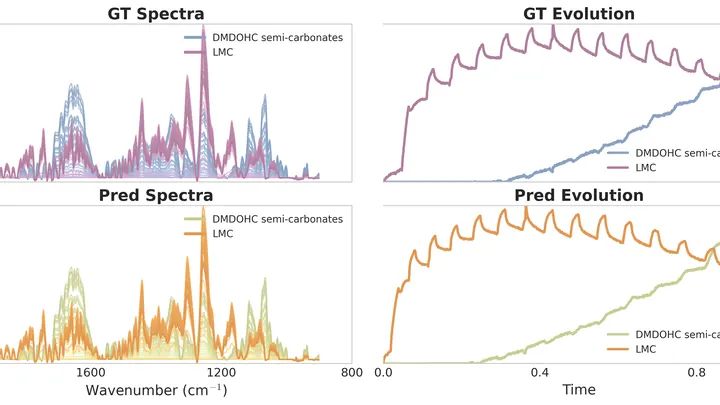
AI Learns to Listen to Black Holes: A Simple Recipe for Gravitational Waves

Collisions between black holes shake spacetime itself, sending out gravitational waves. Decoding these signals used to require hours of computer simulations—until scientists built an AI agent. Like a chef reconstructing a recipe from taste, it finds a simple formula that nearly matches exact calcula
arXiv:2605.11280 · 2026-05-11

Quantum sieve catches one-in-a-million glitches

Predicting rare disasters—market crashes, AI glitches—is nearly impossible. Classical computers demand oceans of data or predefined checklists. A new quantum algorithm flips this: it uses the blurry nature of qubits to amplify the faintest warning signs, offering a safety net for banks, power grids,
arXiv:2606.06316 · 2026-06-04

The Quantum Compressor: A New Way to Find Brain Tumors

Scientists have created a quantum algorithm that compresses images of a healthy brain almost losslessly. A tumor breaks the compression, and the program not only detects the disease but also highlights the affected area. Accuracy outperforms traditional methods — another step toward reliable assista
arXiv:2606.27411 · 2026-06-25

Cosmic Radio: How a Neural Network Catches the Whisper of Neutron Stars

The Aframe algorithm, previously honed on black hole mergers, now teases out signals from binary neutron star mergers from the noise of gravitational wave detectors in fractions of a second. Thanks to a trick from the radio engineer's toolbox—heterodyning—minute-long 'chirps' are compressed to just
arXiv:2607.01372v1 · 2026-07-01