A millisecond is a unit of time equal to one thousandth of a second (10^-3 s). It is a human-scale interval that becomes significant in physics when dealing with fast processes, such as the rotation of neutron stars, the duration of fast radio bursts, or the timing of high-speed electronics. In astrophysics, millisecond pulsars spin so rapidly that their rotation periods are measured in milliseconds, providing precise cosmic clocks.
History
The millisecond as a unit has been used since the adoption of the metric system in the late 18th century. Its importance in physics grew with the discovery of millisecond pulsars in 1982 by Don Backer and colleagues.
How it works
Time intervals are measured using periodic phenomena, such as atomic vibrations or the rotation of celestial bodies. A millisecond is defined as 1/1000 of a second, which itself is defined by the cesium-133 atom's hyperfine transition frequency. In practice, instruments like oscilloscopes and time-to-digital converters can resolve events at the millisecond scale, and even faster.
In practice
Millisecond timing is essential in telecommunications, GPS systems, and high-frequency trading, as well as in studying fast astrophysical phenomena like fast radio bursts and pulsar timing arrays.
Fun fact
A millisecond is about the time it takes a housefly to flap its wings once, but a neutron star can spin around 700 times in that same interval.
Systems:SICGSOne thousandth of a second, defined as 10^-3 times the SI base unit second.
It's like a sprint record: to break it, you need a perfect run-up. But for sub-millisecond pulsars, the run-up is too short. The fastest known pulsar, PSR J1748-2446ad, spins 716 times per second — faster than a kitchen blender. If it were the size of Earth, a point on its equator would move at about 0.24 times the speed of light. But why doesn't any pulsar spin even faster?
In a particle accelerator, nuclei shatter into fragments like a porcelain cup dropped on the floor. Each fragment flies through silicon wafers, which register the impact and its strength. But to distinguish a real signal from random noise, you need a threshold: below it, readings are considered interference.
A spinning top that whirls so fast it completes 220 rotations in a single second: that's exactly what China's FAST radio telescope has caught. This is the pulsar PSR J1810-0623, a neutron star the size of a city but with more mass than the Sun.
Rhythmic flashes of a lighthouse in thick fog: that's what searching for pulsars looks like. The lighthouse spins, and its beam periodically sweeps across the telescope. But the fog smears the light, making the period seem slightly different. If the same lighthouse was observed twice, you can compare: the periods should nearly match, and the smearing should be similar.
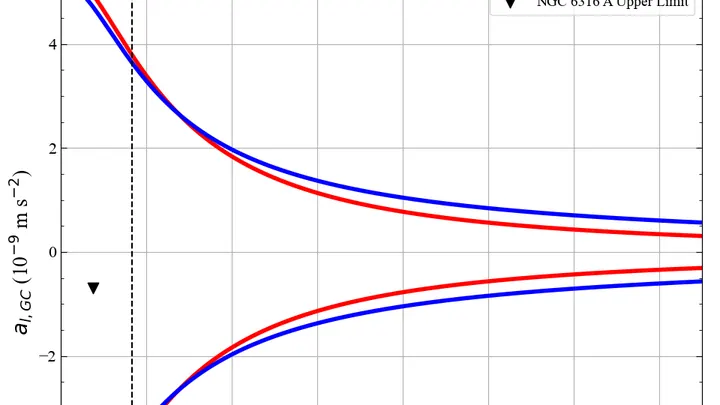
In a dense ball of hundreds of thousands of stars, what astronomers call a globular cluster, radio telescopes have picked up a faint but very steady rhythm. Every 2.45 milliseconds, that's 408 ticks per second, a radio pulse arrives.
The neutron star 1E 161348-5055 in the supernova remnant RCW 103 pulses with a period of 6.67 hours. That's very slow for such a compact object, and astronomers long puzzled over what was going on.
Short gamma-ray bursts — instantaneous, but most powerful explosions — are born from the mergers of neutron stars (the superdense remnants of dead stars).
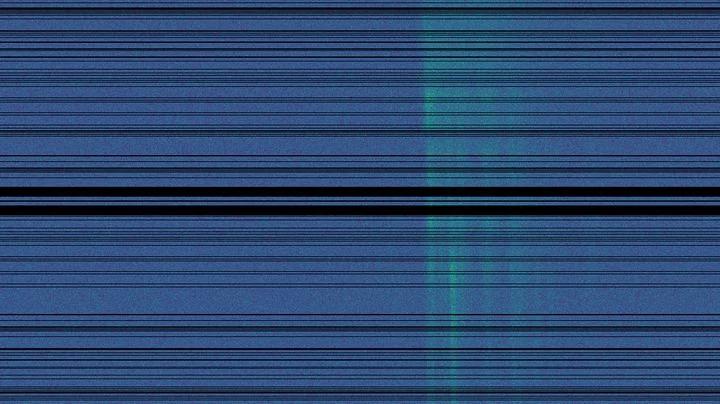
Short, powerful bursts of radio static from deep space have long puzzled scientists. Their source is believed to be the ultra-dense cores of dead stars, where magnetic fields are unimaginably strong.
A pulsar is a dead star spinning at breakneck speed, sending out radio pulses like a lighthouse. Usually these pulses arrive right on schedule, but occasionally there are true monsters among them — giant pulses that are thousands of times brighter than normal.