Earthquake Swarm: How Granite Comes Alive express
In 2019, residents of Palghar district in western India felt the ground slip from under their feet — not once, but thousands of times. Over two years, seismographs recorded about 50,000 tremors. This wasn't a typical earthquake with a main shock and aftershocks, but a swarm: a series of events that quiets down and then flares up again, like a smoldering fire fed with twigs.
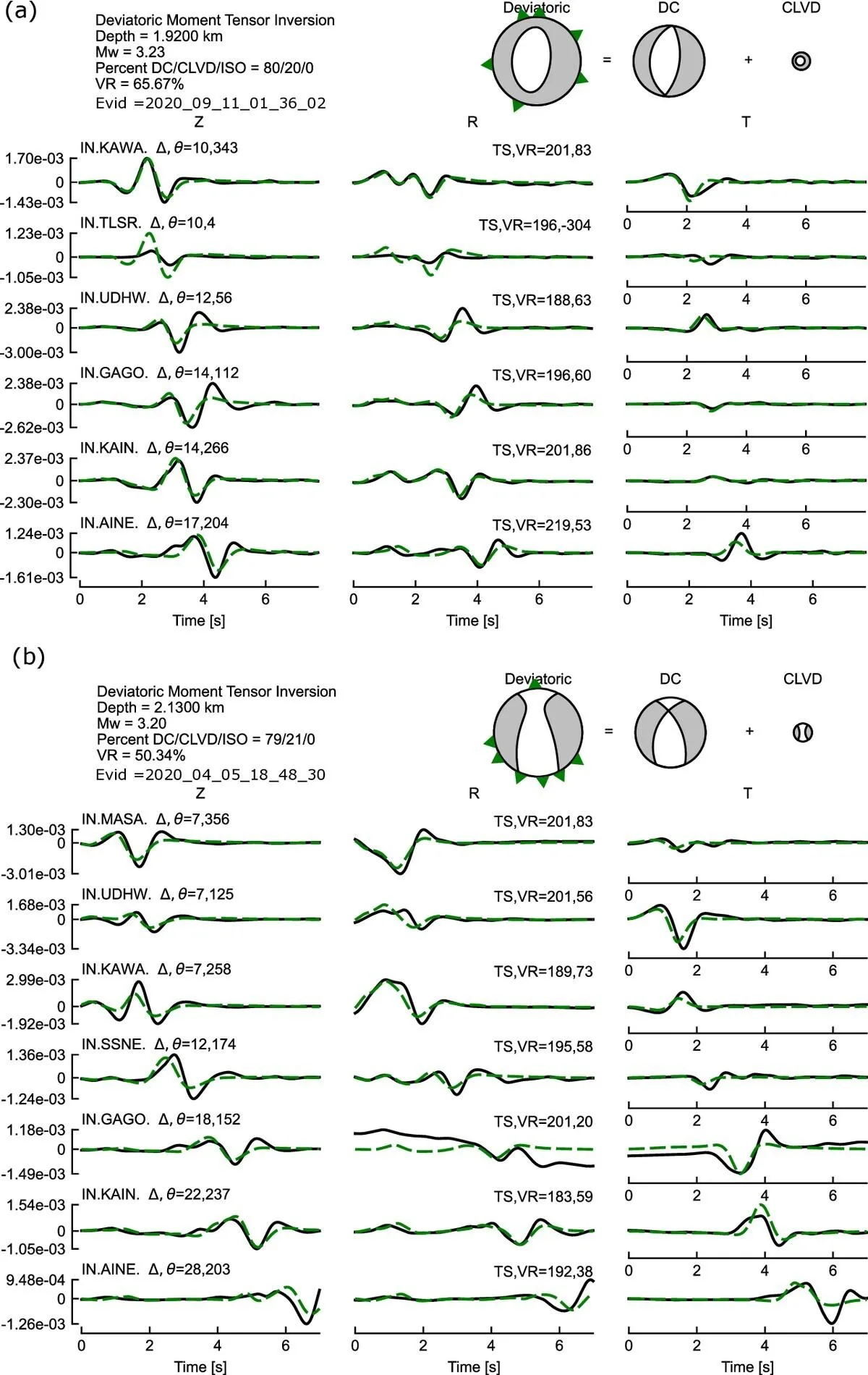
Scientists applied machine learning to catch even weak signals and re-examined every event. It turned out that the tremors originated on two shallow faults in the granite basement — rock that is usually considered strong and quiet. First, the western crack trembled, then activity jumped to the eastern one, and then spread into the damaged zone between them. This sequence resembles a relay race, but instead of runners, it's patches of crust passing the baton.
Usually, swarms are explained either by the movement of underground water that lubricates faults, or by slow slip without strong tremors. But in Palghar, neither mechanism works alone. Observations showed a mix: water aided deformation, and stress transferred from one fault to another, as if neighboring gears were catching each other. This discovery changes our view of how stable continental crust behaves and helps us better understand when and why the ground decides to remind us it's there.
During the Palghar swarm, locals reported a low rumble like thunder, even though the epicenters were about 5 kilometers deep.