SLAM is a mathematical framework that enables a moving platform (robot, drone, car) to simultaneously refine its own position in space and build a map of the environment. It is based on a probabilistic approach: the robot doesn't store a single exact position, but rather a whole fan of possible positions with varying degrees of confidence. Each new sensor measurement — from a laser rangefinder (lidar), inertial sensors, cameras — updates this distribution. The key idea is loop closure: when the robot returns to a previously visited place, it recognizes it and sharply reduces the accumulated error.
History
The concept of SLAM was formalized by Hugh Durrant-Whyte and John J. Leonard in 1991, although earlier works (e.g., Cheyne, 1986) had already tackled similar problems. Early implementations relied on the extended Kalman filter (EKF) and worked with radar or sonar data. A turning point came in 2002, when Montemerlo and Thrun introduced FastSLAM — a particle filter-based algorithm capable of processing thousands of landmarks in real time. Modern approaches, such as ORB-SLAM, use multi-sensor fusion and graph architectures, achieving high accuracy at large scales.
How it works
Probabilistic SLAM models the joint distribution P(x_{1:t}, m | z_{1:t}, u_{1:t}), where x is the trajectory, m is the map, z are observations, and u are control inputs. Recursive Bayesian filtering is commonly used: prediction based on a motion model, correction using sensor data. In Graph SLAM, the problem is transformed into a sparse graph where nodes are robot poses and landmarks, and edges are constraints from odometry and observations. Optimizing the graph using Newton-Gauss or Levenberg-Marquardt methods yields the best estimate of the entire history. For loop closure, place recognition methods are used — often based on visual bags of words (BoW) for camera systems. Particle filters, in turn, represent the distribution with a set of hypotheses (particles), each with its own map; this approach is effective for nonlinear models and non-normal noise.
In practice
A self-driving car doesn't drive blindly — it builds a 3D model of the street and knows where it is. Robot vacuums memorize the layout of an apartment so they don't miss corners.
Fun fact
Some SLAM systems use multiple cameras and inertial sensors at once, similar to how a person orients themselves by looking with their eyes and sensing the tilt of their body.
A radiologist looks at an abdominal scan and sees not just organs but their spatial relationships: which kidney is larger, where the tumor lies relative to a vessel. It's like reading a map, where it's not enough to know where a city usually stands; you also need to measure the distance between two points on the ground.
Space construction today is a costly hassle with prefabricated parts: every panel has to be lifted from Earth, then assembled in zero gravity, like building a model kit while wearing thick gloves. Engineers from a new study propose a different path: not hauling or printing, but letting the liquid itself sculpt the structure.
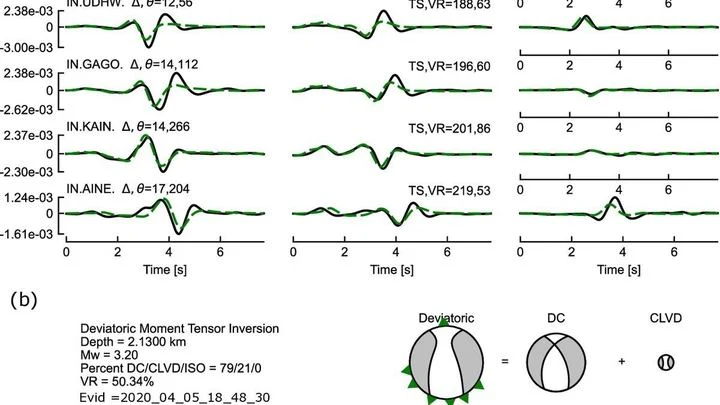
In 2019, residents of Palghar district in western India felt the ground slip from under their feet — not once, but thousands of times. Over two years, seismographs recorded about 50,000 tremors. This wasn't a typical earthquake with a main shock and aftershocks, but a swarm: a series of events that quiets down and then flares up again, like a smoldering fire fed with twigs.
Inside a piece of aluminum, atoms are arranged in neat rows, like bricks in a wall. But sometimes a row ends before reaching the edge, and a "step" appears in the crystal, which physicists call a dislocation. These defects determine how strong, ductile, and how a metal behaves under load.
A shipping container is a steel safe the size of a room, packed with goods. X-rays struggle to see through it: thick walls and dense cargo block the rays. Enter muons — particles born high in the sky that constantly rain down on Earth. They can pass through even lead, but they veer slightly off course when they encounter something heavy.
An array of radio telescopes is like a camera missing several lenses. Ever since Karl Jansky picked up the radio hiss of the Milky Way, astronomers have been trying to piece together a whole picture from fragmentary signals. But the antennas are spaced apart, and the mathematically “developed” image — the dirty map — ends up smeared.
Two hundred million stars. In the heart of the Galaxy, where the future survey by the Nancy Grace Roman telescope will aim, about 250 times during its mission the light of one of them will flicker at an invisible touch.
A group of robot explorers is like a team of cooks tasting the same dish. Each samples their own portion and shares an impression: clear, occupied, or uncertain. But tastes are subjective — one might miss a chair leg, another might only lick the edge.
A twitch of the robot's camera and it drops the part: its neural network is thrown off. But if you peek at its signals, they resemble constellations in a galaxy: when things go smoothly, they cluster in one sector, and just before an error, they abruptly shift to another. The boundary between them is as clear as a safe channel through reefs.
The robot juggler catches and throws balls in precise rhythm with a human, like two пульсара sending pulses in unison. Juggling three balls is a classic cascade, governed by a steady beat, like the uniform rotation of a cosmic lighthouse. Break the rhythm and the pattern crumbles.
The cameras of a self-driving car capture light like telescopes aimed at a distant galaxy. Each frame is a fragmented observation; together they must form a map of the road ahead.
The computer, like an astronomer, doesn't just stitch images together: it generates several possible bird's-eye views and compares them to real data.
Radar, like a bat in a cave, sends out a pulse and listens for the echo. But a microscopic imbalance in the receiver is unavoidable: it scrambles frequencies and creates a phantom twin for each target, like a second, slightly distorted echo.
Usually, these phantoms just get in the way and are cleaned up beforehand. In this new work, ghost echoes become an ally.
Modular satellites are built from cube-shaped blocks, like a construction toy. When struck by space debris, some blocks are destroyed, leaving a puncture. Engineers took inspiration from the way living tissue heals wounds. Surviving blocks detect disorder and trigger an alarm signal that travels at the speed of light through the entire structure.
A radio signal with layered modulation resembles the cultural layer of an ancient city: each level carries its own information, but over time they get jumbled by interference. Conventional algorithms get lost in this mess. The new TSDN method acts as a neural network archaeologist.
For a long time, biologists studied cells by listening to just one voice in a polyphonic choir: measuring gene activity while ignoring how DNA is packed. It's like trying to grasp a conversation knowing only one language. LATTICE fixes this: the program learns five molecular 'languages' at once — from gene activity to spatial markers.
When an unmanned aerial vehicle learns from an experienced pilot, it memorizes not individual maneuvers but entire safe corridors — the trajectories along which the human mentor moved. This approach is called imitation learning: the machine mimics expert demonstrations.
At intersections without traffic lights, people negotiate with glances. A self-driving car can't do that: it has to simultaneously decide whether to go or yield and plan its trajectory. Previously, these tasks were separated, making maneuvers jerky and dangerous.
Scientists have combined them using virtual force fields enveloping each car.
A regular radar is like a microphone in a buzzing crowd: individual sounds blend into mush. PiVoT works like a conductor who instantly recognizes each instrument in the tuning chaos. Instead of shuffling through hypotheses, the algorithm tightens a loop around the most likely targets — cars, cyclists, pedestrians.
A regular radar works like an amateur photographer: it takes a series of blurry snapshots and tries to stitch them into a panorama. Details are smeared, and in a long corridor or crowd, the robot easily gets lost.
The principle is simple: like a bat, the radar emits a wave and catches the echo.
A person in a boat turns by shifting their body weight. An unmanned vessel uses the same trick: a sliding weight inside the hull does the steering. Its movement is controlled by a neural network, anticipating the chaos of waves and gusts of wind. The propeller pushes the boat forward, while the weight shifts balance — like moving from one foot to the other.
A robot swarm is like a cloud of fireflies: each moves on instinct to wherever is freer, and chaos turns into order. For a long time, it was a mystery how coherence emerges without communication or commands. The answer came with the creation of the Response Map — a tool that, like an X-ray, illuminates the hidden logic of the machine brain.
A driver on a slippery road doesn't know exactly how the car will respond to the steering wheel, and learns on the go, leaving room for error. A smart control algorithm behaves in a similar way.
A child exploring an unfamiliar apartment crawls from object to object and remembers what is visible from each corner. This is how the brain builds a mental map — an internal model of space. The gradCSCG algorithm works on the same principle: it receives a video stream from a camera and independently draws a map of the room, relying only on the changing images.
When a glass of water is full, pouring more is pointless waste. Cloud gaming often does the same with video data: encoders push the stream to maximum, even though the eye stops noticing improvements long before the limit. This overconsumption means extra traffic and entropy in the network — useless noise clogging the channel.
Imagine a fleet of many ships, resembling a galaxy — a vast stellar system where every element follows the overall dynamics. From time to time, one ship breaks down, exploding like a supernova — a catastrophic event that can disrupt the integrity of the entire formation. If the damaged unit isn't replaced in time, the fleet loses combat capability.
For decades, global atmospheric models resembled artists forced to paint planetary storms with coarse brushstrokes: a resolution of 25–100 km forced them to 'guess' convection through approximate schemes, introducing systematic errors in rainfall and climate forecasts.
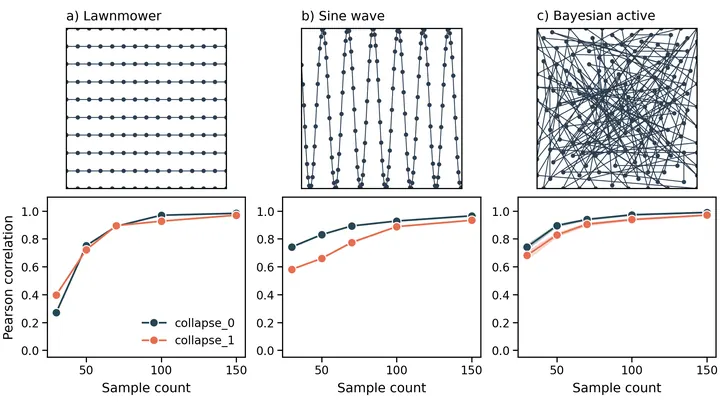
Imagine a philharmonic orchestra playing, but the microphone picks up only a blended roar — a tutti where double basses, flutes, and timpani all merge. Physicists have grappled with a similar task for decades, staring at fields of density, temperature, or magnetic induction.
Stuttgart, 2025. A software engineer plugs a laptop into a test car, not for diagnostics, but to replace the car's 'personality'—like flashing a smartphone's firmware. But instead of a quick update, he faces a cascade of incompatibilities. Each electronic control unit (ECU) speaks its own dialect, tied to a specific supplier's chip.
When a building collapses, steel rebar turns into a chaotic magnetic compass. Entropy, a measure of disorder, increases, but it's this very disorder that points to voids where people might be.
In the lab, there's a trap, an invisible 'pit' made of electric fields, where a charged dust grain about a hundred nanometers across levitates. It oscillates back and forth like a pendulum in a clock.
A handful of sand falls onto a table: each grain rolls down until it rests in a hollow. That's how a potential works: the table's surface tells the grains where to go. But in a river with whirlpools, there's no single basin everything flows into. Water swirls, returns, and meanders. For such systems, the usual map of 'pits and hills' doesn't apply.
Your arm lifts a cup from the shelf — a familiar motion you don't notice until muscles tire. Then the trajectory changes: the elbow shifts slightly, the hand trembles. A doctor usually catches these changes by hand, feeling the patient's muscles.
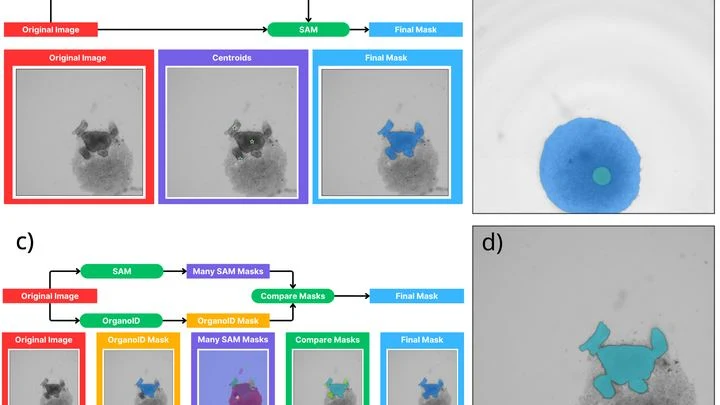
A biologist looks through a microscope at dozens of tiny cell spheres — spheroids. From these, miniature organ-like structures will later grow. The task is similar to a baker's job of checking whether the dough has risen evenly in each mold. Only here, instead of molds, there's a nutrient medium, and instead of dough, there are living cells.
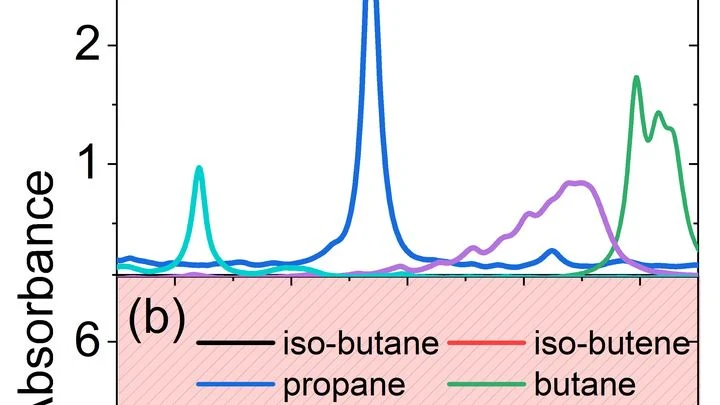
A hundred people are talking at once in a large hall. You try to hear one, but voices blend, some whisper, and you don't even suspect the existence of others. That's roughly how a conventional laser gas analyzer feels when dozens of substances mix in a combustion chamber or a factory pipe.
After a game of Scrabble, the board looks like a mosaic: tiles are scattered but form a connected pattern — islands of words in a sea of empty cells. Such a pattern can be described mathematically, but usually that requires complex rules.
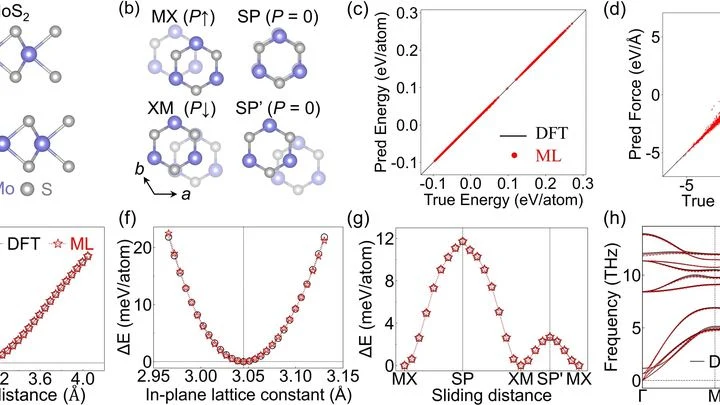
Two sheets of paper stacked together start to creep ever so slightly over each other when heated. That's roughly how layers of molybdenum disulfide, a material one atom thick, behave. At room temperature, they spontaneously slide at a speed of about one meter per second.
In a lab where crystals are studied, a technician stares at a screen covered in bright spots and slowly rotates the sample, trying to get the spots to form a symmetric pattern. It's like tuning an old radio: you turn the knob until the static gives way to a clear signal. Now, a machine can turn that knob.
Scientists have created a program that learns to align crystals without any knowledge of how those spots work.
A pathologist stains a tissue section with hematoxylin and eosin — cells turn blue and pink, and under the microscope you can see their shape and arrangement. But which genes are active in each cell cannot be read from such an image. That requires a separate, expensive assay that reveals the activity of thousands of genes at once, but it is rarely performed.
When light passes through a turbid medium, like a glass of milk or frosted glass, it scatters in all directions. But sometimes, instead of spreading out, it gets trapped in tiny 'pockets' inside the material. Physicists call these pockets localized modes: light falls into them as if into a trap and cannot escape.