A fault is a planarfracture in Earth's crust where significant displacement has occurred due to tectonic forces. Faults range from tiny cracks to massive structures like the San Andreas Fault, and they are the primary sites where earthquakes nucleate and release accumulated stress. The geometry and frictional properties of faults determine whether movement is gradual (aseismic creep) or sudden (seismic slip), shaping landscapes and posing seismic hazards.
History
The concept of faults as fractures with displacement was established in the 19th century by geologists studying mining exposures and mountain ranges. The elastic rebound theory, explaining earthquakes as fault slip, was proposed by Harry Fielding Reid after the 1906 San Francisco earthquake.
How it works
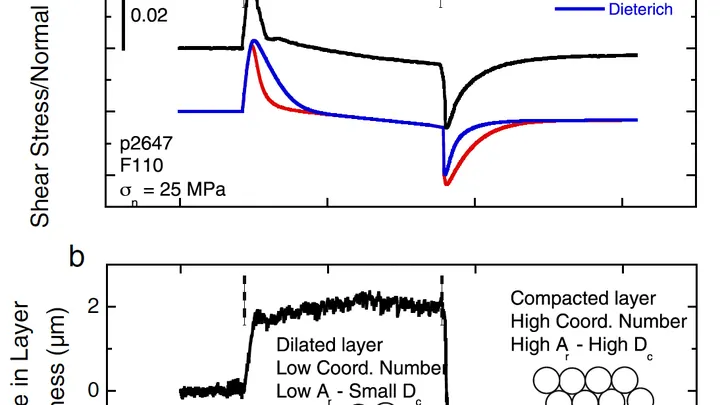
Tectonic plates push against each other, building up elastic strain in the rocks around a fault. When the stress exceeds the frictionalstrength of the fault surface, it slips suddenly, releasing energy as seismic waves. The behavior is governed by complex friction laws that depend on slip rate, temperature, and the presence of fluids or granular materials like sand and gouge. Some faults are 'locked' for centuries, then rupture in great earthquakes, while others creep steadily.
In practice
Fault mapping and monitoring are essential for seismic hazard assessment, informing building codes, and siting critical infrastructure like nuclear power plants and dams.
Fun fact
Fault zones can act as barriers or conduits for groundwater and hydrocarbons, making them important for both water resources and petroleum exploration.
In 2019, residents of Palghar district in western India felt the ground slip from under their feet — not once, but thousands of times. Over two years, seismographs recorded about 50,000 tremors. This wasn't a typical earthquake with a main shock and aftershocks, but a swarm: a series of events that quiets down and then flares up again, like a smoldering fire fed with twigs.
One hundred milliseconds. In that time, after a lightning strike or a short circuit, the power system either returns to normal operation or loses stability. A new-generation Neural Network Oscillations learns to sense this moment, like an experienced tightrope walker anticipating a gust of wind.
Two pieces of sandpaper are pressed tightly together. As you start to slide them, they first catch on the rough spots, then suddenly slip. A fault in the Earth behaves much the same way during an earthquake. But there's a crucial detail: how far do you need to push the edges before the grip gives way? This distance is called the critical slip distance.
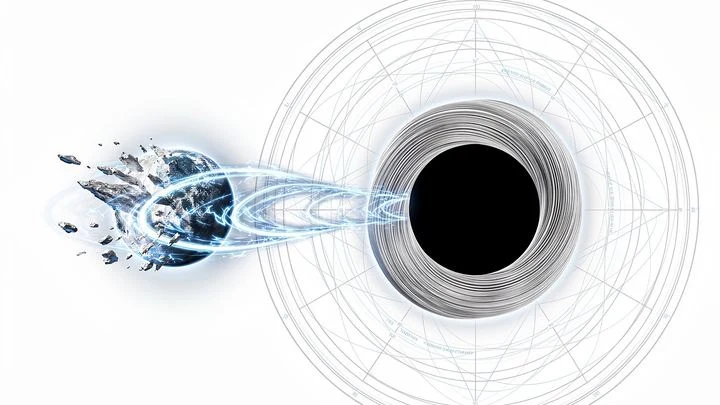
89 milliseconds. That's how long a vortex avalanche lasts that abruptly speeds up the rotation of the Vela pulsar — one of the most famous 'glitching' pulsars. Pulsars are rapidly spinning neutron stars born in the collapse of supernovae.
Modular satellites are built from cube-shaped blocks, like a construction toy. When struck by space debris, some blocks are destroyed, leaving a puncture. Engineers took inspiration from the way living tissue heals wounds. Surviving blocks detect disorder and trigger an alarm signal that travels at the speed of light through the entire structure.
In the accretion disks that gird the nuclei of active galaxies (quasars, discovered by Maarten Schmidt way back in the 1960s) a river of incandescent gas and dust churns. In its backwaters, where turbulent flows subside, against all odds, planets are born.
Since their discovery in 2007, fast radio bursts (FRBs) have teased astrophysicists with their elusive nature. These millisecond signals arrive from distant galaxies and carry colossal energy: for an instant, they radiate as much as the Sun does in a month.
A lightning strike splits the sky in a fraction of a second, leaving a branched trail. At the same moment, in a tiny superconducting crystal cooled to near absolute zero, an avalanche of magnetic field rushes through — thin fingers of magnetization piercing the material.
When hot soup cools, clumps form on the surface — similarly, as the early universe cooled, it gave birth to threadlike clumps of energy: cosmic strings. Some of them are like a stretched rubber band: as long as it's intact, it's stable. But if you nick the band, it snaps.
A landscape cut by roads or rivers into isolated patches resembles a shared apartment after partitions are installed: residents no longer bump into each other in the common hallway. Species that once competed for the same food or space now live apart. Competition weakens, and those that would have lost to pushier neighbors in a continuous landscape now survive.
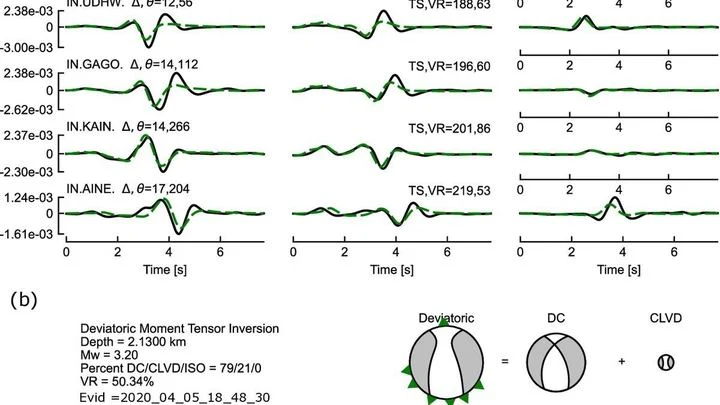
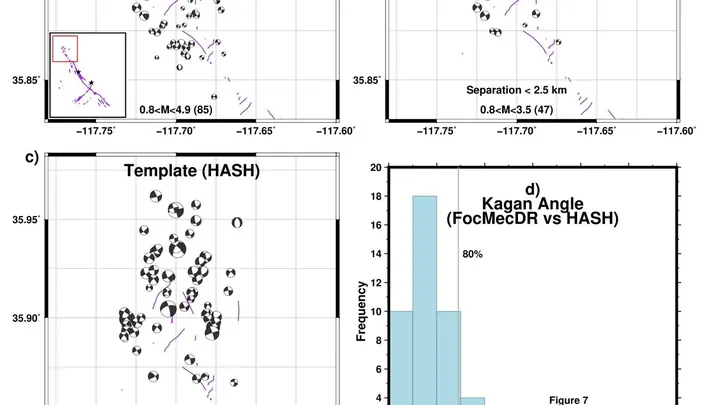
Seismologists catch every underground tremor the way a doctor listens to a heart. But small earthquakes have weak and fuzzy signals: it's hard to tell exactly where the rock shifted. Usually, scientists look at the first wave motions: compression or dilation. But if the tremor starts gently, without a sharp snap, the picture gets blurred.
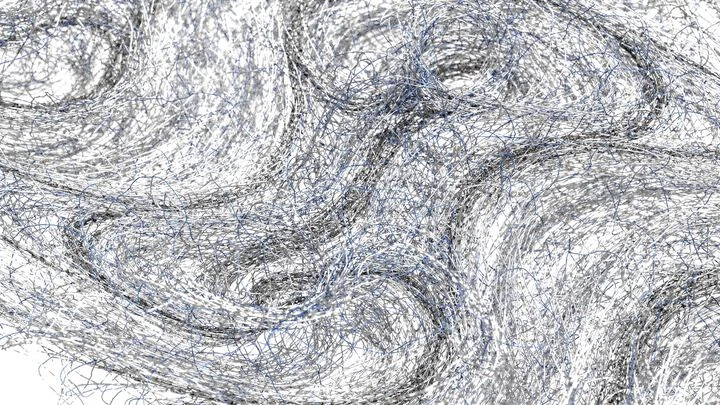
When two tectonic plates grind against each other, a layer of pulverized rock ends up between them, like sand between your palms. This layer, which geologists call fault gouge, behaves not like solid rock but like a thick paste: it can compact, dilate, and slide. Whether a fault ruptures in a devastating earthquake or creeps slowly and safely depends on its whims.
A stag beetle the size of a fingernail stands on the ground with its legs spread wider than its own height. An elephant as tall as a room, on the other hand, towers above the ground like a tower. Why is that? Both animals walk on the same ground, but they see it differently. For a beetle, each pebble is a boulder, while for an elephant, it's a grain of sand.