A Clean Target for a Stellar Reaction ✛
A chef prepares a dish where every grain matters. One crumb of a foreign ingredient can ruin the whole flavor. Likewise, physicists studying the fusion of oxygen nuclei must remove all foreign atoms from their target.
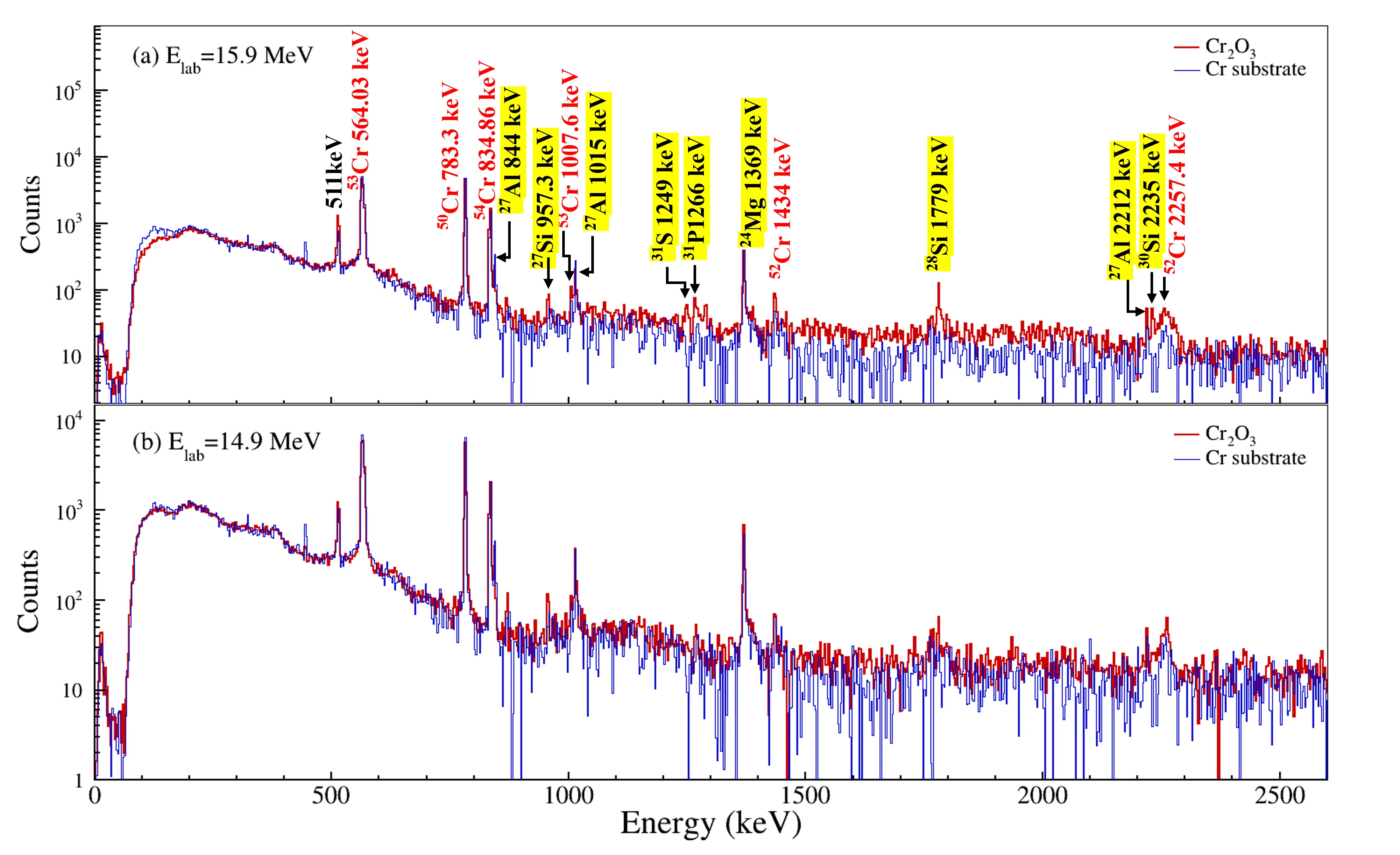
Oxygen nuclei fuse inside massive stars, but catching this process on Earth is very difficult because it happens extremely rarely. To spot the rare signal, you need a target free of impurities. Scientists made theirs from chromium oxide, that is, a compound of chromium and oxygen. Then they checked what it was made of by bombarding it with protons and watching how they bounced off.
However, four signals from the desired reaction remain clean. This means they can be used to measure how often oxygen nuclei fuse. Now scientists know how to prepare targets properly and will be able to make measurements at lower energies, as in real stars.
A carbon film just a few atomic layers thick on the substrate produces a gamma background comparable to the signal from the entire target. To avoid this, the setup used a liquid-nitrogen-cooled trap that freezes residual hydrocarbons out of the vacuum.