Popular

Nuclear Experiment nucl-ex

22 articles

Results from experimental nuclear physics: fundamental interactions, low- and medium-energy measurements, relativistic heavy-ion collisions.

articles

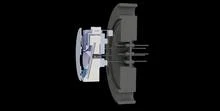
Peering Inside the Proton: New Detector Hunts for Unknown Forces

In the US, the SoLID detector is being prepared for launch — a device that will peer inside protons and neutrons, creating 3D snapshots of their structure. It will study how the energy gluing particles together gives rise to almost all mass in matter. Additionally, SoLID will hunt for new particles
arXiv:2408.16037 · 2024-08-28

A Mousetrap in the Atomic Nucleus: Reading Thorium with Ejected Electrons

By detecting electrons hurled from thorium-229's nucleus, researchers bypass light-blocking materials, enabling faster readout and bringing ultra-precise nuclear clocks within reach.
arXiv:2506.03018v1 · 2025-06-03

Scandium-45: The Key to Clocks More Precise Than Atomic Ones

Physicists excited scandium-45 nuclei with an X-ray laser and saw that in a solid crystal, vibrations hinder ideal precision. But the transition's natural purity promises nuclear clocks with an error of less than a second over the age of the universe. This opens the door to ultra-precise measurement
arXiv:2508.17538 · 2025-08-24

Tantalum Nucleus Reveals Electric Asymmetry

An electric dipole moment has been spotted in the tantalum nucleus — like a spinning top’s center of mass suddenly shifting. This imbalance, measured with record precision, sheds light on the mystery of missing antimatter and aids the hunt for dark matter.
arXiv:2510.21768 · 2025-10-16

Fusion Energy Will Help Treat Cancer

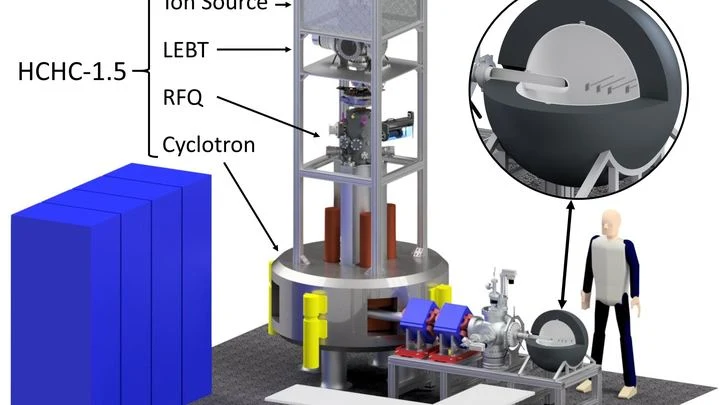
Neutrons from fusion turn stable elements into radiopharmaceuticals—without waste or nuclear reactors. A single compact source will replace dozens of outdated facilities and meet global demand for diagnostic and therapeutic isotopes.
arXiv:2511.02814 · 2025-11-04

Thorium Nuclear Clocks: A New Frontier of Precision

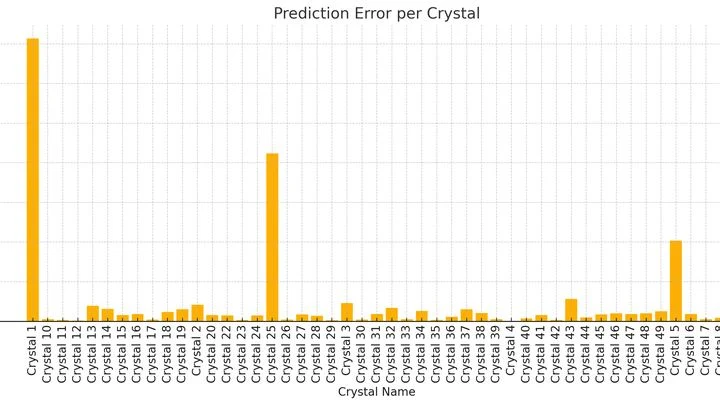
In thorium-229 nuclear clocks, one 'tick' lasts 641 seconds — like a pendulum in syrup. The hardest part is eliminating interference from the crystal. If successful, the clocks will surpass everything created before and pave the way for testing fundamental theories.
arXiv:2511.13017 · 2025-11-17

The Muon Magnetism Mystery

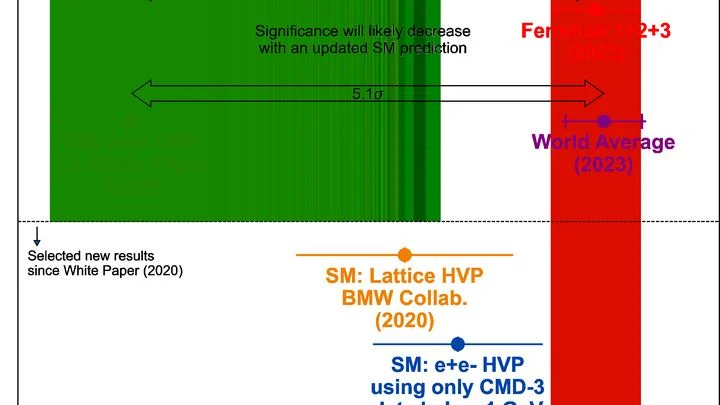
The muon's magnetic strength slightly exceeds predictions. MUonE will probe if the vacuum's own churning is to blame — and whether unknown particles lurk within.
arXiv:2512.02209 · 2025-12-01

Nuclear Fusion in Metals: How the Medium Helps Nuclei Fuse

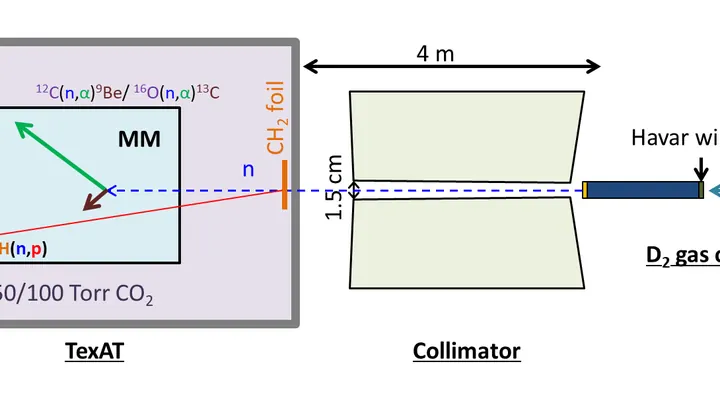
Palladium and titanium foil saturated with deuterium boosted the probability of nuclear fusion by a quintillion times. At low energies where the reaction should vanish, it unexpectedly plateaus. The discovery proves: the medium can control fusion just as well as stellar temperatures.
arXiv:2512.06212 · 2025-12-05

How Neutrinos Switch Flavors While Traveling Through the Sun

Solar neutrinos change their type on the way to Earth — theory predicted this, but directly observing the transition has been elusive due to background noise. A new filtering method in the JUNO detector will make it possible to see this process for the first time, strengthening our current picture o
arXiv:2512.14824 · 2025-12-16

The Ultimate Stiffness Limit of Neutron Stars

In a neutron star, matter is compressed to the limit. But even that limit has a limit: physicists have calculated that the ratio of pressure to energy density never exceeds 0.385. This law holds for any ultra-dense matter in the universe.
arXiv:2601.02980v1 · 2026-01-06

How ytterbium atoms hunt for new forces of nature

Physicists measured with unprecedented precision how the glow colors of different ytterbium isotopes differ. They compared these atomic 'voices' using a King plot—a tool for hunting unknown forces. It turned out that the anomaly previously thought to be a hint of a fifth force was due to inaccurate
arXiv:2601.08487 · 2026-01-13

Fusion without plasma: a beam instead of the sun

Colliding a particle beam with a 'naked' target opens the way to fusion energy without heating plasma to hundreds of millions of degrees.
arXiv:2601.09458 · 2026-01-14

How Earthly Atomic Nuclei Reveal the Size of Neutron Stars

Neutron stars are among the densest objects, but their exact size long remained a puzzle. Now physicists have found a universal link: the easier it is to deform a lead nucleus in the lab, the softer the matter inside a neutron star and the smaller its radius. Using lab data, scientists calculated th
arXiv:2601.16894 · 2026-01-23

How a Neutron Star Cooled Off in Just Four Days

When the neutron star MAXI J1752–457 cooled down in 4 days instead of weeks, scientists suspected a draft. It turned out to be the nuclear 'Urca process': in an ocean of atomic nuclei, neutrinos are born and instantly fly away, carrying heat off.
arXiv:2602.19018 · 2026-02-22

A Tiny Skew in the Atomic Nucleus and the Mystery of the Universe

Inside a giant magnetic ring, nuclei were accelerated and their spin axis was monitored. If there were a charge imbalance inside, the axis would tilt. No tilt was found, but a new precise limit was set. This is key to the puzzle: why after the Big Bang, matter survived over antimatter.
arXiv:2602.20828 · 2026-02-24

Flexible Threads Turn Clothing into Radiation Detectors

Scientists have woven a radiation detector into an ordinary thread. Now any garment can signal invisible danger with blinking lights—like a colony of fireflies in a jar.
arXiv:2604.05061 · 2026-04-06

Why the Proton 'Lost Weight' and Then 'Gained It Back'

Scientists swapped the electron in a hydrogen atom for a heavy muon. The new 'magnifying glass' revealed a more compact proton, challenging the principle that all light particles are equal. But an old data error was found. The size matched up, and physics held steady.
arXiv:2604.15546 · 2026-04-16

Nuclear Clock on a Chip: A New Step Toward Precision

Physicists have developed a method to make thorium nuclei emit light signals with record stability. The key element is a crystalline cavity that amplifies light, greatly simplifying the excitation of nuclei with a laser. For the first time, a roadmap for creating all-solid-state nuclear clocks on a
arXiv:2604.20687 · 2026-04-22

Radioactive Molecules — Hunters for Unknown Particles

Physicists have turned unstable molecules into sensitive bloodhounds, picking up the slightest influence of unknown particles and forces. This approach complements experiments at huge accelerators and could lead to the discovery of dark matter.
arXiv:2605.12767 · 2026-05-12

How Heavy Electrons Ignite an Artificial Sun

Scientists are studying muon-catalyzed fusion: swapping light electrons for muons squeezes atoms so much that hydrogen nuclei fuse at room temperature. The main problem is that muons often stick to the newly formed helium. New ideas, such as an additional electric field, could boost the number of re
arXiv:2605.26432 · 2026-05-26

The shape of the xenon nucleus is no longer a mystery

By colliding xenon and lead nuclei at the Large Hadron Collider, physicists reconstructed the true shape of the xenon-129 nucleus from the debris scattering, like splashes from an impact. It turned out to be a lumpy body, stretched in three directions—almost like an ordinary potato. The method turns
arXiv:2606.03993 · 2026-06-02

Nuclear Clock: The Ticking Nucleus in the Search for Dark Matter

Physicists have built a clock where the pendulum is an atomic nucleus. Its ticking is almost immune to disturbances. It's accurate to 10⁻¹⁵ seconds per day, setting new limits on dark matter particles.
arXiv:2606.04997 · 2026-06-03