Popular

Instrumentation and Detectors physics.ins-det

21 articles

Instrumentation and detectors for research in natural science, including optical, molecular, atomic, nuclear and particle physics instrumentation and associated electronics.

articles

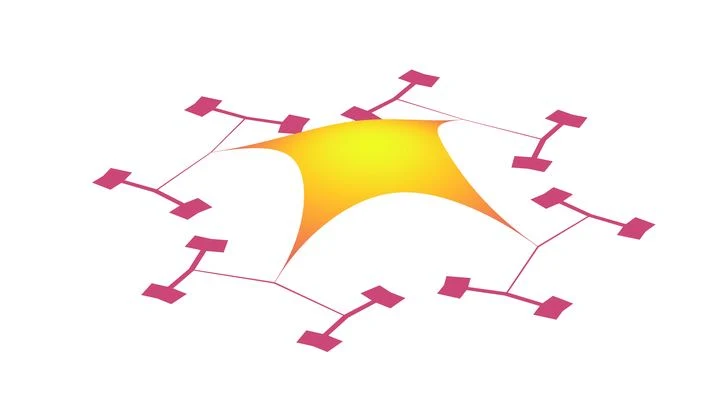
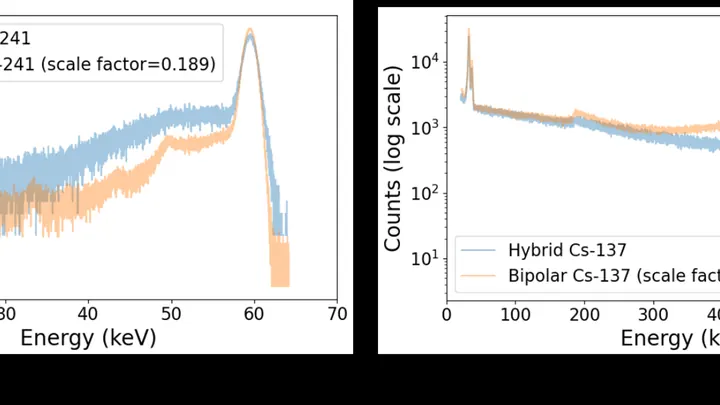
Peering Inside the Proton: New Detector Hunts for Unknown Forces

In the US, the SoLID detector is being prepared for launch — a device that will peer inside protons and neutrons, creating 3D snapshots of their structure. It will study how the energy gluing particles together gives rise to almost all mass in matter. Additionally, SoLID will hunt for new particles
arXiv:2408.16037 · 2024-08-28

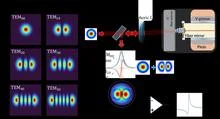
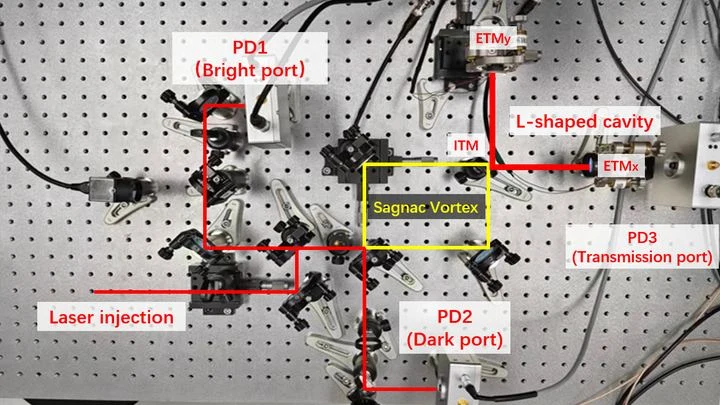
Donut Beam Locks Mirrors with Subatomic Precision

Scientists stabilized a pair of micromirrors using a donut-shaped laser beam. The beam’s dark center lands right on the detector, letting the camera capture the glow of single atoms without interference. This will boost the reliability of quantum devices.
arXiv:2412.00271 · 2024-11-29

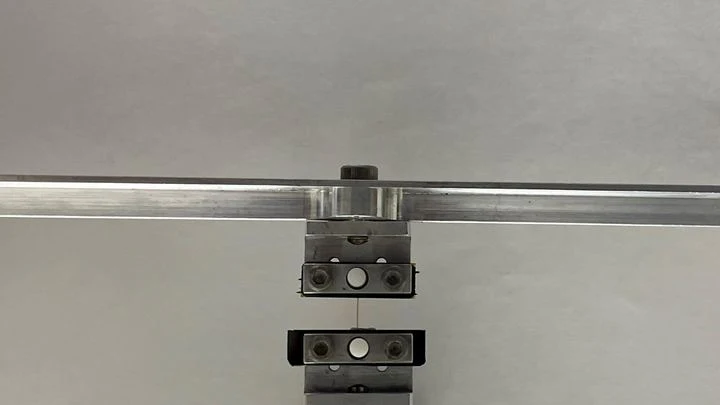
Time Trap: A Detector with Picosecond Precision

Physicists have built a detector prototype that works like a perfectly tensioned membrane. A particle hit generates a signal, from which time is measured to within 38 trillionths of a second, and location to within 15 microns (hundredths of a hair's thickness). The secret to its uniform response is
arXiv:2505.05642 · 2025-05-08

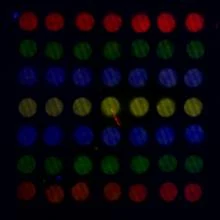
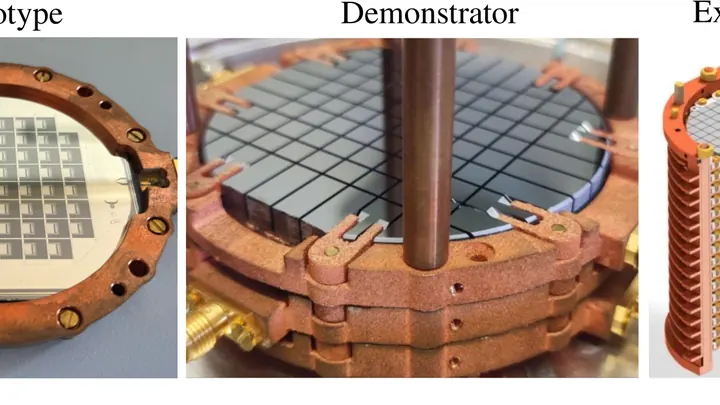
Diamond DNA Chip: A Revolution in Rapid Diagnostics

A diamond plate with 49 DNA sensors catches disease marker molecules. When the target is caught, the magnetic noise quiets, and the sensor gives a signal—fast, with no reagents or bulky equipment.
arXiv:2508.13193 · 2025-08-15

Radio Whisper of Dark Matter: A New Axion Detector

Scientists have created a detector that catches axions—candidates for dark matter. The device, made of layered material in a magnetic field, turns axions into light particles. Resonance, like that of a musical instrument, amplifies the faint signal, and tilting instead of moving parts lets you tune
arXiv:2509.14320 · 2025-09-17

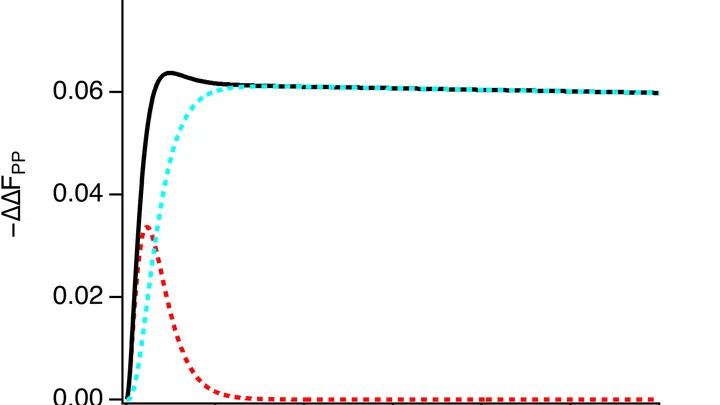
How to Watch the Electron Dance in Living Cells

Biological processes depend on magnetic fields inside cells. A new method uses paired laser flashes to see invisible chemical 'dances' in living systems—a step toward portable sensors.
arXiv:2510.05600 · 2025-10-07

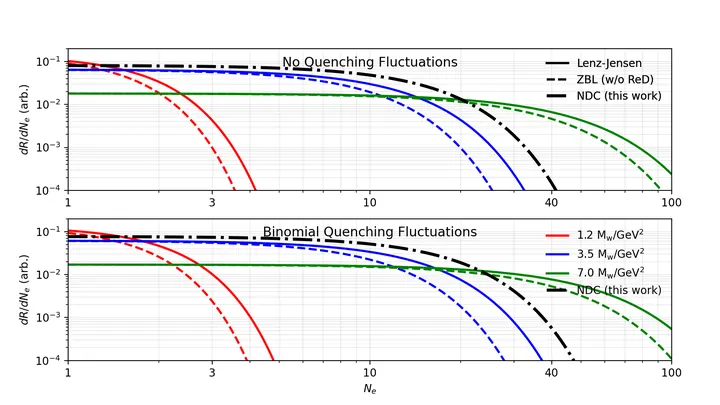
Neural Network by Ear: How to Capture a Particle's Energy

At the Large Hadron Collider, noise hinders precise particle energy measurement. A neural network embedded in the detector picks out the right signals and honestly assesses its own uncertainty — boosting the reliability of physics discoveries.
arXiv:2510.11469 · 2025-10-13

Tantalum Nucleus Reveals Electric Asymmetry

An electric dipole moment has been spotted in the tantalum nucleus — like a spinning top’s center of mass suddenly shifting. This imbalance, measured with record precision, sheds light on the mystery of missing antimatter and aids the hunt for dark matter.
arXiv:2510.21768 · 2025-10-16

Quantum Camera Reveals Invisible Particle Bonds

Scientists used an ordinary camera to capture the quantum connection of photon pairs. Bright light and a simple algorithm replaced complex detectors that work in total darkness. The new approach speeds up imaging by tens of thousands of times and makes quantum technologies more accessible.
arXiv:2512.24878 · 2025-12-31

How to Make Light Late

Gravity causes light to be delayed — this Shapiro effect has only been tested in space. Now scientists aim to measure it in a lab with a fiber-optic loop. The precision will increase a thousandfold, paving the way to discover unknown laws of nature.
arXiv:2601.00468v2 · 2026-01-01

One membrane – two mysteries of the Universe

A new type of detector uses a membrane inside an optical cavity to search for two substances at once: gravitational waves and dark matter. Light pressure stretches the membrane, and six such membranes cover frequencies from 0.5 to 40 kHz — from a low hum to a high squeak. Sensitivity to spacetime ri
arXiv:2601.02576v1 · 2026-01-05

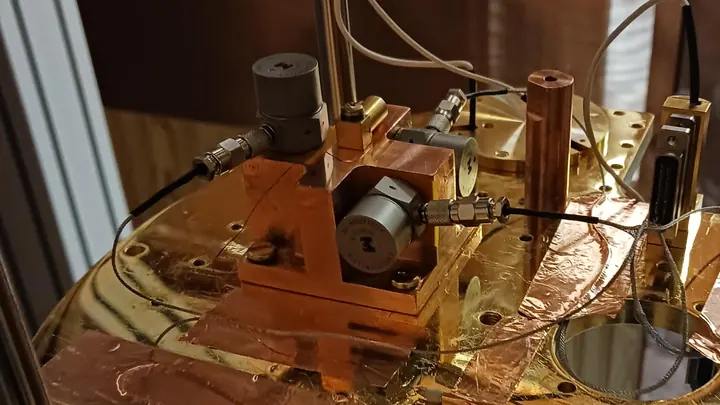
Hunting Dark Photons with a Mirror Telescope

Dark photons are light relatives of ordinary light, which could explain dark matter. A spherical mirror transformed them into radio waves, and 221 chilled sensors tried to catch that signal. In 1480 minutes, not a single photon was found, but it set a new limit on how strongly they interact with mat
arXiv:2602.18218 · 2026-02-20

Radon Hides Dark Matter

Scientists found that noise in dark matter detectors is caused by radon. Its atoms settle on internal metal grids and, when decaying, mimic signals from elusive particles. The created model matched data from the LUX and LZ experiments. This will help purify future experiments and maybe finally catch
arXiv:2602.21177 · 2026-02-24

How to Catch Microplastics with Twin Light

Twin light beams bypass pricey hardware: one probes the sample with invisible light, the other delivers the results in the visible spectrum. The device tells plastic types apart in a split second and fits in the palm of your hand.
arXiv:2603.22253 · 2026-03-23

Flexible Threads Turn Clothing into Radiation Detectors

Scientists have woven a radiation detector into an ordinary thread. Now any garment can signal invisible danger with blinking lights—like a colony of fireflies in a jar.
arXiv:2604.05061 · 2026-04-06

Atomic Nuclei Measure Gravity

Take a clock to the second floor and you'll make it run fast — gravity slows time. Scientists have developed a method that uses iron-57 nuclei as supersensitive metronomes: by shining X-rays on them, they turn a tiny frequency shift into a glaring rhythm discrepancy. Within hours, the method sees Ei
arXiv:2604.17157 · 2026-04-18

Pendulum Swinging Nonstop for Five Days

Physicists built a microscopic pendulum that loses energy so slowly it swings for nearly five days. Superconductivity and cooling to ultralow temperatures eliminate friction. The device already detects tiny nudges from impurities in superfluid helium, and in the future it will test quantum gravity h
arXiv:2605.09632 · 2026-05-10

Gravitational Waves: A New Listener at the South Pole

A new type of gravitational antenna will be built in Antarctica. It will capture low-frequency space vibrations that are inaccessible to current detectors, allowing us to hear the cosmic symphony in previously unheard notes.
arXiv:2605.14279v1 · 2026-05-14

Light Carousel Measures Earth's Rotation

Deep inside the Gran Sasso underground lab, a prototype called TRIO has come to life—a device built like a light carousel. Two beams race around a ring in opposite directions, and the slightest rotation alters their meeting point. A special design suppresses internal tremors and lets the ring be sca
arXiv:2606.02594 · 2026-05-22

Levitating Graphite Web Captures the Moon's Embrace

In Southampton, the thinnest graphite flake has been turned into an ultrasoft gravitational antenna. Levitating above magnets, it shifts by nanometers under tidal forces, and a laser interferometer converts this into a precise signal. The instrument distinguishes lunar and solar contributions, achie
arXiv:2606.14738v1 · 2026-06-02

Tiny Diamond Compass Peers Inside Batteries

They broke the old trade-off between size and sensitivity. The new 6mm probe picks up magnetic fields millions of times weaker than Earth's. Tests on a lithium-ion battery let them 'see' the currents inside without opening the case. This opens doors to non-destructive testing in tech and medicine.
arXiv:2606.18871 · 2026-06-17