Water flips the magnetic switch in a porous crystal ✛
A crystal of a Prussian blue analogue is like a sponge, with a framework of metal ions and voids where water can enter. Inside these voids, water molecules feel like tenants in rooms. Whether water is present determines how the tiny magnets in the framework behave.
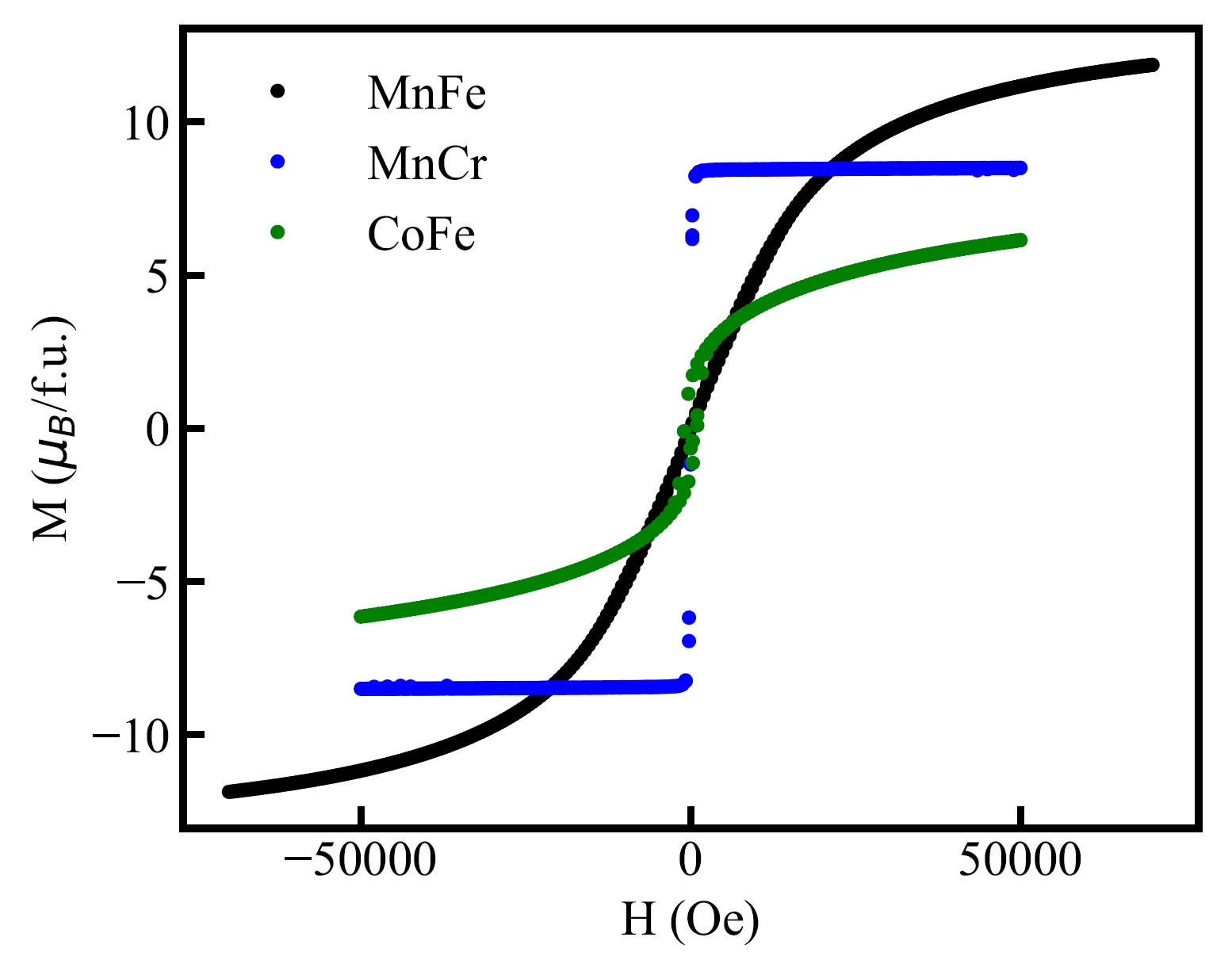
In one compound containing manganese and iron, at zero field the tiny magnets arrange into a complex pattern where they cannot fully align. But if you apply a field, like in a medical MRI scanner, the pattern changes to a simple and ordered one. The same thing happens if you simply dry the crystal: water leaves, and the magnets rearrange.
This discovery explains why this material behaved strangely in earlier experiments: its magnetization did not grow even in a strong field. It turns out the measurements were already taken in the switched state. Now that we know the role of water, we can design materials for batteries where controlling humidity is important.
The critical field for the transition in MnFe is only 1.3 tesla, comparable to the field of a typical MRI magnet (1.5–3 T). This means the material's magnetic state could be switched using an ordinary medical scanner. Another interesting fact: dehydrating MnFe leads to the same magnetic transition as applying a field, so water acts as a 'chemical field' that controls the spin structure.
The idea of switching a material's magnetic state with a small external stimulus (a field or removal of water) echoes the concept of 'smart materials' from science fiction, such as the programmable matter in Neal Stephenson's novel 'The Diamond Age', where a substance's properties change on command. Here, the switching occurs at the level of magnetic structure, which could inspire the creation of controllable magnetic switches.