Popular

Other Condensed Matter cond-mat.other

12 articles

Work in condensed matter that does not fit into the other cond-mat classifications.

articles

Time Crystals Boost Batteries and Sensors

A chain of tiny magnets, where coupling strength drops sharply with distance, under rhythmic kicks transitions into a discrete time crystal state. Energy accumulates avalanche-like, and sensitivity to rhythm disruptions surpasses all known limits.
arXiv:2508.14847 · 2025-08-20

Scandium-45: The Key to Clocks More Precise Than Atomic Ones

Physicists excited scandium-45 nuclei with an X-ray laser and saw that in a solid crystal, vibrations hinder ideal precision. But the transition's natural purity promises nuclear clocks with an error of less than a second over the age of the universe. This opens the door to ultra-precise measurement
arXiv:2508.17538 · 2025-08-24

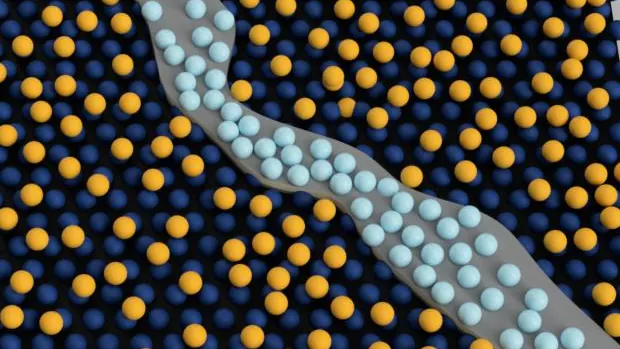
The Crooked Seed That Spawned the Universe

New theoretical research reveals how the weak interaction—normally imperceptible—gets massively amplified during crystal growth. The amplification depends on a critical number of atoms in the seed of the new phase. This mechanism might have played a decisive role in the early universe, turning a mic
arXiv:2509.14701 · 2025-09-18

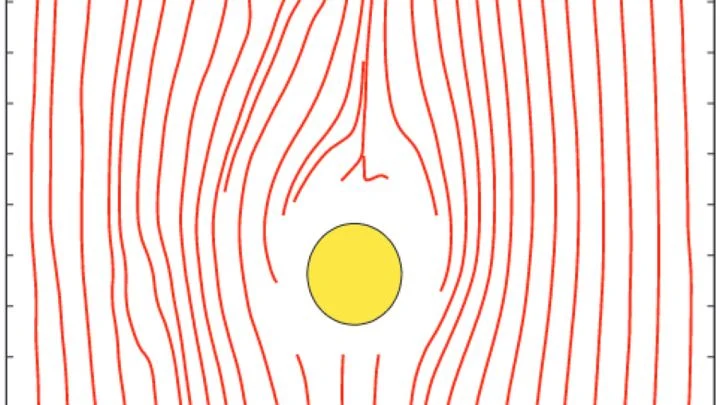
Superfluid Helium Feels How the Earth Spins

Earth drags the fabric of space-time along with it — an effect predicted by Einstein. Scientists propose catching it with superfluid helium and a highly precise detector. The device will notice rotation slower than one revolution in the entire history of Earth.
arXiv:2510.20772 · 2025-10-23

Thorium Nuclear Clocks: A New Frontier of Precision

In thorium-229 nuclear clocks, one 'tick' lasts 641 seconds — like a pendulum in syrup. The hardest part is eliminating interference from the crystal. If successful, the clocks will surpass everything created before and pave the way for testing fundamental theories.
arXiv:2511.13017 · 2025-11-17

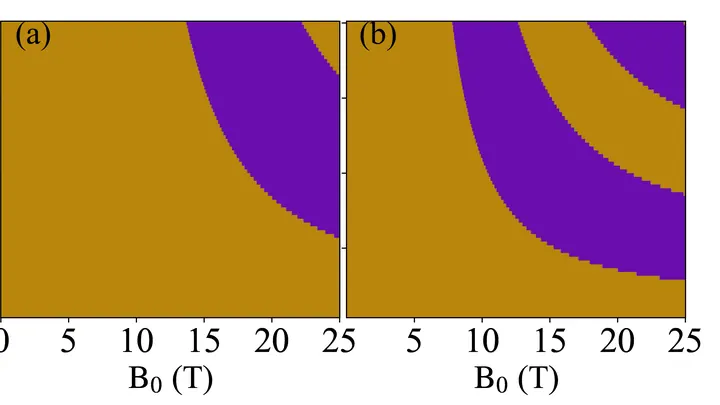
Temperature Changes the Number of Dimensions in Quantum Systems

Physicists have built a model where the number of dimensions isn't fixed but a quantum property that changes with heat. This approach could shed new light on black holes and the behavior of materials.
arXiv:2511.14547 · 2025-11-18

Magnetic field turns the void into a motor

Normally, rotation in a vacuum requires an asymmetric shape or a special material. But new research shows that a magnetic field and special magnets can induce rotation without any asymmetry. This paves the way for contactless nanomotors.
arXiv:2601.14381 · 2026-01-20

Gravity and Charge: Physics' Blind Spot

New work exposes a gap: the effect of charge on gravity has never been systematically studied. The authors predict a tiny change in acceleration depending on the charge-to-mass ratio and propose modifying a torsion balance to illuminate this blind spot for the first time. Surprise: for the electron,
arXiv:2601.16325 · 2026-01-22

Neutron Star Glitches: Solved in the Lab

Neutron stars sometimes abruptly speed up on their own. Experiments with superfluid helium in aerogel replicated the mechanism: in the star's crust and core, quantum whirlpools either break loose or are born in avalanches, nudging the star forward.
arXiv:2604.18016 · 2026-04-20

Quantum Squeezing in Superfluid Helium

Laser pulses in superfluid helium revealed quantum squeezing of paired waves: their random fluctuations are suppressed in one direction and amplified in another. An unexpected phase shift—crests appeared before the signal—is explained by interference. The discovery paves the way for ultrasensitive d
arXiv:2605.05345 · 2026-05-06

Laboratory Black Holes: Playing with Temperature

Researchers studied the behavior of miniature black hole analogues built from superconductors. They found that in these systems, the dependence of temperature on internal state can be turned on and off—a feature unavailable to real black holes. This paves the way for an engineering approach to under
arXiv:2605.11046 · 2026-05-11

A Diamond Defect Steered by Light Remembers a Quantum Secret

Scientists turned a tiny defect in diamond—a nickel atom with missing neighbors—into an all-optical qubit. It's controlled by a laser, emits in the infrared, and holds a quantum state 3400 times longer than usual, running in a standard fridge.
arXiv:2607.02258 · 2026-07-02